The Walled Garden Crumbles: Apple Loses Major EU Legal Battle Over iPhone Control
Apple's attempt to dodge the EU's Digital Markets Act has failed in court. This landmark ruling forces the iPhone to open up like never before. Here is what it means for your mobile experience.
Key takeaways
- Apple lost its legal challenge against the EU, cementing its status as a gatekeeper under the Digital Markets Act.
- The ruling mandates that Apple must provide free interoperability for iOS features, though the company has blocked all 56 requests from developers so far.
- Apple's primary defense remains that these regulations compromise user security and create a fragmented experience compared to its traditional model.
The Gavel Drops in Brussels
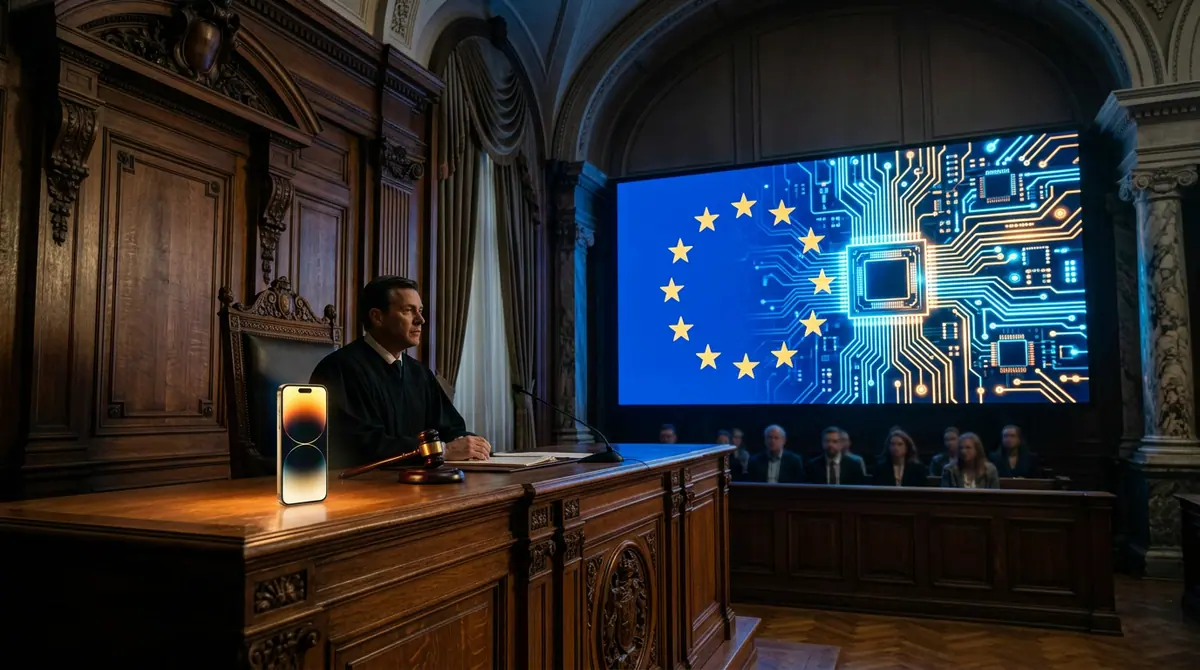
Apple’s walled garden just lost its most important legal padlock. On July 8, 2026, the European Union General Court handed down a decisive ruling that dismissed Apple’s legal challenge against the Digital Markets Act, commonly known as the DMA. According to a report by Reuters, the court confirmed Apple’s designation as a gatekeeper for both its App Store and its mobile operating system, iOS. This decision is not just a legal technicality; it is a fundamental shift in how the world’s most famous smartphone ecosystem must operate. For years, Apple has argued that its closed ecosystem is a necessity for user privacy and security, but European regulators are now legally empowered to force those gates open in the name of fair competition.
The Interoperability Standoff
The core of this conflict lies in a concept called interoperability. Under the DMA, Apple is required to provide free access to features controlled by iOS and iPadOS to third party developers. However, the transition has been anything but smooth. Research published by the Free Software Foundation Europe (FSFE) reveals that since May 2025, Apple has received 56 formal interoperability requests. As of this week, not a single one of those requests has resulted in a successful solution. Developers have asked for access to specialized hardware like NFC protocols and Bluetooth Low Energy Audio, yet they have been met with denials based on technical grounds or claims that the requests fall outside the scope of the law.
This friction highlights the massive cultural divide between the iPhone and Android worlds. Android has historically been built on a foundation of open standards, allowing different apps and hardware components to communicate relatively freely. Apple, conversely, has curated every interaction to ensure a seamless (and profitable) experience. As noted in a report by Silicon Republic, the EU court also ruled Apple’s challenge regarding iMessage to be inadmissible, further signaling that the company’s messaging crown jewel may eventually be forced to play nice with other platforms.
Context Box: The Digital Markets Act (DMA)
The DMA is a landmark piece of European legislation designed to curb the dominance of Big Tech. It identifies companies with massive market influence as gatekeepers and imposes strict rules on how they handle data and third party competition. While Apple, Meta, and ByteDance have all faced scrutiny, Apple’s fight has been particularly fierce because the law directly challenges the integrated hardware and software model that defines the iPhone experience.
What Changed: From Gatekeeper to Open Gate
Before this ruling, Apple maintained a sliver of hope that it could legally bypass the most restrictive parts of the DMA. By challenging its gatekeeper designation, Apple sought to preserve its absolute control over how apps are installed and how features are shared. The dismissal of this appeal means that the debate is over. Apple is now legally bound to provide the same level of system access to a startup in Berlin as it gives to its own internal engineering teams. This includes the controversial fee structure changes. According to data from RevenueCat, Apple recently introduced a new Core Technology Commission fee of 5% on digital goods, a move designed to replace older per-install fees that had drawn the ire of the developer community.
Why It Matters: Security vs. Choice
This ruling will have immediate consequences for how you use your phone. In a blog post on its official newsroom, Apple argued that the DMA is causing a worse user experience in the EU by delaying new features and exposing users to security risks from third party data access. For the average user, this means the iPhone may start to feel a bit more like a PC or an Android device: more options for where to buy apps and how to pay for subscriptions, but potentially more complexity and more prompts regarding data permissions.
For the mobile industry, the precedent is massive. If Apple can be forced to dismantle its vertical integration, every other tech giant is on notice. We are seeing a shift away from the era of digital monopolies toward a mandated era of interoperability. Interestingly, Apple is already preparing for a more fragmented global landscape. The company recently announced a 30 billion dollar investment with chipmaker Broadcom to produce over 15 billion chips in the United States, signaling a strategic move toward domestic manufacturing as European regulations become increasingly stringent.
What to Watch Next
While the EU General Court has spoken, the legal drama is likely not over. Apple has the option to appeal this decision on matters of law to the Court of Justice of the European Union, which is the highest court in the region. Analysts are also watching how Apple handles the backlog of 56 interoperability requests. If the company continues to deny developers access to the iPhone's inner workings, it could face massive fines of up to 10% of its global annual turnover. The battle for the soul of the smartphone is no longer happening in a design lab in Cupertino; it is happening in the courtrooms of Brussels, and the walls are finally coming down.
Sources (6)
Discussion (0)
Commenting as
No comments yet. Be the first to share your thoughts!
The discussion could not be loaded. Please refresh the page.
Cloud computing specialist and tech trend forecaster