Mapping the Rift: Why Apple and Google Are Fighting Over Lake America
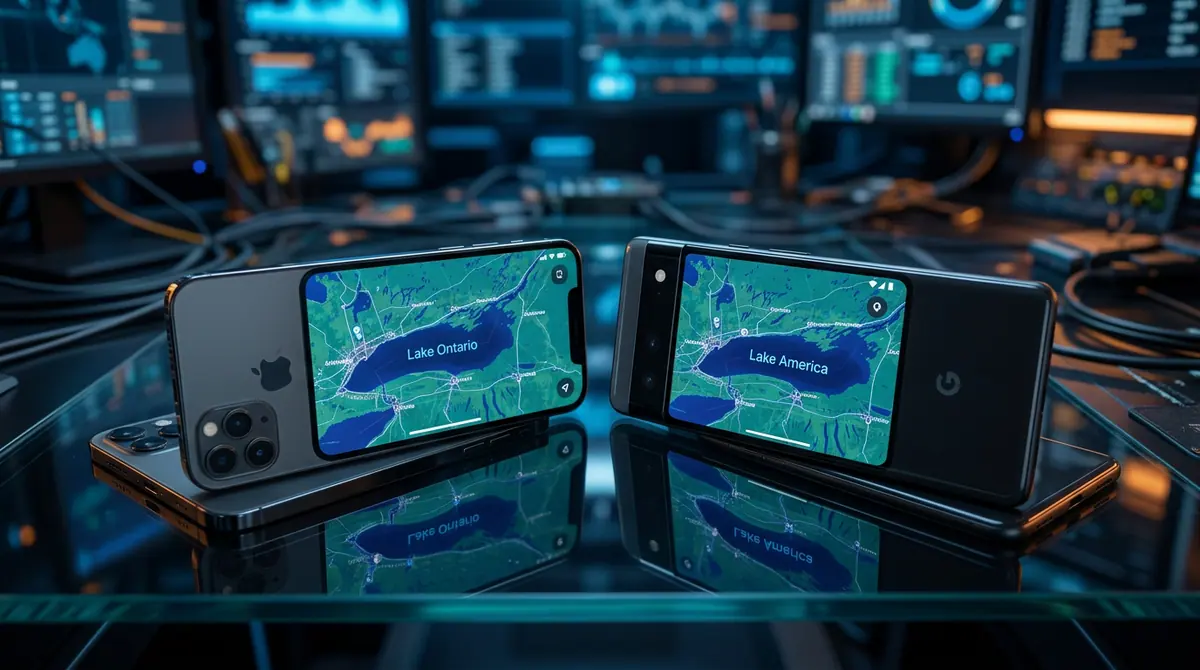
A geopolitical tug-of-war has landed on your smartphone screen. While Google Maps rebrands Lake Ontario, Apple is standing its ground in a high-stakes clash of tech and policy.
Key takeaways
- Apple and Google have diverged on the naming of Lake Ontario following a U.S. executive order.
- Google has updated its maps for U.S. users to show Lake America, while Apple Maps has not yet complied.
- Pixel 11 users are reporting ghost wake-up issues, though the root cause is not yet confirmed.
- Apple accessories like AirTag 2 and AirPods Pro 3 are seeing major discounts during Labor Day sales.
The Map Is No Longer Just a Tool, It Is a Statement
Imagine waking up, opening your favorite navigation app, and discovering that a 7,000-square-mile body of water has changed its name overnight. For millions of smartphone users in the United States, that is exactly what happened this week. A simple search for Lake Ontario now yields a new result on some devices: Lake America. This shift represents more than just a label change; it has become the latest battleground in the ongoing rivalry between Apple and Google, highlighting how these tech giants navigate political pressure and international diplomacy.
According to a report by Axios, the controversy stems from an executive order signed on August 27, 2026, which directs federal agencies to refer to the lake as Lake America within 30 days. While the order primarily binds federal records, its impact on the private sector was immediate. Google Maps moved swiftly to update its labels for users within the United States, whereas Apple Maps has notably held its ground, continuing to display the traditional name for the time being. This divergence creates a rare moment where the two most powerful mapping platforms on earth show fundamentally different versions of North American geography.
The Politics of Navigation
The pressure on Apple is not just coming from the text of the order. Interior Secretary Doug Burgum recently stated that the administration personally asked Apple to update its mapping software to reflect the change, as reported by the Lethbridge Herald. Despite this high-level request, Apple has remained cautious. The Washington Times noted that while Google complied with the directive for its U.S. audience, Apple Maps still showed Lake Ontario as of Monday morning, August 31.
This situation is complicated by the international nature of the Great Lakes. While Google shows Lake America to U.S. users, users in Canada still see the traditional name. Reporting from MacRumors indicates that users outside of North America may see both names or a split label. This localized approach to geography is a strategy often used by tech companies to satisfy local laws or political sensitivities, yet it rarely happens on such a massive scale within the Western world. Business Insider suggests that because the executive order does not legally mandate private companies to change their software, Apple may be waiting to see how the diplomatic fallout with Canada settles before making a move.
Context: How Private Maps Handle Public Policy
For newcomers to the tech policy world, it is important to understand that mapping providers like Apple and Google are not neutral observers. They frequently adjust borders and names based on the region where the phone is used. For example, borders in the Middle East or naming conventions in the Sea of Japan often change depending on whether you are viewing them from Tokyo or Seoul. However, seeing this level of divergence within North America is unprecedented and signals a new era where software companies must choose between federal requests and international consistency.
Hardware Woes and Labor Day Deals
While the mapping war dominates the headlines, the hardware side of the iPhone vs. Android rivalry remains just as active. Android Authority recently reported on an emerging issue for Google's newest flagship, the Pixel 11. Several owners have reported ghost wake-ups, where the phone screen turns on without any user interaction or incoming notifications. While it is currently being treated as user-reported behavior rather than a confirmed hardware defect, it is a reminder that even the most advanced AI-powered phones can suffer from software or sensor glitches.
Apple users, on the other hand, are currently seeing some of the best accessory pricing of the year. According to 9to5Mac, the Amazon 2026 Labor Day sale has slashed prices across the board. The new AirTag 2 is currently available for just $24 for a single unit or $80 for a four-pack, which represents an all-time low price. Other notable discounts include the AirPods Pro 3 at $200 and the Apple Pencil Pro starting at $74. These deals suggest that Apple is clearing the deck for future hardware announcements, making it a prime time for budget-conscious fans to upgrade their ecosystem.
What Changed and What is New
- Mapping Divergence: Google Maps has adopted Lake America for U.S. users; Apple Maps has not.
- Federal Pressure: The name change was formalized via an executive order on August 27, 2026, followed by personal requests to tech CEOs.
- Accessory Pricing: The AirTag 2 has reached its lowest price since launch, hitting approximately $20 per unit when bought in bulk.
Why It Matters
This rivalry matters because it determines the reality you see on your screen. When tech companies disagree on geography, it creates a fractured digital landscape. For the average user, this could mean confusion when sharing locations or navigating across borders. On a deeper level, it raises questions about the power of the government to influence the tools we use for basic information. If a map can be changed by a signature, what other parts of our digital world are subject to the same pressures?
What to Watch Next
The next few weeks will be critical. Watch for whether Apple eventually caves to the renaming request or if it maintains its current stance to avoid friction with international partners like Canada. Additionally, keep an eye on Google's response to the Pixel 11 wake-up issues; a firmware update could be on the horizon if the problem proves to be widespread. Finally, with the Labor Day sales in full swing, we expect to see if these aggressive discounts are a prelude to new hardware launches in the coming weeks.
Whether you prefer the open ecosystem of Android or the curated experience of Apple, one thing is certain: the devices in our pockets are no longer just communication tools. They are the frontline of a complex battle between technology, geography, and global policy.
Sources (7)
Discussion (0)
Commenting as
No comments yet. Be the first to share your thoughts!
The discussion could not be loaded. Please refresh the page.
Open source advocate and full-stack developer