
The Great AI Divorce: Why Switching Between iPhone and Android Just Became Impossible
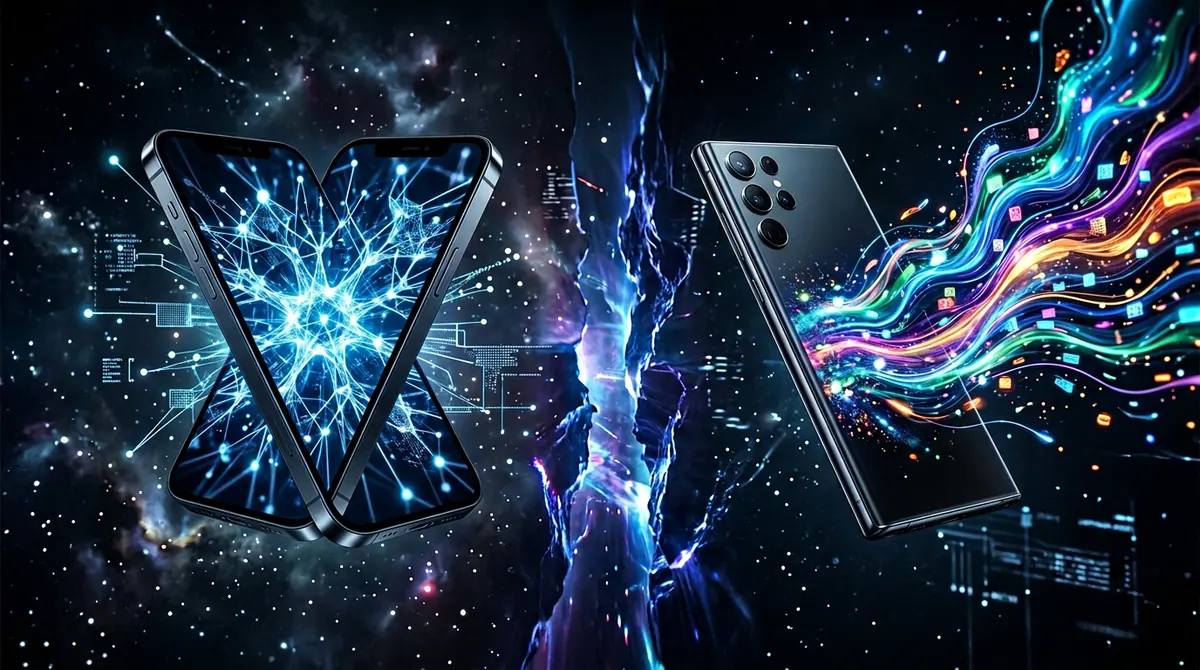
The rivalry between Apple and Google has moved beyond megapixels and refresh rates. In 2026, your phone choice is a permanent commitment to an AI identity you cannot export.
Key takeaways
- Switching rates between iPhone and Android have reached a historic low due to AI data lock-in.
- Apple's Personal Knowledge Graph and Google's Gemini Deep Memory create high friction for users wanting to change platforms.
- Privacy versus Utility has become the primary differentiator between the two ecosystems in 2026.
- Lack of AI portability standards is a growing concern for antitrust regulators and consumer advocates.
The Death of the Annual Switch
Choosing a smartphone in 2026 is no longer about whether you prefer the brushed titanium of the iPhone or the bold, symmetrical aesthetics of a Google Pixel. It is about which digital soul you want to inhabit. For over a decade, the mobile industry thrived on the churn of users moving between iOS and Android, but a new era of Generative AI lock-in has effectively slammed the door shut on the platform hopper. According to a recent market analysis by IDC, switching rates between the two major operating systems have hit a ten-year low as of March 2026, dropping to just under 3 percent of the total user base.
The reason for this stagnation is not a lack of innovation. On the contrary, smartphones have never been more powerful. The friction comes from the intimate, hyper-personalized nature of the AI models living inside these devices. When you use an iPhone today, Apple Intelligence is not just a Siri upgrade; it is a system-wide layer that has cataloged your habits, your speech patterns, and your relationships for years. Moving to Android does not just mean buying new cables; it means lobotomizing your digital assistant and starting from scratch with a stranger.
Context Box: The AI Shift
For years, the choice between iPhone and Android was defined by hardware and app availability. If you wanted the best video, you bought an iPhone; if you wanted customization, you bought a Samsung or a Pixel. By 2026, hardware has largely plateaued, and almost every major app is identical on both platforms. The new battlefield is Contextual Intelligence, the ability of a phone to anticipate your needs based on years of private data history. This history is now the ultimate proprietary feature that neither Apple nor Google is willing to make portable.
What Changed: The Rise of the Personal Knowledge Graph
In early 2025, Apple introduced what it calls the Personal Knowledge Graph as part of its Private Cloud Compute 2.0 initiative. This system, as described in an Apple technical white paper, allows your iPhone to build a deep, encrypted map of your life that remains on-device or in a secure cloud silo. It knows when you are likely to be late for pick-up based on traffic patterns it has observed for months. It knows which tone to use when drafting emails to your boss versus your siblings. It is a mirror of your personality.
Google has countered with Gemini Nano 3, which is now standard on all devices running Android 16. According to a blog post from Google's engineering team last month, Gemini now features "Deep Memory," a function that allows the AI to recall context from conversations or searches you had years ago to inform current tasks. This level of utility creates a psychological barrier to switching. Users are finding that the cost of teaching a new AI their life is simply too high, a phenomenon researchers at Stanford have recently labeled as Algorithm Fatigue.
Why It Matters: The End of Neutral Hardware
This shift matters because it changes the power dynamic between the consumer and the manufacturer. In the past, if a company raised prices or removed a feature, you could simply take your business elsewhere. Today, your data is so deeply integrated into the specific logic of the OS that you are effectively a digital sharecropper. According to a report by the Electronic Frontier Foundation, the lack of "AI Portability" standards is the next great antitrust frontier. Without a way to export your Personal Knowledge Graph, the competitive pressure on Apple and Google to lower prices or innovate on hardware is significantly reduced.
iPhone vs Android: The Privacy Paradox
The rivalry has also taken a sharp turn regarding privacy. Apple continues to lean heavily into its "Privacy-First" branding, marketing its AI as a black box that even Apple cannot see into. In contrast, Google has opted for a "Utility-First" approach, arguing that by allowing Gemini to synthesize data across your Gmail, Docs, and Search history, it provides a far more capable assistant than Apple's more restricted model. This creates a fundamental choice for the user: do you want the AI that knows you best, or the AI that protects you most? In 2026, you can no longer have both, and once you choose a side, the migration path is blocked by a wall of proprietary encryption.
What to Watch Next
- The Rise of Cross-Platform Bridges: Keep an eye on third-party startups attempting to create "AI middle-ware" that can sync your personality between iOS and Android, though expect heavy legal pushback from the tech giants.
- The Hardware Decline: As AI becomes the primary selling point, we may see a decline in the frequency of flagship hardware releases, with companies moving toward a three-year cycle for phone bodies while focusing on monthly AI software updates.
- Regulation Battles: Watch for the European Commission's upcoming ruling on the Digital Markets Act 2.0, which is rumored to include mandates for AI data portability.
The Final Takeaway
The smartphone rivalry has entered its final, most personal stage. We are no longer choosing tools; we are choosing companions. If you are considering a switch between iPhone and Android, do it now before your AI knows you too well to let you go. The convenience of a phone that finishes your thoughts is a beautiful thing, but it comes with a invisible tether that might just make it the last phone you ever choose.
Discussion (0)
Commenting as
No comments yet. Be the first to share your thoughts!
The discussion could not be loaded. Please refresh the page.
Open source advocate and full-stack developer


