
The End of the Crease? Samsung’s Bold Gamble for the Galaxy Z Fold 8
Samsung aims to eliminate the foldable screen's biggest flaw as Apple prepares a hardware-heavy WWDC and smart rings redefine health tracking.
Key takeaways
- Samsung is rumored to be eliminating the visible display crease in the upcoming Galaxy Z Fold 8 to compete with more refined Chinese foldable designs.
- Apple may break tradition by launching up to five new hardware products at WWDC, signaling a deeper integration of hardware and AI software.
- The wearable market is splitting into two distinct paths: high-brightness fitness bands like the Xiaomi Smart Band 10 Pro and discreet health monitors like the Oura Ring 5.
- Apple continues to prioritize ecosystem stability through public betas of iPadOS and watchOS 26.6, ensuring a polished experience for current users.
The Great Vanishing Act: Samsung’s Quest for Perfection
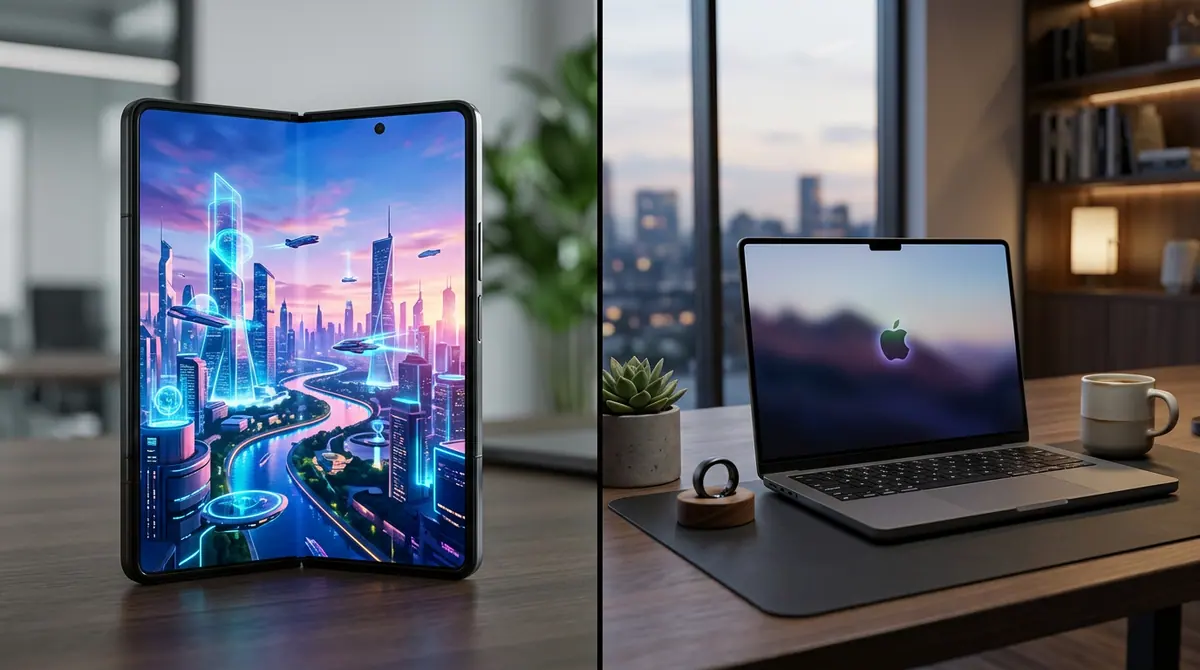
Every time you open a foldable smartphone, a subtle valley in the center of the display reminds you that you are using a mechanical compromise. For years, the screen crease has been the single biggest aesthetic hurdle for the foldable market, a visual scar that critics have used to argue that the technology is not yet mature. However, that may be about to change. Recent industry whispers, highlighted by reports from Android Authority and PhoneArena, suggest that Samsung is finally on the verge of launching a creaseless display with the upcoming Galaxy Z Fold 8.
This is not just a cosmetic update; it is a tactical necessity in the brutal rivalry between Android manufacturers. While Samsung pioneered the foldable category, Chinese competitors have recently pushed the envelope with thinner designs and more sophisticated hinges that have already minimized the crease. If Samsung can successfully eliminate this physical dip, it would remove one of the primary reasons users cite for sticking with traditional glass slabs like the iPhone. Achieving this feat would likely require a trifecta of engineering breakthroughs: evolved hinge geometry, new display layer materials, and enhanced durability standards that do not sacrifice the flexibility of the panel.
The Apple Countermove: Hardware Rumors at WWDC
While Samsung works on mechanical miracles, Apple is reportedly preparing its own hardware surprises. Although the Worldwide Developers Conference is historically a software-centric event, 9to5Mac reports that five new Apple products could be waiting in the wings for a June debut. This suggests a strategic shift for the company, as it seeks to align new hardware releases more closely with developer-facing cycles, particularly those tied to the expansion of Apple Intelligence.
Beyond the hardware rumors, Apple is currently in a phase of intense software refinement. The company recently opened public betas for iPadOS 26.6, tvOS 26.6, and watchOS 26.6. According to reporting from 9to5Mac, these updates are focused on polishing the user experience and ensuring system stability across the ecosystem. For the average user, this means that even if a folding iPhone remains a distant dream, the current lineup is becoming more integrated and reliable through constant iterative testing.
Context Box: The Foldable Evolution
Since the launch of the original Galaxy Fold in 2019, the industry has struggled with the trade-off between screen size and device thickness. Early foldables were bulky and featured prominent gaps when closed. Today, the focus has shifted toward making foldables feel identical to standard smartphones when folded, requiring thinner glass and hinges that allow the screen to bend without forming a permanent indentation.
The Wearable Revolution: From Bands to Rings
The rivalry extends beyond the pocket and onto the wrist and finger. Xiaomi is currently refreshing its wearable lineup with the Smart Band 10 Pro. Reviewers at Notebookcheck have noted that the new model features a massive jump in display visibility, boasting a 2,000-nit AMOLED screen that vastly outperforms previous generations in direct sunlight. While the standard Band 10 remains a budget-friendly fitness tracker, TechRadar highlights that the Pro model is designed to bridge the gap between a simple band and a premium smartwatch by including independent GPS and more advanced health sensors.
Meanwhile, at the high end of the market, the Oura Ring 5 has been unveiled with a significantly smaller footprint. As reported by GSMArena, this new generation of the smart ring includes ambitious features like Blood Pressure Signals. This move signals a broader industry trend where health tracking is becoming more discreet. While the Apple Watch remains the dominant force in wearable health, the rise of the smart ring category presents a unique challenge: providing 24/7 metabolic monitoring without the distraction of a glowing screen.
Why This Matters for You
For the consumer, this era of mobile technology marks the end of the incremental upgrade cycle. If Samsung successfully removes the crease, the primary argument against foldables disappears, potentially forcing Apple to accelerate its own foldable roadmap. At the same time, the divergence in wearables means you now have a choice between the high-visibility, app-rich environment of a device like the Xiaomi Smart Band 10 Pro or the passive, invisible health monitoring of the Oura Ring 5. The focus is shifting from what the device can do for you to how seamlessly it can fit into your life without being a distraction.
What to Watch Next
Keep a close eye on the official WWDC announcements this June. If Apple does indeed launch five new products, it will signal a major pivot toward hardware that supports its new AI initiatives. Furthermore, as Samsung approaches the launch of the Galaxy Z Fold 8, the real test will be independent durability studies. A creaseless screen is a triumph of design, but only if it can survive the thousands of folds a typical user performs every year. The next twelve months will determine whether the foldable phone becomes the new standard or remains a luxury niche for early adopters.
Sources (10)
Discussion (0)
Commenting as
No comments yet. Be the first to share your thoughts!
The discussion could not be loaded. Please refresh the page.
How-to guide expert and developer advocate


