The End of Battery Anxiety? Redmi’s 7,560 mAh Beast and Apple’s Design Reset
A massive battery breakthrough from Redmi and a major design shift at Apple are redefining what we expect from our smartphones in 2026.
Key takeaways
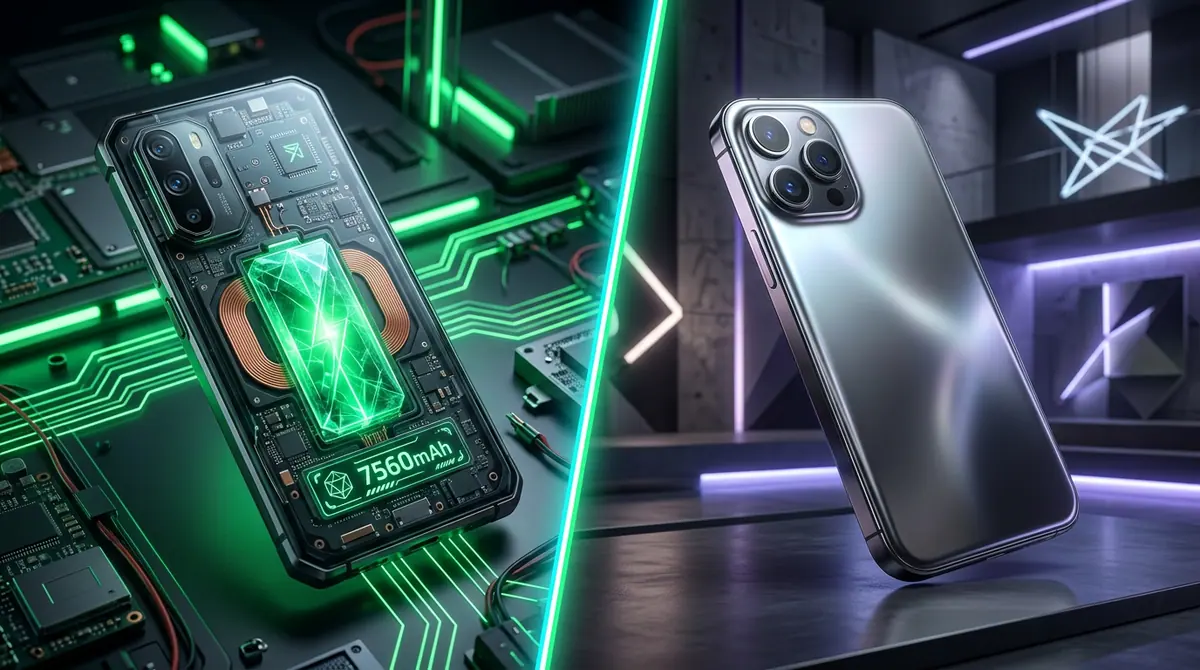
- The Redmi Turbo 5 sets a new industry record with a 7,560 mAh battery, signaling a shift toward multi-day battery life in midrange Android phones.
- Apple is reportedly restructuring its leadership to give the industrial design team more influence, potentially leading to a major aesthetic shift for future iPhones.
- Sharp's Aquos R11 is pushing display technology to the limit with a 240Hz Pro IGZO OLED, even as prices in the premium segment continue to rise.
- The mobile market is moving toward experiential marketing, with brands like Roborock and DJI using physical pop-ups to demonstrate high-end features to consumers.
The Era of the Three-Day Smartphone Has Arrived
Imagine a world where you plug in your phone on a Sunday night and do not think about a charger again until Wednesday afternoon. While the industry has spent years chasing thinner frames and brighter pixels, a quiet revolution in energy density just hit the mainstream. The latest developments in mobile hardware suggest that the long-standing rivalry between iPhone and Android is entering a fascinating new phase: one where Android manufacturers are doubling down on raw endurance while Apple prepares for a profound internal design renaissance.
According to a detailed hands-on report from GSMArena, the newly released Redmi Turbo 5 is shattering the standard 5,000 mAh ceiling that has defined the industry for years. This device, which officially went on sale in India on June 20, 2026, packs a staggering 7,560 mAh battery into a chassis that remains remarkably pocketable. When paired with 100W wired charging, the Turbo 5 represents a fundamental shift in the midrange market. It is no longer about just getting through a full day; it is about providing a level of reliability that rivals the legendary endurance of old-school flip phones.
Why It Matters: The New Benchmark for Endurance
For years, smartphone users have been forced to choose between performance and battery life. The Redmi Turbo 5, powered by the Dimensity 8500 platform, suggests that we may finally be able to have both. This matters because it shifts the competitive landscape. If a midrange Android device can offer nearly double the battery capacity of a flagship iPhone or Samsung Galaxy, the pressure on premium manufacturers to innovate their power management becomes immense. GSMArena notes that Xiaomi is also promising four years of major updates and six years of security patches, signaling that endurance is now measured in both daily battery life and long-term software support.
Context Box: The Midrange Evolution
In the past, midrange phones were defined by what they lacked, such as plastic builds or subpar displays. In 2026, the midrange has become the primary laboratory for extreme hardware experiments. Because these devices sell in higher volumes than ultra-premium flagships, companies like Xiaomi use them to test massive battery capacities and ultra-fast charging before deciding if the technology is refined enough for their most expensive models.
Apple’s Counter-Move: The Return of Design Influence
While Android brands are winning the spec war with massive batteries and specialized hardware, Apple appears to be looking inward. A recent report from 9to5Mac highlights a potential shift in Apple’s internal power structure under John Ternus. As the company eyes a future leadership transition, there are signs that the industrial design team may regain the central influence it held during the Jony Ive era. For the average user, this means a likely pivot away from the iterative, safe designs of the last few years toward something more adventurous for the rumored iPhone 17 Pro and beyond.
This creates a compelling contrast in the market. On one side, you have the Sharp Aquos R11, which was announced on June 16, 2026, showcasing a stunning 6.5-inch 1 to 240Hz Pro IGZO OLED display and a Snapdragon 8s Gen 4 chip. As Gadgetscoop97 reported, Sharp is pushing the price of the R11 significantly higher, betting that enthusiasts will pay for superior display technology and camera tuning. On the other side, Apple is betting that cohesive, high-end industrial design and deep software integration will continue to trump raw battery numbers.
What Changed: The Shift to Experiential Marketing
We are also seeing a change in how these companies interact with us. It is no longer enough to just list specs on a website. As reported by Android Authority, brands like Roborock are opening community classrooms and pop-up shops in places like Miami to educate buyers in person. Similarly, DJI is moving its Osmo Pocket line toward more professional-oriented vlogging tools, blurring the lines between consumer electronics and specialized creative gear. The hardware is becoming so capable that manufacturers now feel the need to teach us how to actually use these powerful tools.
What to Watch Next
Keep a close eye on the global rollout of the high-capacity battery trend. If the 7,560 mAh cell in the Redmi Turbo 5 proves stable and popular, expect Samsung and Google to follow suit with their 2027 lineups. Furthermore, as Apple’s design team potentially re-centralizes its influence, look for radical changes in the physical form factor of the iPhone, perhaps finally moving toward the long-rumored ultra-thin or portless designs. The smartphone rivalry is no longer just about who has the better camera; it is a battle between those who want to give you more power and those who want to give you a better experience.
The takeaway is clear: the era of the boring smartphone is over. Whether you value the sheer longevity of the latest Android powerhouses or the refined design philosophy of the Apple ecosystem, the next twelve months promise to be the most transformative we have seen in a decade.
Discussion (0)
Commenting as
No comments yet. Be the first to share your thoughts!
The discussion could not be loaded. Please refresh the page.
Senior tech journalist covering AI and emerging technologies