
Sony’s Bold $1,400 Bet: Can a Creator Phone Topple the iPhone and Galaxy?
Sony's new Xperia 1 VIII brings Alpha camera tech and a stunning 4K 240Hz display to the smartphone war. But as Apple and Samsung shift strategies, is professional hardware enough to win?
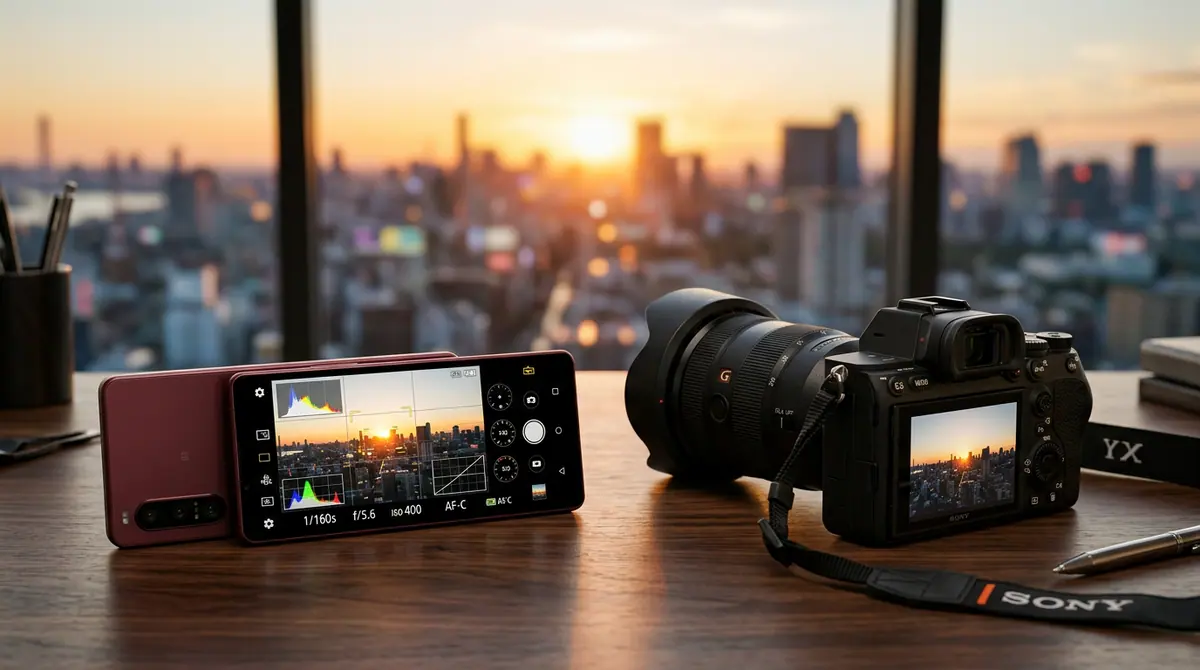
Key takeaways
- Sony Xperia 1 VIII prioritizes professional creator tools with a 4K 240Hz display and Alpha camera integration over mainstream appeal.
- Samsung is rumored to sacrifice camera megapixels in the Z Fold Wide to achieve a record-breaking slim design under 4mm.
- Apple is planning a major 'Liquid Glass' UI refresh for iOS 27 to counter the growing AI capabilities of Android's Gemini integration.
- Google's improved 'Switch to Android' tools are making it significantly easier for iPhone users to migrate data, including WhatsApp history.
The Professional Pivot in Your Pocket
In an era where every smartphone looks like a glass slab and performs almost identically, Sony has decided to stop playing the popularity contest and start building a specialized tool for the elite. The newly launched Sony Xperia 1 VIII is not just another flagship; it is a $1,400 statement of intent that challenges the dominance of the iPhone 15 Pro Max and the Galaxy S25 Ultra by doubling down on professional-grade hardware that most manufacturers have abandoned. While Apple focuses on AI-driven simplicity and Samsung grapples with the physical limits of foldable screens, Sony is betting that there is a massive, underserved market of creators who want a smartphone that feels like a professional cinema camera.
The Xperia 1 VIII: A Beast by Design
The latest flagship from the Japanese tech giant represents a significant departure from its predecessor. According to a hands-on review by GSMArena published on May 10, 2026, the device features a striking 6.5-inch 4K LTPO OLED display that can scale from 1Hz all the way to a blistering 240Hz. This puts it ahead of most competitors, including the standard 120Hz screens found on the latest iPhones. Tech Advisor recently highlighted the biggest aesthetic change: a redesigned square camera module and a unique ORE texture on the frame for better grip during intensive filming sessions.
The internal specifications are equally formidable. Powered by the Snapdragon 8 Elite Gen 5 chipset, the device is built for heavy lifting. NotebookCheck reports that Sony has replaced the previous model’s variable zoom lens with a fixed 70mm prime telephoto sensor. While some critics initially labeled this a step back, the 48MP sensor provides significantly better low-light performance and natural bokeh than the older variable optics. Lab tests cited by GSMArena show a 20 percent gain in low-light efficiency over the previous generation, making it a powerhouse for night photography.
The Rivalry: Samsung and Apple Shift Focus
As Sony leans into hardware prowess, its biggest rivals are facing different challenges. Samsung is currently preparing the Galaxy Z Fold Wide, a device expected to redefine the foldable market with a thinner profile. However, internal supply chain leaks reported by GSMArena on May 12, 2026, suggest a major compromise: the Z Fold Wide will likely skip the 200MP sensor found in the S25 Ultra. Analysts at PhoneArena suggest this omission is necessary to keep the device under 4mm when unfolded, but it marks a clear divergence in strategy. Samsung is choosing portability and form factor over raw camera resolution.
Meanwhile, the world is looking toward Apple and the upcoming iOS 27. A report from 9to5Mac on May 13, 2026, details rumors of a Liquid Glass UI, which would be the most significant visual overhaul since iOS 7. While Sony focuses on the lens, Apple is focusing on the interface, integrating Apple Intelligence 2.0 to compete with Google’s Gemini. Mark Gurman noted in a Bloomberg newsletter that while the UI will be revolutionary, some features might be delayed in certain regions due to regulatory compliance, potentially giving Android manufacturers a window to capture more market share.
What Changed and Why It Matters
The Hardware Delta
The transition from the Xperia 1 VII to the VIII marks a shift from experimental tech to refined performance. The move to a fixed 70mm telephoto lens with a larger sensor proves that Sony is prioritizing image quality over marketing gimmicks. Additionally, the inclusion of a 5,200mAh battery and 65W charging addresses long-standing complaints about Sony's longevity. This matters because it creates a clear alternative for users who are tired of the software-heavy approach of the Google Pixel or the locked-down ecosystem of the iPhone.
The Industry Impact
For the average consumer, Sony’s persistence keeps the industry honest. If Sony can successfully market a phone with a headphone jack, a microSD slot, and a 4K display in 2026, it puts pressure on Apple and Samsung to stop removing features in the name of minimalism. However, the $1,399 price point remains a massive barrier. Android Authority recently analyzed the device as a niche pro tool, questioning if its best-in-class manual controls can justify the cost when the Galaxy S25 Ultra offers a more rounded consumer experience.
What to Watch Next
The mobile landscape is about to become even more competitive as Google simplifies the exit ramp from the Apple ecosystem. On May 13, 2026, 9to5Google reported that the updated Switch to Android app now features one-tap transfers for WhatsApp history and AI-powered app remapping. This tool, integrated into the upcoming Android 17, is designed specifically to lure iPhone users toward the Pixel 10 and other high-end Android devices like the Xperia 1 VIII. As switching becomes easier, the pressure on Apple to innovate with iOS 27 becomes even more intense. Keep an eye on the June 9 beta release of iPadOS and iOS 27, as it will likely dictate the narrative for the rest of the year.
Final Takeaway
The smartphone market has fractured into two distinct camps. On one side, we have the AI-first approach of Apple and Google, where the software does the thinking for you. On the other, we have Sony’s Xperia 1 VIII, which treats the smartphone as a high-precision instrument for those who want total control. Whether you choose the automated brilliance of a 200MP Samsung sensor or the manual precision of Sony’s Alpha-integrated optics, the message is clear: the hardware wars are far from over, and the choices for power users have never been better.
Discussion (0)
Commenting as
No comments yet. Be the first to share your thoughts!
The discussion could not be loaded. Please refresh the page.
Education technology researcher and policy analyst


