
Siri’s Silent Treatment: Apple Agrees to $250 Million AI Misstep Settlement
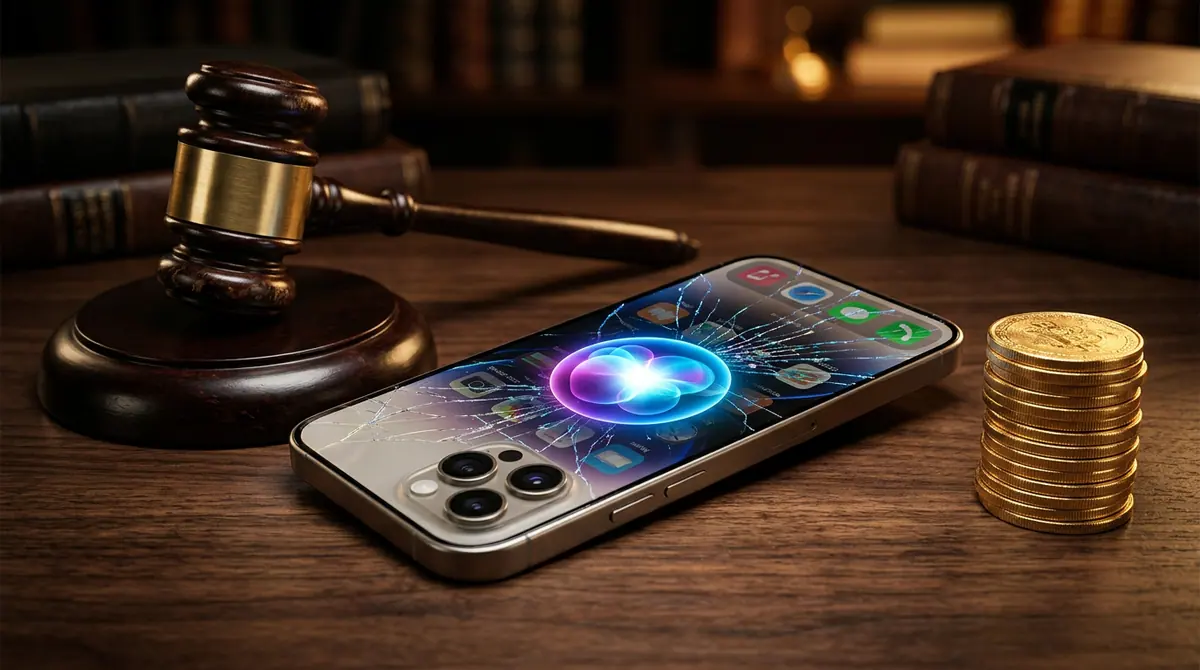
Apple just agreed to a massive $250 million settlement over claims it overhyped Siri's AI. Here is what it means for your iPhone 15 or 16 and how to get your payout.
Key takeaways
- Apple settled a $250M class-action lawsuit regarding delayed Siri and Apple Intelligence features promised for the iPhone 15 and 16.
- U.S. consumers who bought eligible devices between June 2024 and March 2025 could receive $25 to $95 per device.
- The settlement highlights a growing industry trend where tech giants are being held accountable for 'vaporware' marketing in the AI space.
The High Cost of Artificial Intelligence
The iPhone 15 and 16 were marketed with the promise of a genius-level Siri, but the reality left many users talking to a digital assistant that felt stuck in the past. According to a report by 9to5Mac on May 7, 2026, Apple has finally reached a $250 million class-action settlement to resolve claims of false advertising related to these delayed AI-enhanced features. As first reported by the Financial Times, the lawsuit alleged that Apple overhyped its Apple Intelligence capabilities, particularly the Siri upgrades showcased at WWDC 2024, to drive sales of the iPhone 15 and 16 series.
While Apple has denied any wrongdoing, the company chose to settle to avoid prolonged litigation ahead of its upcoming developer conference. TechCrunch notes that the lawsuit focused on the gap between marketing and reality. Features like contextual understanding and the integration of third-party large language models, such as Google Gemini, remain incomplete even as we approach the summer of 2026. This settlement marks a rare moment of accountability for the tech giant in the rapidly moving world of generative AI.
What Changed and What is New
For the past two years, the smartphone industry has been gripped by an AI arms race. Apple attempted to seize the narrative in 2024 by promising a revolutionary overhaul of Siri that would rival ChatGPT. However, as the 9to5Mac report details, those features were consistently delayed. What is new here is the legal precedent: a major tech company is being held financially responsible for "vaporware" marketing in the AI era. While iOS 18.5 recently added minor tweaks, the heavy lifting of Siri 2.0 is now expected to be the centerpiece of iOS 19, which is likely to be unveiled at WWDC 2026 on June 8.
Why It Matters: The End of Overpromising
This settlement is more than just a line item on a balance sheet; it is a signal to the entire mobile industry. Analysts at Wedbush Securities told The Verge that while $250 million is a drop in the bucket for a company with a 2.5 trillion dollar valuation, the reputational risk is significant. Consumers are becoming wary of buying hardware based on software promises that might not materialize for months or years. If you bought an iPhone 15 or 16 believing you were getting a next-generation AI companion, this settlement is a validation of your frustration.
The rivalry with Android adds another layer of complexity. While Apple settles lawsuits, Google is refining the user experience of its own AI. Android Authority reported on May 6, 2026, that Google’s Gemini app is adopting a new "speckly" particle animation across both iOS and Android to unify its look and feel. This small design touch reflects a broader trend: Google is moving fast to make AI feel tangible and responsive, whereas Apple is currently playing defense in the courtroom.
What This Means for You: How to Claim Your Payout
If you purchased an iPhone 15 or iPhone 16 in the United States between June 10, 2024, and March 29, 2025, you might be eligible for a piece of this settlement. According to legal experts cited by Bloomberg Law, eligible claimants could receive between $25 and $95 per device. The payout process is expected to begin with notifications on August 7, 2026, followed by a 90-day window to file claims. If you are a power user who felt misled by the initial Apple Intelligence reveal, this is a practical way to recoup some of that premium price tag.
The Rivalry Angle: Android’s Play for Hearts (and Moms)
While Apple deals with Siri's growing pains, Android manufacturers are leaning into practical features and aggressive pricing. Samsung is currently offering a massive $400 discount on the Galaxy Z Fold 7 for Mother’s Day, as reported by Android Authority. This brings the cutting-edge foldable down to a more manageable $1,699, directly challenging the iPhone’s dominance in the premium market. Furthermore, data from major carriers like Verizon and T-Mobile shows that 75 percent of Americans now prefer texting their mothers over calling, a shift driven by the improved RCS messaging experience that Apple was forced to adopt in iOS 18. This convergence of features means the "green bubble versus blue bubble" war is cooling, leaving AI as the new primary battleground.
What to Watch Next
All eyes are now on June 8, 2026. This is the date Apple is expected to kick off WWDC 2026 and finally deliver on the promises made two years ago. We are watching for the reveal of iOS 19, which rumors suggest will include a much-improved Apple Notes app with collaborative real-time editing and AI-powered summaries. If Apple fails to impress this time, no amount of settlement money will be enough to restore consumer confidence in its AI vision. The era of selling a dream is over; Apple now has to ship the reality.
Takeaway
Apple’s $250 million settlement is a sobering reminder that even the world’s most powerful brand cannot indefinitely market features that do not exist. As the iPhone 17 Fold rumors begin to swirl and Android continues to iterate with Gemini, Apple’s focus must shift from marketing hype to functional excellence. For now, check your purchase dates, keep an eye on your inbox this August, and remember that in the world of mobile tech, the best features are the ones you can actually use today.
Discussion (0)
Commenting as
No comments yet. Be the first to share your thoughts!
The discussion could not be loaded. Please refresh the page.
Innovation correspondent with 10 years in Silicon Valley


