HTC’s $535 Gamble: Can the Vive Eagle Dethrone Meta’s Smart Glass Empire?
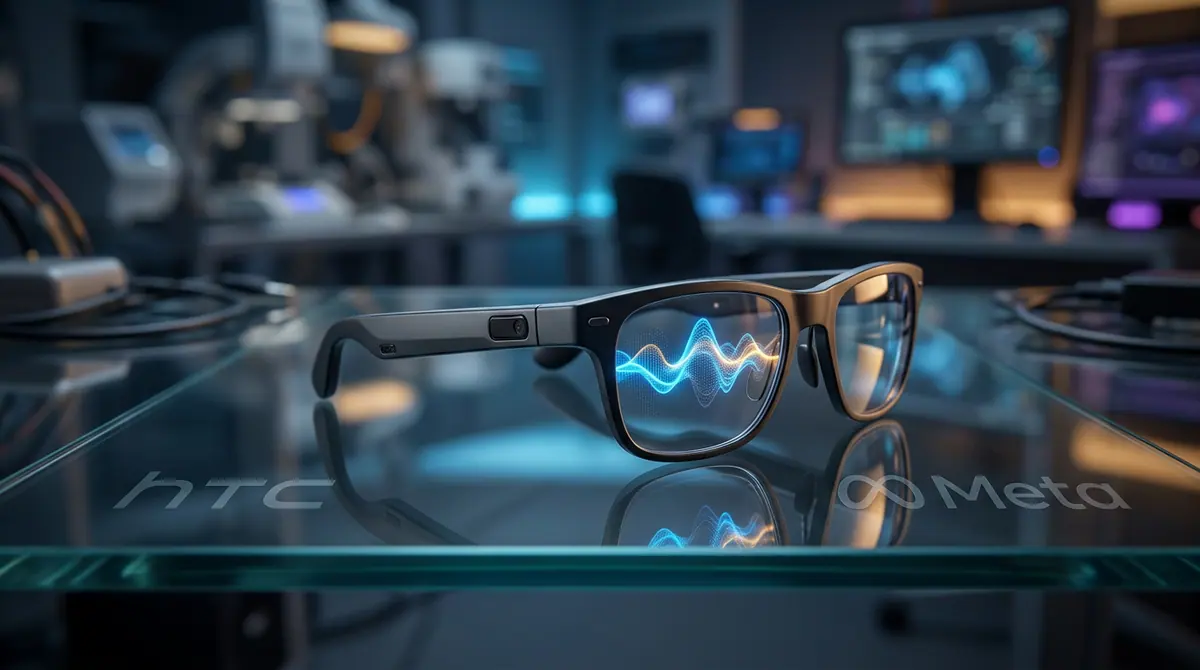
HTC just launched the Vive Eagle to take on Meta's dominant smart glasses. With a higher price tag and identical specs, can it survive the AI hardware war?
Key takeaways
- HTC Vive Eagle matches Ray-Ban Meta in specs (Snapdragon AR1 Gen 1, 12MP camera) but costs significantly more at approximately $535.
- Meta currently dominates the market with an 80% share and has recently launched a more affordable $299 in-house model to solidify its lead.
- The smart glasses industry is shifting away from bulky AR displays toward 'displayless' AI-powered frames that prioritize audio and camera functionality.
- HTC's success in the global market will likely depend on whether it can justify its price premium through superior battery life or software features.
The War for Your Face Just Got Much More Expensive
The battle for the future of mobile technology has officially moved from our pockets to our eyes. For years, the smart glasses market was a niche playground for enthusiasts, but the rivalry between tech giants is reaching a fever pitch. HTC, once a titan of the smartphone world, is attempting a bold comeback with the Vive Eagle, a pair of smart glasses designed to go head-to-head with the Ray-Ban Meta. However, the price of admission for HTC's vision of the future is remarkably high, leaving many to wonder if the company is bringing a premium price tag to a price-sensitive fight.
The Vive Eagle: High Specs and a Higher Price
According to a detailed report from Gizmodo, the HTC Vive Eagle is positioned as a direct answer to the Ray-Ban Meta. Under the hood, the Eagle is impressive. It utilizes the Qualcomm Snapdragon AR1 Gen 1 chipset, featuring 32GB of internal storage and a pair of 12-megapixel ultrawide cameras. For those familiar with the Ray-Ban Meta, these specifications will look nearly identical. The device also includes twin speakers in each arm and connects to a sophisticated AI assistant capable of recognizing objects, reading text, and even assisting with translations.
The friction begins with the cost. While the base Ray-Ban Meta (Gen 2) retails for approximately $379, the Vive Eagle is launching in Taiwan for roughly $535. This creates a $156 premium for a device that essentially mirrors its competitor's hardware layout. Industry analysts, as noted in reports from Yahoo Finance, suggest that this pricing could be a significant hurdle. HTC does not have the massive scale of Meta, nor does it have the fashion-forward branding that comes with the Ray-Ban partnership, making that $535 price point a difficult sell for the average consumer.
Context: The Rise of the Displayless AI Wearable
In a surprising shift for the industry, the most popular smart glasses on the market today do not actually have screens. Instead of projecting a digital image onto your field of view, these devices focus on being an AI-powered interface for your life. They use cameras to see what you see and microphones to hear what you hear, allowing an AI assistant to provide real-time information through audio. This pivot away from heavy, power-hungry displays has allowed glasses to look like regular eyewear, which is the primary reason the Ray-Ban Meta has seen such widespread adoption.
Meta’s Aggressive Counter-Strategy
While HTC prepares its launch, Meta is not sitting still. CNBC reported in June 2026 that Meta has launched a new, even more affordable line simply called Meta Glasses. Starting at just $299, these in-house frames lack the Ray-Ban branding but offer the same core technology. By undercutting its own premium line, Meta is clearly attempting to lock down the market before competitors like HTC can gain a foothold. Currently, Meta and its partner EssilorLuxottica control a staggering 80 percent of the smart glasses market, according to industry estimates.
For those who want more than just audio and cameras, the competition remains fierce. Rokid, a prominent player in the space, offers glasses with a full heads-up display for $599. As ZDNet reported, some reviewers argue that if you are going to spend nearly $600, you might as well get a device that includes a visual display, further squeezing the Vive Eagle between Meta's affordable audio-only glasses and Rokid's high-functionality visual glasses.
What Changed: The Shift to General Consumer AI
In previous years, smart glasses were marketed as tools for enterprise or high-end gaming. What has changed in 2026 is the democratization of AI within the frame. The focus has moved from augmented reality visuals to ambient intelligence. The Vive Eagle and the newest Meta Glasses prioritize 4.5 hours of music playback and instant AI text recognition over complex holographic displays. This reflects a broader industry realization: users want a lighter, more stylish device that helps them navigate the real world, rather than a bulky headset that replaces it.
Why It Matters to You
The rivalry between HTC and Meta is more than just a corporate spat; it represents a fundamental shift in how we will interact with the internet. If HTC succeeds despite its higher price, it proves that there is a market for high-quality, independent hardware that is not tied to the Facebook ecosystem. If Meta continues its dominance, we may see a future where our visual and auditory data is channeled primarily through a single social media giant. For students and professionals, these devices offer a new way to record lectures, translate documents on the fly, and stay connected without staring at a smartphone screen.
What to Watch Next: The Global Rollout
While the Vive Eagle is currently exclusive to Taiwan with a September launch date, the tech world is waiting to see if HTC will adjust its pricing for a US or European release. To compete with Meta's $299 and $379 price points, HTC may need to bundle the glasses with unique software services or prove that its battery life and audio quality are vastly superior. Furthermore, with rumors of Apple exploring the smart glasses space, the current $300 to $500 price bracket may soon become the battleground for the next great mobile computing platform. If you are in the market for smart eyewear, the next six months will likely bring a wave of new options and potentially some aggressive holiday price cuts.
Takeaway
The HTC Vive Eagle is a powerful, well-designed piece of technology that finds itself in a precarious market position. While its specs are top-tier, the aggressive pricing from Meta makes the Eagle an underdog from day one. However, in the world of mobile tech, being the underdog often leads to the most exciting innovations. Whether you choose the fashion-first Ray-Bans or the spec-heavy Vive Eagle, one thing is certain: the future of the smartphone is moving to your face, and the competition is just getting started.
Discussion (0)
Commenting as
No comments yet. Be the first to share your thoughts!
The discussion could not be loaded. Please refresh the page.
Education technology researcher and policy analyst