
Apple’s Great Divorce: Why the iPhone Is Returning to Samsung and Intel
Nvidia just stole Apple's crown as TSMC's top priority, forcing the iPhone maker back into the arms of its oldest rivals to secure the future of mobile silicon.
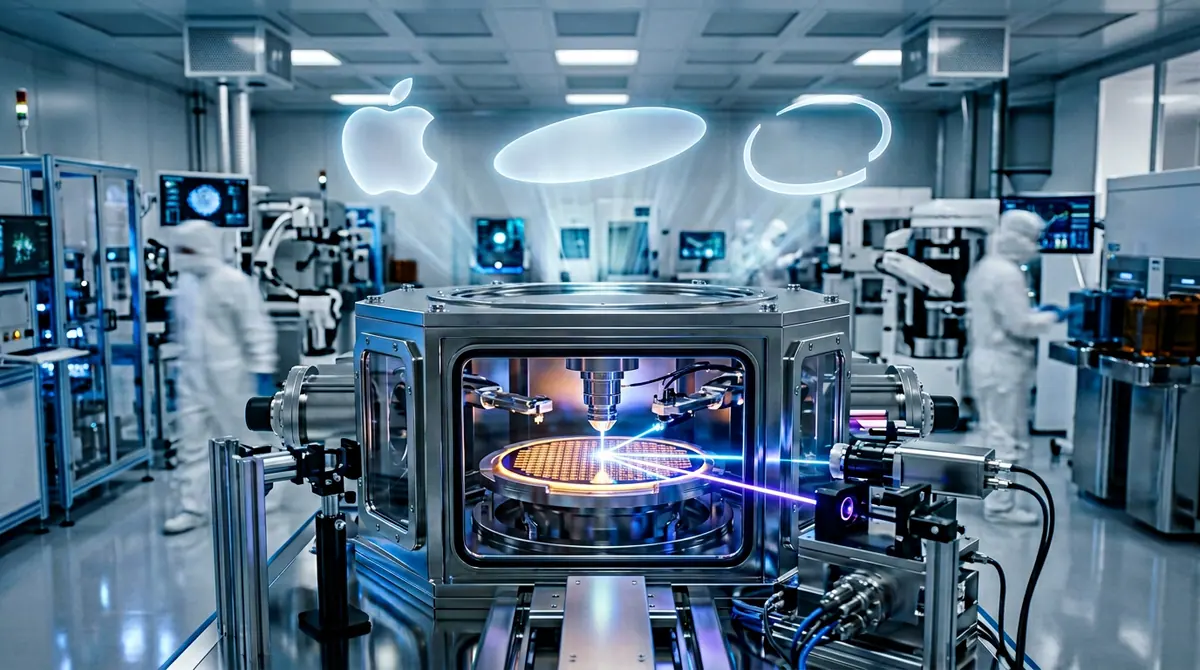
Key takeaways
- Apple is ending its exclusive reliance on TSMC for chip manufacturing due to increased competition for capacity from Nvidia.
- The company is in early-stage talks with Samsung and Intel to produce future iPhone and Mac processors, potentially as early as 2026.
- Samsung has already broken Sony's decade-long monopoly on iPhone camera sensors through a new manufacturing deal.
- Geopolitical risks and US-based manufacturing incentives are driving Apple toward Intel's and Samsung's Texas and Arizona facilities.
The Unthinkable Reunion
For the last decade, the relationship between Apple and the Taiwan Semiconductor Manufacturing Company, better known as TSMC, has been the most successful marriage in the history of technology. However, a massive shift in the silicon landscape is forcing Apple to look for a way out. According to a report from Bloomberg, Apple is currently exploring strategic partnerships with its two biggest historical rivals: Samsung Electronics and Intel. This is not just a minor supply chain adjustment; it is a seismic shift in how the world's most popular smartphone is built.
The Nvidia Factor: Why TSMC is Suddenly Crowded
For years, Apple was the undisputed king of TSMC's factories, always getting the first crack at the latest 3-nanometer or 2-nanometer process nodes. But the AI gold rush has changed the hierarchy. Researchers at SemiAnalysis have noted that Nvidia has reportedly overtaken Apple as TSMC's largest and most important customer. With Nvidia demanding every available scrap of manufacturing capacity to build AI chips for data centers, Apple is finding itself in an unfamiliar position: waiting in line. To ensure that future iPhones and Macs aren't delayed by these capacity constraints, Apple executives have reportedly visited Samsung's advanced manufacturing facility in Taylor, Texas, to discuss a potential return to the Korean giant’s foundry.
What Is New: The End of the Sony Monopoly
While the talks about processors are still in the early stages, one major wall has already crumbled. According to reporting from SemiAnalysis, Apple has signed a strategic deal with Samsung Foundry to manufacture advanced CMOS Image Sensors for the iPhone. This is a monumental shift that breaks Sony's decade-long exclusivity as the sole provider of iPhone camera sensors. This move serves as a trial run, allowing Apple to test Samsung’s manufacturing reliability at its Austin, Texas, facilities before potentially trusting them with the A-series chips that power the entire iPhone ecosystem. This diversification is already paying dividends, as GSMArena reports that the iPhone 17 has officially claimed the title of the best-selling smartphone globally in the first quarter of 2026, a feat that requires a perfectly oiled supply chain.
The Intel Wildcard
Perhaps even more surprising than a return to Samsung is Apple’s renewed interest in Intel. After Apple famously ditched Intel processors in favor of its own M-series silicon, the relationship seemed dead. However, Intel's new focus on becoming a dedicated foundry for other companies has caught Apple’s eye. Analysts at GF Securities suggest that Intel’s 18A-P manufacturing process, which is expected to begin shipping in late 2026, represents the first technically viable alternative to TSMC that Apple has seen in a decade. While the flagship iPhone chips will likely stay with TSMC for now, Intel could begin producing non-critical components or entry-level processors for the MacBook lineup as early as 2027.
Context Box: The History of the Rivalry
Between 2010 and 2014, Apple and Samsung were locked in a complex relationship where Samsung manufactured the iPhone's chips while simultaneously competing with Apple in the smartphone market. Apple eventually moved all production to TSMC in 2016 due to concerns over Samsung's chip efficiency and thermal performance. This period of TSMC exclusivity allowed Apple to pull significantly ahead of the Android world in raw performance, a gap that competitors have only recently begun to close.
Why It Matters for You
For the average user, this diversification is about one thing: availability. If Apple stays tied exclusively to TSMC while Nvidia and AMD take up all the space, we could see iPhone shortages or significant price hikes. By bringing Samsung and Intel back into the fold, Apple creates a competitive environment where these three giants must fight for Apple's business by offering better yields and lower prices. It also helps Apple navigate the complex world of international trade. As Tom's Hardware points out, leveraging Samsung’s and Intel’s facilities in the United States helps Apple mitigate risks associated with geopolitical tensions in the Taiwan Strait.
What to Watch Next
Expect a phased transition. Apple is unlikely to move its most advanced A-series chips away from TSMC immediately because the risk of a technical failure is too high. Instead, look for Apple to outsource secondary chips like power management components or display drivers to Samsung and Intel first. The real test will come in 2028. If Intel’s 14A process node meets its performance targets, we might see a world where the iPhone 20 features a processor "Made in the USA" by Intel, marking the final evolution of Apple's quest for supply chain independence. For now, the iPhone remains the king of the hill, but the hands that build it are about to change forever.
Sources (7)
Discussion (0)
Commenting as
No comments yet. Be the first to share your thoughts!
The discussion could not be loaded. Please refresh the page.
Open source advocate and full-stack developer


