AirPods Just Gained a Brain: The iOS 27 Revolution and the End of Generic Audio
Apple is finally breaking its 'one-size-fits-all' audio rule. From Custom EQ to Siri AI integration, the new AirPods beta reveals a future where your earbuds are your health coach and AI assistant.
Key takeaways
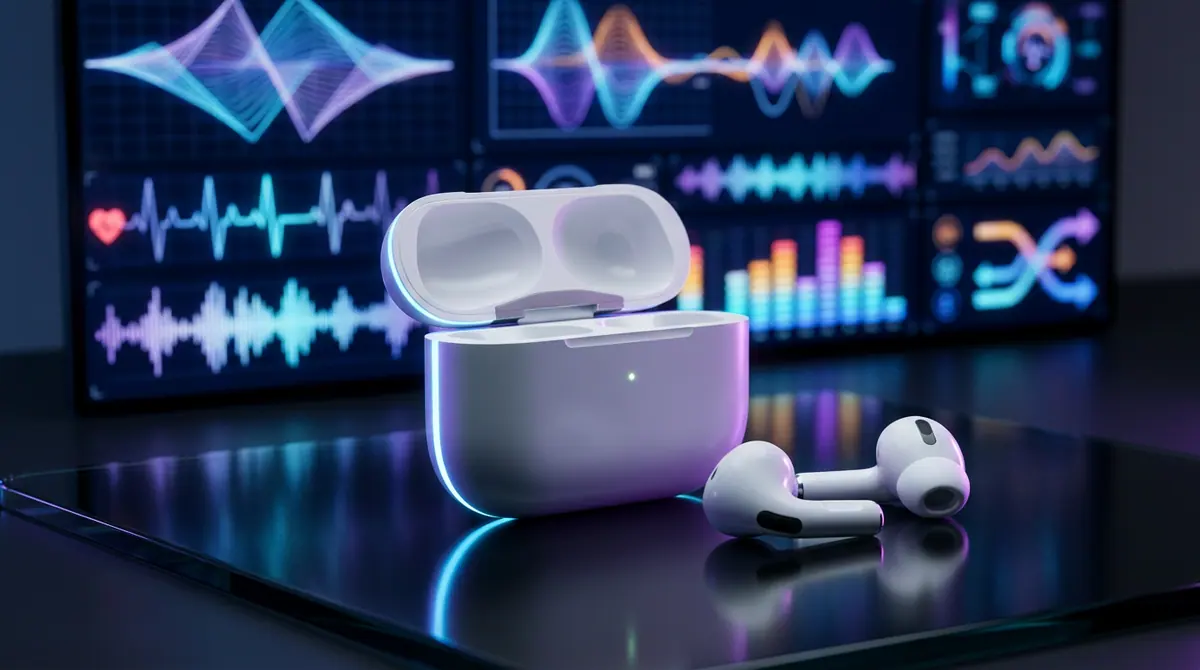
- Apple is finally introducing Custom EQ settings in the iOS 27 beta, allowing manual control over bass, midrange, and treble.
- AirPods Pro 3 now supports heart rate monitoring for 50 workout types, integrating directly with the Fitness app and GymKit equipment.
- Siri AI integration turns the AirPods into a powerful voice-first interface for generative AI tasks, moving beyond simple voice commands.
The Great Audio Personalization Pivot
For years, Apple has maintained a paternalistic stance on how your music should sound. You were given a series of presets, or you could simply trust the Adaptive EQ to do the heavy lifting. That era is officially ending. In the latest iOS 27 developer beta, Apple has finally introduced a feature that Android users have enjoyed for a decade: a fully customizable Equalizer. According to technical reports from MacRumors, the new firmware allows users to manually adjust bass, midrange, and treble, marking a fundamental shift in Apple's philosophy toward user agency in the audio experience.
This is not just about making your music thump a bit harder. It is part of a broader software strategy, identified by industry analysts at 9to5Mac, to turn the AirPods from a simple peripheral into a standalone computing platform. The new firmware, build 8B5034f, targets the AirPods Pro 3, Pro 2, and the new AirPods 4, bridging the gap between hardware and the upcoming Liquid Glass UI refinements of the next-generation operating system.
Siri AI and the Rise of the Hearable
The most profound change hidden within the iOS 27 beta is the integration of Siri AI. As Forbes recently highlighted, this update transforms AirPods into a primary interface for voice commands and text generation. Instead of just being a microphone for your phone, the AirPods now act as a low-latency conduit for a significantly more powerful, generative Siri. This puts Apple in direct competition with Google’s Gemini-powered Buds, creating a high-stakes rivalry over who can provide the most seamless 'heads-up' digital assistant.
Privacy advocates have raised eyebrows at this development. Because the new Siri AI integration and GymKit sync require deeper access to biometric data, there are ongoing discussions regarding how this information is handled between the AirPods and third-party gym equipment. However, for the average user, the convenience of having a heart-rate-sensing earbud that talks to your treadmill is a compelling trade-off. Researchers at Apple have already verified that the AirPods Pro 3 can now support heart rate monitoring for up to 50 distinct workout types within the Fitness app, according to official Apple Support documentation.
Context: The AirPods Evolution
For newcomers to the ecosystem, the AirPods have evolved from a simple wireless version of EarPods in 2016 to a sophisticated health and audio device today. While early models focused on connectivity, the H2 chip era brought active noise cancellation and spatial audio. The current transition to iOS 27 and the H3 chip architecture (found in the Pro 3) focuses on 'intelligence' and 'biometrics,' effectively turning the earbuds into a wearable health monitor that rivals the Apple Watch in specific tracking metrics.
What Changed: The Delta from iOS 26 to iOS 27
The leap from the current firmware to the iOS 27 beta is substantial. Previously, AirPods settings were tucked away in a sub-menu that felt like an afterthought. The new beta introduces a redesigned interface with distinct sections on both iPhone and Mac, making it easier to manage multiple devices. Additionally, the Precision Finding feature has been expanded. As noted in recent reports by Apple Insider, users can now use a compatible Apple Watch to track down an AirPods Pro 3 charging case with centimeter-level accuracy, a feature that addresses one of the most common complaints among mobile users.
Why It Matters
This update signals that the smartphone rivalry is moving away from the screen and toward the ears. While Samsung and Sony have long offered superior manual EQ controls, Apple is leveraging its ecosystem to offer a more holistic experience. By syncing heart rate data directly from your ears to your gym equipment via GymKit, Apple is creating a 'stickiness' that makes it incredibly difficult for users to switch to Android. It is a brilliant, if somewhat aggressive, strategy to maintain market dominance in the premium wearable space.
What to Watch Next
The road ahead is even more futuristic. Bloomberg recently reported that Apple is already testing camera-equipped AirPods, slated for a late 2027 release to coincide with the 20th anniversary of the iPhone. These would likely use infrared sensors to 'see' the environment, aiding in spatial computing and accessibility. For now, the focus remains on the public release of iOS 27, expected in September 2026. If you are a developer, you can toggle the beta updates in your System Settings today, but for everyone else, the wait for a smarter, more personal sound is nearly over.
The takeaway is clear: the AirPods are no longer just for music. They are your next health tracker, your AI interface, and soon, perhaps your eyes in the back of your head. If you have been on the fence between the latest Android buds and the AirPods Pro 3, the sheer intelligence of Apple's new software stack might just tip the scales.
Sources (6)
Discussion (0)
Commenting as
No comments yet. Be the first to share your thoughts!
The discussion could not be loaded. Please refresh the page.
Robotics and automation industry analyst