AI Wars 2026: Why Your Choice of Phone is Now a Choice of Brains
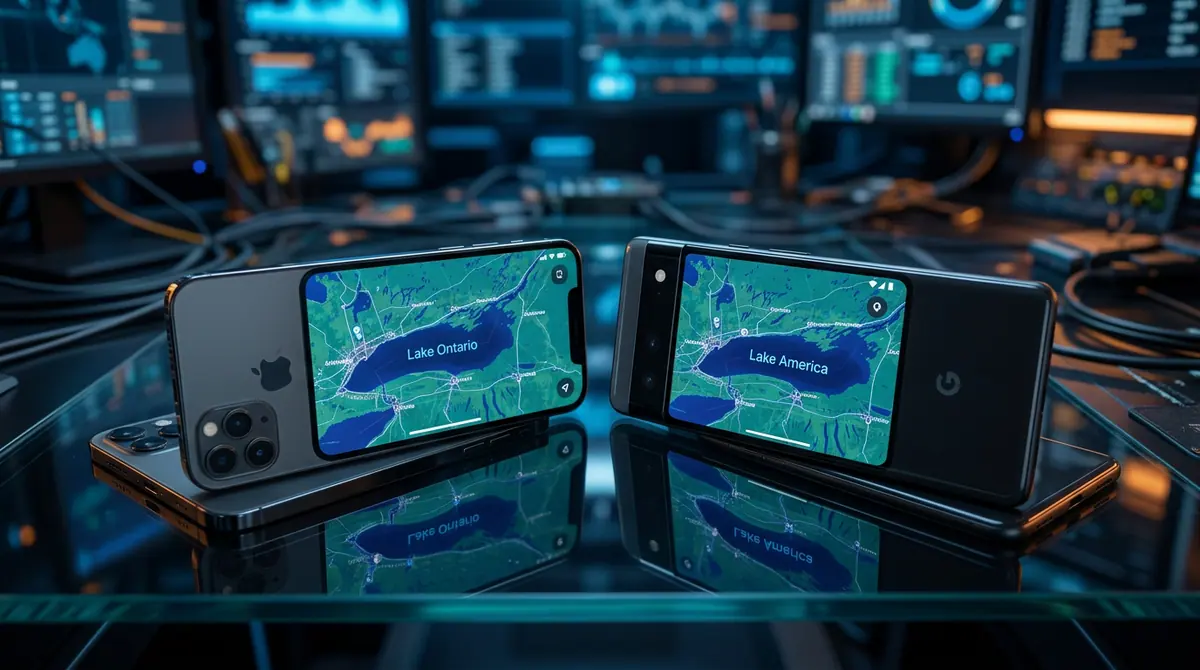
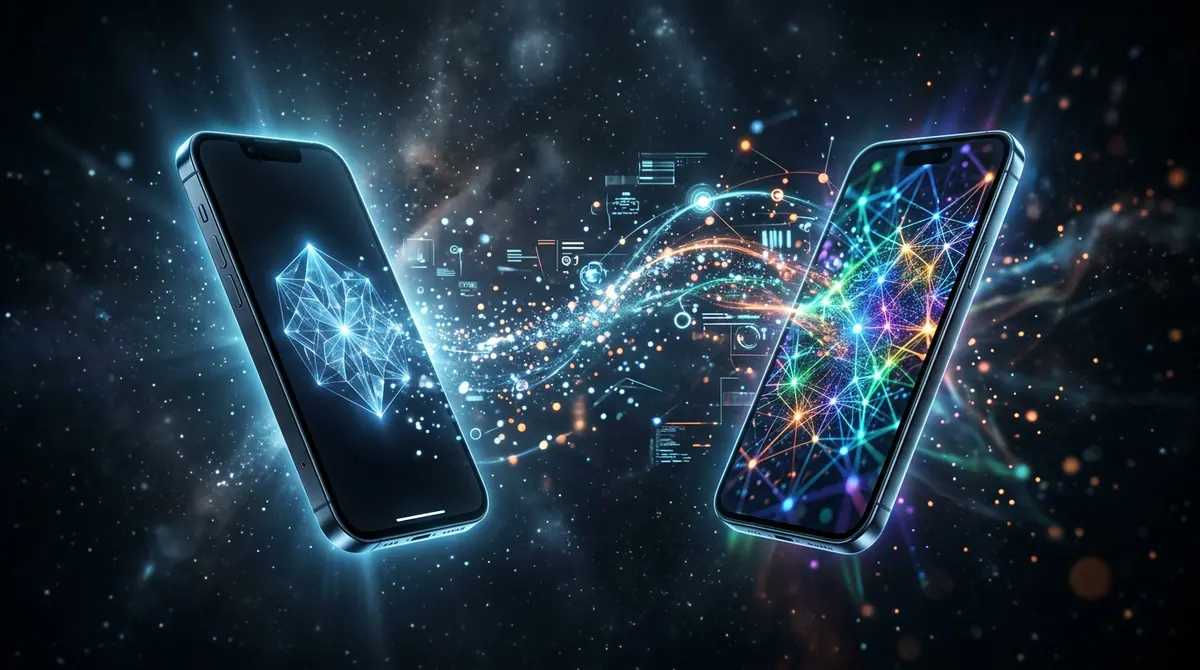
The iPhone versus Android debate has evolved from screen sizes to silicon souls. As of June 2026, the real battle is between Apple Intelligence and Google Gemini.
Key takeaways
- The iPhone vs Android rivalry has shifted from hardware specs to the capabilities and privacy of their integrated AI models.
- Apple focuses on 'Private Cloud Compute' to maintain its privacy-first reputation while offering advanced AI features.
- Google leverages its vast data ecosystem to make Gemini a more knowledgeable and context-aware assistant compared to Siri.
- The 2026 smartphone market is defined by 'Generative Operating Systems' that predict user needs rather than just hosting apps.
- Hardware requirements for on-device AI are accelerating the obsolescence of older smartphones, forcing a faster upgrade cycle.
The Ghost in the Machine
Your smartphone is no longer a mere communication tool; it is a ghostwriter, a personal assistant, and a creative director living in your pocket. As we cross the midpoint of 2026, the legendary rivalry between iPhone and Android has moved past the trivialities of megapixel counts and screen refresh rates. According to a recent market analysis by IDC, over 85 percent of premium smartphones shipped this year feature dedicated AI hardware capable of trillions of operations per second. We have officially entered the era of the ‘Cognitive Smartphone,’ where the software does not just run apps, it anticipates your intentions.
Context: The Evolution of the Rivalry
For over a decade, the iPhone versus Android debate was defined by ecosystem lock-in and hardware aesthetics. Apple focused on a walled garden and premium materials, while Android, led by Samsung and Google, pushed the boundaries of display technology and customization. However, the release of generative AI models changed the trajectory of both platforms. Today, the choice between an iPhone 17 and a Pixel 10 or Galaxy S26 is less about the hardware and more about which artificial intelligence you trust to manage your digital life.
Apple Intelligence: The Privacy Fortress
Apple continues to double down on its strategy of on-device processing. During the WWDC 2026 keynote, Apple executives highlighted their new Private Cloud Compute infrastructure, which ensures that complex AI tasks that cannot be handled on the iPhone are processed on dedicated Apple Silicon servers without ever storing user data. This approach has resonated with privacy-conscious consumers who are wary of large-scale data harvesting. The integration of Siri with more advanced Large Language Models has finally turned the once-mocked assistant into a proactive companion that can summarize emails, edit photos with natural language commands, and even manage complex scheduling across multiple third-party apps.
Google Gemini: The Knowledge Powerhouse
On the other side of the fence, Google has leveraged its massive data advantage to make Gemini the most capable knowledge engine on the planet. According to a technical deep dive published by The Verge last month, Google’s latest Gemini 2.5 Pro model on Android devices demonstrates a superior ability to understand context across different Google services. If you use Google Workspace for work and Gmail for personal use, the Android experience remains unmatched in its ability to synthesize information from your entire digital footprint. Samsung has also joined this fray, layering its Galaxy AI features on top of Google’s foundation, offering unique tools like real-time holographic translation during video calls, a feature that was once the stuff of science fiction.
What Changed: The Shift to Generative OS
What is new in 2026 is the ‘Generative Operating System.’ In previous years, AI was an add-on or a specific app feature. Now, the OS itself is built around a predictive engine. According to a report from Bloomberg, both Apple and Google have redesigned their home screens to be dynamic. Instead of a grid of static icons, your phone now presents ‘intent-based widgets’ that change based on your location, the time of day, and your recent conversations. If your phone knows you have a flight in two hours, the entire interface shifts to prioritize boarding passes, gate updates, and ride-sharing shortcuts without you lifting a finger.
Why It Matters: The End of the Learning Curve
This matters because it represents the first major shift in how humans interact with computers since the introduction of the multi-touch interface in 2007. We are moving away from ‘learning how to use a phone’ toward ‘the phone learning how to assist the user.’ For students, this means having a tutor that understands their specific curriculum. For professionals, it means an automated secretary that can draft perfectly toned replies based on years of previous correspondence. The barrier between intention and action is effectively being erased.
The Hardware Catch-22
Despite the focus on software, the hardware requirements for these AI features have created a new divide. Research published by Counterpoint Research indicates that older devices are being left behind faster than ever before. To run these localized models, phones now require a minimum of 12GB of RAM, a threshold that many mid-range devices from just two years ago cannot meet. This has led to a surge in trade-in programs as users realize that their ‘old’ hardware simply cannot keep up with the intelligence of the modern web.
What to Watch Next: The Rise of the Foldables and Wearables
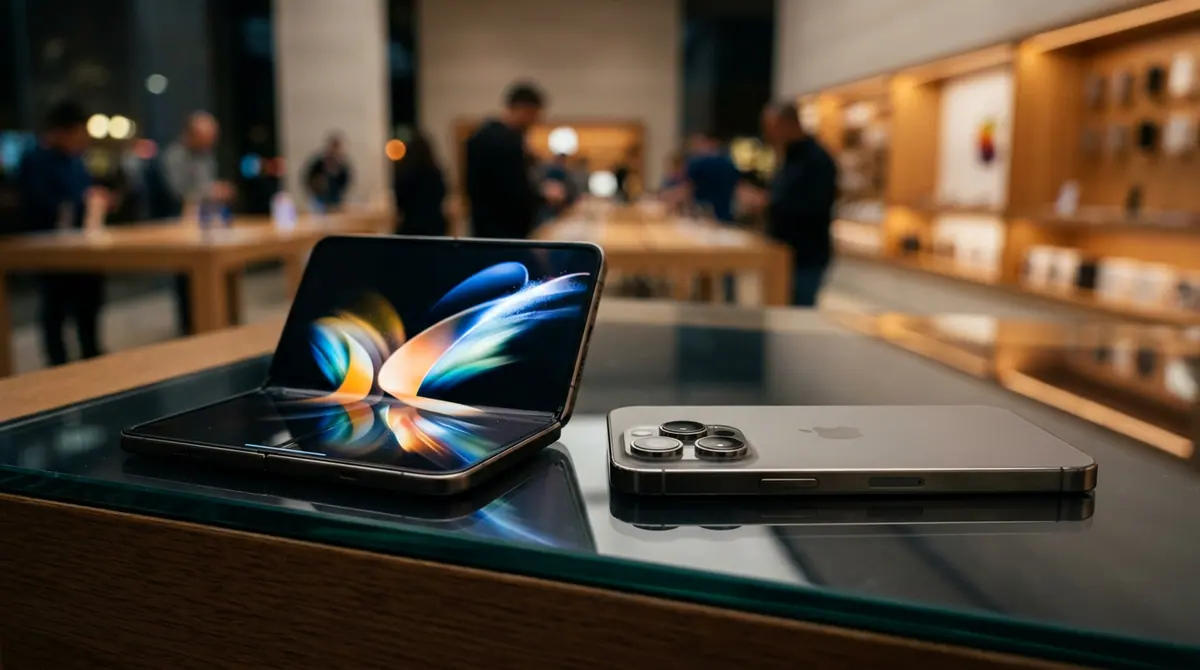
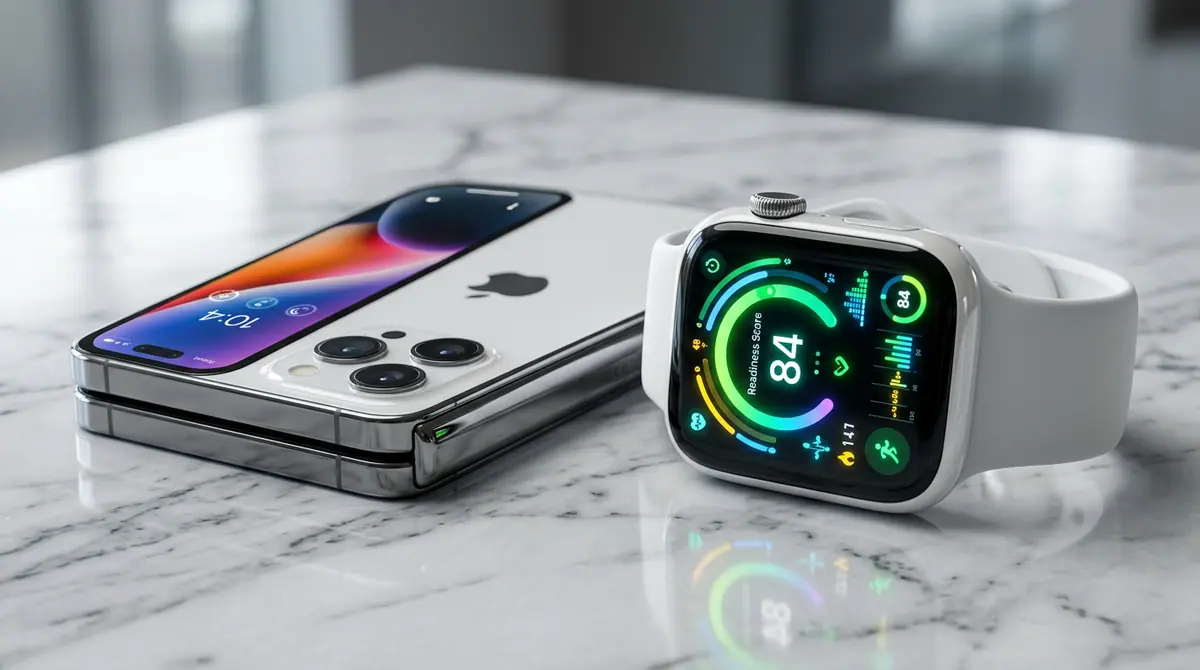
Looking ahead, the industry is closely watching how AI will integrate with the maturing foldable market. Rumors from supply chain analysts at DigiTimes suggest that Apple may finally debut a foldable ‘iPhone Ultra’ in late 2026, specifically designed to take advantage of multi-window AI multitasking. Furthermore, the integration of these phone-based AI ‘brains’ with smart glasses is the next logical step. We expect to see a tighter synergy where your phone acts as the processing hub for augmented reality displays that overlay AI-generated information onto the real world.
Conclusion: Choosing Your Digital Partner
The rivalry between iPhone and Android is no longer a matter of which phone is better, but which philosophy you prefer. Apple offers a curated, private, and deeply integrated experience that prioritizes security and ease of use. Android offers a more open, data-rich, and highly capable environment that rewards those who live within the Google or Samsung ecosystems. As these devices become more intelligent, they become more like partners than tools. Choose wisely, because your phone is about to know you better than you know yourself.
Discussion (0)
Commenting as
No comments yet. Be the first to share your thoughts!
The discussion could not be loaded. Please refresh the page.
AI researcher turned science communicator