
Your Family’s $300 Stake: OpenAI Proposes Giving the U.S. Government a 5% Share
OpenAI just proposed a plan that would give every American household a roughly $320 stake in the company. Could this $42 billion move redefine the relationship between AI and the public?
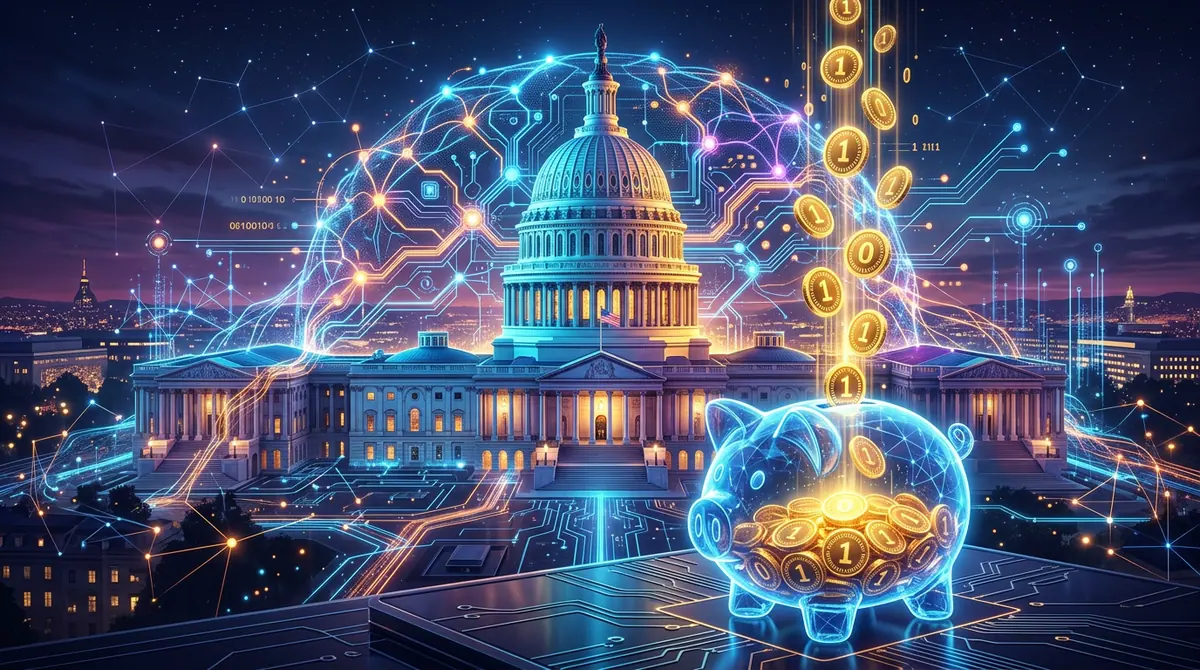
Key takeaways
- OpenAI has proposed giving the U.S. government a 5% equity stake worth approximately $42.6 billion.
- The stake would value the company at $852 billion, translating to roughly $320 per American household.
- This move is designed to mitigate political and regulatory pressure while OpenAI aims for a $1 trillion valuation before its IPO.
- The proposal represents a major shift in how AI companies view their social and economic obligations to the public.
The $42 Billion Handshake
What if the next time a tech giant went public, you already owned a piece of it? In a move that could fundamentally redefine the relationship between Silicon Valley and the American public, OpenAI has reportedly proposed giving the United States government a 5 percent stake in the company. At its current valuation of 852 billion dollars, this equity would be worth roughly 42.6 billion dollars. If distributed equally across the approximately 133 million households in the country, it would equate to about 320 dollars per family.
According to a report by MIT Technology Review, the proposal is framed as a way for the public to share in the economic upside of artificial intelligence while simultaneously easing the mounting political pressure facing the company. As OpenAI prepares for an eventual initial public offering, or IPO, the company is looking for ways to align its success with the national interest. This strategy comes at a time when regulators and lawmakers are increasingly skeptical of the immense power concentrated within a handful of AI laboratories.
The Math Behind the Momentum
OpenAI has seen its valuation skyrocket in recent years. Following a record-breaking funding round in early 2025, the company reached its staggering 852 billion dollar price tag. CNBC reported on Thursday that while the 5 percent stake is a massive sum, it serves a dual purpose for OpenAI CEO Sam Altman. First, it acts as a hedge against potential antitrust or regulatory pushback. Second, it creates a massive base of stakeholders who are suddenly incentivized to see the company succeed. However, reaching the final goal of an IPO may still be a long road. Sources close to the matter suggest the company is delaying its public debut until it hits a 1 trillion dollar valuation, a feat that remains challenging given the massive capital expenditures required for data centers and specialized hardware.
Context Box: The Evolution of OpenAI
OpenAI began its life as a non-profit research lab with a mission to ensure that artificial general intelligence benefits all of humanity. As the scale of compute needed to train models like GPT-4 and its successors grew, the company transitioned to a capped-profit model, attracting billions in investment from Microsoft and other venture capital firms. This latest proposal to grant equity to the government represents the next phase of that evolution, attempting to bridge the gap between a private corporation and a public utility.
What Changed and Why It Matters
The core of this development is a shift from purely private ownership to a model of national equity. Previously, the gains from AI breakthroughs were reserved for employees and private investors. By proposing a government stake, OpenAI is suggesting that AI is a national resource, similar to oil or land, where the public deserves a dividend from its exploitation. This is a significant delta from how companies like Google or Meta approached their early growth phases.
This matters because it sets a precedent for how the massive wealth generated by automation and intelligence might be redistributed. As researchers at Stanford and various economic think tanks have warned, AI has the potential to displace jobs and increase wealth inequality. A direct equity stake for the government could provide a mechanism to fund social safety nets or provide direct dividends to citizens, much like the Alaska Permanent Fund does with oil revenue. It transforms the conversation from how to regulate AI to how to share in its prosperity.
The Road to a Trillion Dollars
Despite the high valuation, OpenAI is not without its hurdles. The company continues to burn through cash at an incredible rate. Building the infrastructure necessary to support the next generation of LLMs requires tens of billions of dollars in investment. According to analysis from Crunchbase, the lack of current profitability is the primary reason the company is eyeing that 1 trillion dollar milestone before going public. They need to prove that the revenue from enterprise subscriptions and API usage can eventually outpace the astronomical costs of electricity and chips.
What to Watch Next
Keep a close eye on the response from Washington. While the proposal sounds generous, it raises complex questions about government influence over a private company's editorial and safety policies. If the U.S. government becomes a major shareholder, does that mean OpenAI becomes an arm of national policy? Furthermore, watch for other AI leaders like Anthropic or Google to see if they feel pressured to offer similar concessions to maintain their standing with regulators.
The ultimate takeaway is that we are entering an era where AI companies are no longer just startups; they are becoming entities of national importance. Whether or not every family actually sees a 300 dollar check, the fact that the conversation has reached this level shows just how much is at stake as we move toward the trillion dollar AI era.
Sources (5)
Discussion (0)
Commenting as
No comments yet. Be the first to share your thoughts!
The discussion could not be loaded. Please refresh the page.
Cybersecurity and privacy journalist


