Your Face is Now Your Spare Key: Google Launches Selfie Video Recovery
Google is transforming account recovery by letting users use encrypted selfie videos to regain access, signaling a major shift toward a biometric, passwordless future.
Key takeaways
- Google is introducing selfie videos as a secure backup method for account recovery and login.
- The system uses guided head movements to ensure 'liveness' and prevent spoofing by photos or deepfakes.
- Videos are encrypted and users have the authority to delete their biometric data from Google's servers.
- This move signals a broader industry transition toward biometric, passwordless authentication systems.
The End of the Locked Out Nightmare
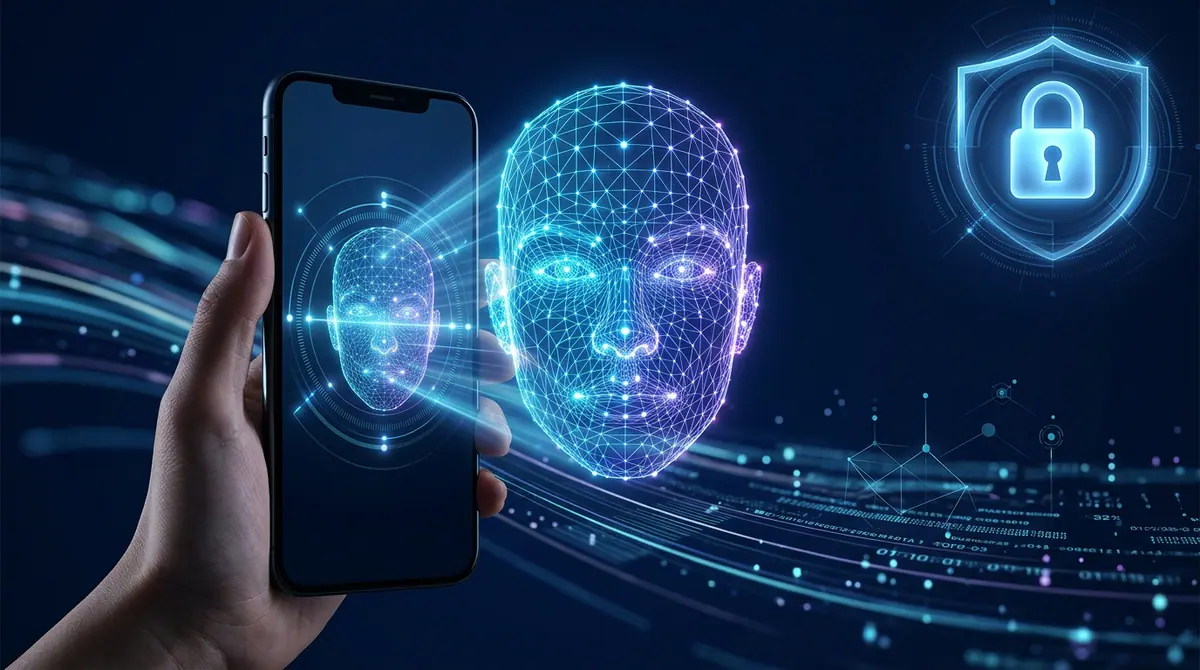
Imagine the sinking feeling of forgetting your password, losing your physical security key, and realizing your backup codes are trapped inside a locked drawer. For years, this was the digital equivalent of being stranded in a desert. However, according to a report by Wired, Google is now rolling out a feature that turns your own face into the ultimate spare key. By using a short, guided selfie video, users can now prove their identity and regain access to their accounts without needing a single character of text.
How the Digital Mirror Works
This is not just a static photo. As Forbes recently detailed, the system requires users to record a brief video following specific prompts, such as moving their head in different directions. This process ensures liveness, making it significantly harder for bad actors to use high-resolution photos or deepfakes to trick the system. Google has emphasized that these videos are encrypted and stored securely, giving users the power to delete the data once the verification is complete.
While the feature is currently positioned as a backup sign-in and recovery method rather than a primary login, it represents a massive leap in accessibility. TechCrunch notes that this rollout is part of a wider industry push toward passwordless authentication, where biometrics handle the heavy lifting of security while reducing the friction that often leads users to choose weak, easily guessable passwords.
The Context Box: A Brief History of Recovery
For decades, account recovery relied on security questions (like your first pet's name) or SMS codes. Both methods have become increasingly vulnerable to social engineering and SIM-swapping attacks. In response, the industry shifted toward two-factor authentication (2FA) and passkeys. Google's move into selfie video recovery is the latest evolution, attempting to bridge the gap between high-security requirements and the messy reality of human forgetfulness.
What Changed: The Shift from Verification to Recovery
Previously, Google used similar video technology primarily for high-stakes actions or certain identity checks. What is new here is the democratization of the tool for standard account recovery. According to guidance summarized by News18, this feature is explicitly not for age verification but is focused on helping users who are locked out of their primary devices. It moves biometrics from being a premium convenience to a foundational safety net for the average user.
Why It Matters
This development matters because it addresses the single biggest point of failure in digital security: the human element. Even the most secure account is useless if the owner cannot get inside. By integrating facial biometrics into the recovery flow, Google is aligning itself with the ecosystems of Apple and Microsoft. As Forbes highlighted, this brings Google into parity with Apple’s Face ID and Microsoft’s Windows Hello, creating a world where your physical presence is the only credential you truly need to remember.
What to Watch Next
As this feature continues its global rollout, keep an eye on how privacy advocates react. While Google stresses user control and encryption, the storage of biometric templates remains a sensitive topic. We should also watch for whether this technology begins to appear in more routine sign-in flows. If the liveness checks prove robust enough to stop advanced AI-enabled cybercrime, we may soon see the total disappearance of the traditional password prompt in favor of a quick glance at a camera. Furthermore, as reported by CNET, the integration of these features into broader anti-fraud measures suggests that your selfie might soon be doing more than just unlocking your email; it could be your primary defense against identity theft.
A Future Without Typing
We are rapidly approaching a post-password era. The introduction of selfie video recovery is a signal that big tech is finally ready to trust our faces more than our memories. It is a bold step that promises to make our digital lives more secure and significantly less frustrating. The next time you find yourself staring at a login screen with a blank mind, your own reflection might be the only answer you need.
Discussion (0)
Commenting as
No comments yet. Be the first to share your thoughts!
The discussion could not be loaded. Please refresh the page.
AI researcher turned science communicator