
Your Earbuds Are Listening: The Hidden Spy Inside Your Beats Studio Buds
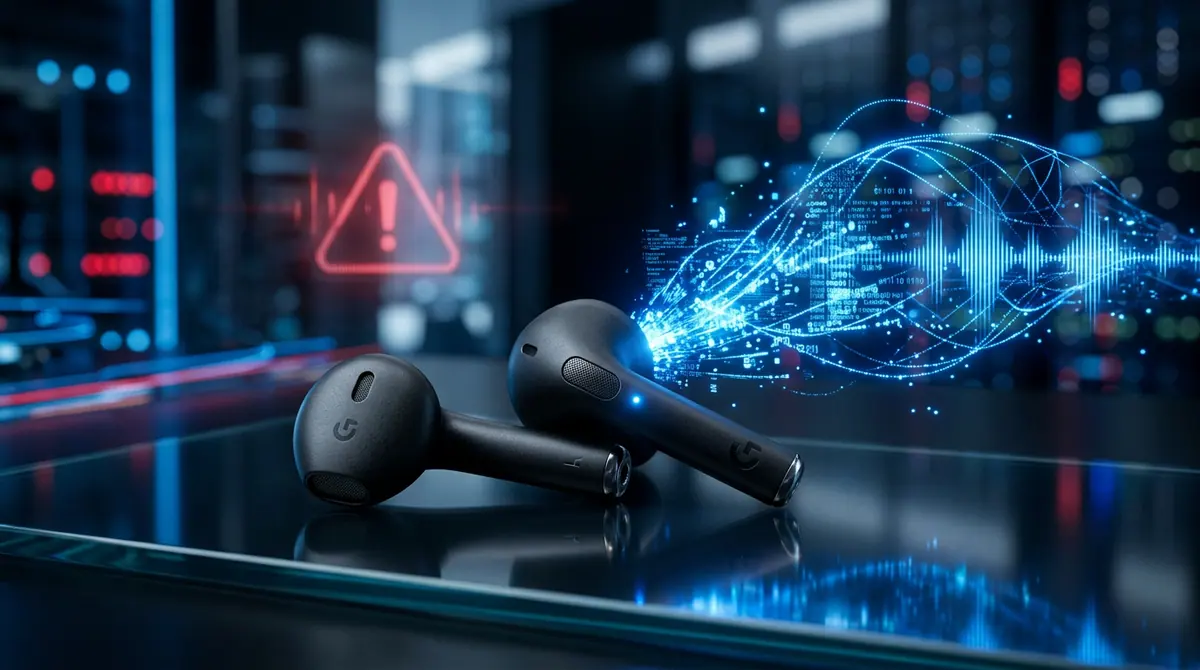
Apple just released an emergency fix for a vulnerability that allowed hackers to turn your Beats Studio Buds into a remote microphone. Here is why the invisible spy is a wake-up call.
Key takeaways
- Apple firmware update 1B211 fixes a critical microphone eavesdropping flaw (CVE-2025-20701) in Beats Studio Buds.
- The vulnerability stems from a shared Airoha Bluetooth chipset, affecting multiple vendors including Jabra.
- The fix is delivered automatically when paired with an Apple device, requiring no manual user intervention.
- This incident highlights a broader industry shift toward securing non-human identities and hardware supply chains.
The Microphone in the Room
Your favorite pair of earbuds might be doing more than just playing music; they could be acting as a wireless bug for a nearby hacker. In a move that highlights the fragile nature of Bluetooth security, Apple recently pushed an emergency firmware update to address a critical flaw that allows attackers to eavesdrop through the microphone of Beats Studio Buds. This is not a hypothetical scenario from a spy novel, but a real-world vulnerability tracked as CVE-2025-20701, which Apple addressed on June 16, 2026, with the release of firmware version 1B211.
The Vulnerability Explained
According to an official security advisory published by Apple on Tuesday, the flaw exists within the pairing process of the Beats Studio Buds. A nearby attacker within Bluetooth range could essentially spoof a connection request. If the device is not yet paired and is actively seeking a connection, the attacker could exploit this window to listen in through the microphone. This means that if you are setting up your new earbuds in a public place, like a coffee shop or an airport lounge, someone sitting nearby could potentially overhear your private conversations before you even finish the setup process.
While Apple notes that the attacker must be in physical proximity to the device, the implications for privacy are significant. Reporting by BleepingComputer suggests that this is not merely an Apple problem, but part of a much larger ecosystem failure. The vulnerability reportedly traces back to open-source code used in the Airoha Bluetooth audio Software Development Kit (SDK) and System on a Chip (SoC). Because many manufacturers rely on these same hardware components, the ripple effect of this bug extends far beyond the Apple ecosystem.
Context Box: What is an SoC Vulnerability?
A System on a Chip (SoC) is the brain of small devices like earbuds, combining processors, memory, and Bluetooth radios onto a single piece of silicon. Manufacturers like Apple or Jabra often buy these chips from third party suppliers like Airoha. When a vulnerability is found in the supplier's code (the SDK), every single brand that uses that chip becomes vulnerable. This creates a supply chain security crisis where one bug can affect millions of devices across different competing brands simultaneously.
Why This Matters: The Supply Chain Threat
The discovery of CVE-2025-20701 is a stark reminder that our digital security is only as strong as the most obscure component in our devices. Researchers at ERNW GmbH, who originally disclosed the broader weakness in 2025, pointed out that these types of Bluetooth vulnerabilities can sometimes be chained together. While eavesdropping is the primary concern here, more sophisticated attacks could theoretically allow for read or write access to the device's memory, or even a total takeover of the headset's functions. Other vendors, such as Jabra, have already had to issue similar patches for their hardware, according to technical analysis from The Hacker News.
For the average consumer, the lesson is clear: even the most trusted brands are susceptible to vulnerabilities inherited from their suppliers. Apple has designed the fix to be delivered automatically. When your Beats Studio Buds are in range of your iPhone, iPad, or Mac, the 1B211 update should install itself without requiring you to click a single button. However, users are encouraged to verify their firmware version in their device settings to ensure they are protected.
Beyond Earbuds: The New Frontier of Identity
While eavesdropping earbuds capture the headlines, a parallel shift is happening in the world of corporate security that mirrors this concern for invisible threats. Just as we must now secure the non-human components of our headphones, organizations are being forced to rethink how they manage AI agents. A recent report from industry analysts highlights a growing trend: every AI agent must be treated as a first-class identity. As these autonomous systems begin to access email, cloud APIs, and sensitive company data, they become high-value targets for attackers.
This shift is part of a broader movement toward phishing-resistant Multi-Factor Authentication (MFA). As attackers get better at bypassing traditional security codes through session token theft and social engineering, the industry is moving toward hardware-backed keys and passkeys. Whether it is a pair of earbuds or an autonomous AI bot, the goal remains the same: ensuring that only the intended user has the keys to the kingdom.
What to Watch Next
As we look toward the future, expect to see a surge in security audits for wearable technology and IoT devices. The discovery that a shared Bluetooth chipset could compromise privacy across multiple brands will likely lead to stricter regulations and better transparency regarding the software components inside our gadgets. Furthermore, as AI agents become more autonomous, watch for the emergence of new Identity and Access Management (IAM) tools designed specifically to govern how these non-human actors interact with our data. The line between a gadget, an identity, and a vulnerability is blurring, and our defenses must evolve to keep up.
Sources (6)
Discussion (0)
Commenting as
No comments yet. Be the first to share your thoughts!
The discussion could not be loaded. Please refresh the page.
Cybersecurity and privacy journalist