Unlocking the Hidden Power of Your Amazfit Cheetah 2 Ultra
Discover how to turn your Amazfit Cheetah 2 Ultra into a professional-grade trail navigator with these five essential hacks that even long-time users often miss.
Key takeaways
- Unlocking Developer Mode via the 'About' menu allows for custom watch face installation via QR codes.
- The watch supports offline OpenStreetMap (OSM) files, which must be transferred through the Zepp app for standalone navigation.
- A dedicated red light mode for the screen flashlight is a vital tool for preserving night vision during overnight activities.
- Battery life can be optimized by adjusting heart-rate sampling frequency and using specific power-saving GPS modes during long excursions.
The Secret Potential Already Strapped to Your Wrist
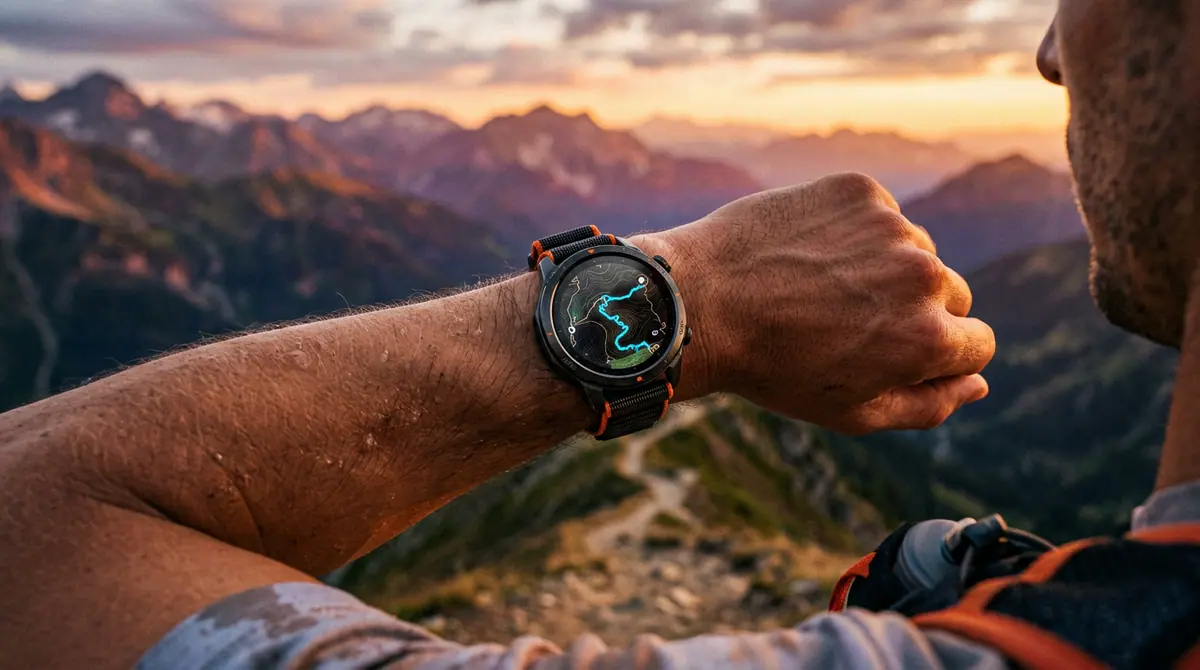
Imagine standing at the trailhead of a remote mountain path, the sun starting to dip behind the peaks, and realizing your smartwatch can guide you home using high-resolution topographic maps it didn't even come with. Most people treat their fitness trackers like glorified step counters, but the Amazfit Cheetah 2 Ultra is secretly a high-performance computer for endurance athletes. According to a recent report by Lifehacker, there are specific power-user tweaks that bridge the gap between a basic wearable and a professional navigation tool.
The Cheetah 2 Ultra has quickly gained a reputation among trail runners. A review from the fitness site The5krunner suggests that the device is now being evaluated as a serious competitor to flagship sports watches, largely due to its robust offline capabilities. However, many of these features are tucked away behind layers of menus or hidden gestures. By mastering a few key workflows, you can significantly extend your watch's battery life and utility during long excursions.
Context: What is the Zepp Ecosystem?
For newcomers, Amazfit devices run on Zepp OS, a lightweight operating system designed for extreme battery efficiency. Unlike the Apple Watch or Wear OS devices which may require daily charging, Amazfit watches often last weeks. The trade-off is that advanced features are often managed through the companion Zepp app on your smartphone rather than on the watch screen itself. To get the most out of the Cheetah 2 Ultra, you must be comfortable syncing data between the watch and the app.
What is New in the Cheetah 2 Ultra?
The latest generation of the Cheetah series represents a major shift toward professional-grade mapping. Previously, Amazfit watches relied primarily on basic GPS breadcrumb trails. The new Ultra model introduces support for full OpenStreetMap (OSM) imports and advanced elevation tracking. This change allows users to see the actual contour of the land around them, rather than just a line on a black screen. Furthermore, the inclusion of a dedicated red light flashlight mode shows a new focus on tactical and overnight endurance sports.
Five Hacks to Master Your Watch
1. Unlock the Secret Developer Mode
One of the most powerful hidden features is Developer Mode. As reported by Lifehacker Japan, users can unlock this mode to install custom, community-created watch faces via a simple QR code scan. To find it, navigate to the "About" section in your watch settings and tap the OS version repeatedly. This allows for a level of customization usually reserved for software engineers, enabling you to prioritize specific data fields like vertical speed or real-time atmospheric pressure.
2. Import Offline OSM Maps
Do not rely on a cellular signal when you are deep in the woods. You can download specific map tiles via the Zepp app and transfer them to your watch. This turns your device into a standalone navigator. Once the map is loaded, you can use the watch’s route tools to see your exact position on a topographic grid. Official manual materials from Amazfit confirm that this feature is built-in but requires the app-mediated transfer to function.
3. Switch to Red Light Flashlight Mode
Standard white light flashlights ruin your night vision and attract insects. During an overnight race or a late-night camping trip, you can toggle the Cheetah 2 Ultra’s screen to a deep red light. This provides enough illumination to read a physical map or find something in your pack without blinding yourself or others. It is a small change that makes a massive difference in the field.
4. Add Real-Time Elevation to Data Screens
Standard data screens often focus on pace and heart rate, but for trail runners, elevation is the most important metric. You can customize your activity screens to include a real-time elevation profile. This shows you exactly how much of a climb you have left in a specific segment. This hack is essential for managing your energy levels during steep ascents.
5. Load MP3s for Phone-Free Performance
Many users do not realize the Cheetah 2 Ultra has local storage for music. By loading MP3 files directly onto the watch via the Zepp app, you can pair your Bluetooth headphones to the watch and leave your heavy smartphone at home. This reduces weight and eliminates distractions, allowing you to focus entirely on your performance.
Why This Matters for Your Gear Strategy
As wearable technology matures, we are seeing a shift from "all-purpose" devices to highly specialized tools. The ability to customize a watch to this degree means you no longer have to pay for a thousand-dollar specialized dive or flight watch if you can program those functions yourself. It democratizes high-end navigation and performance tracking, making elite-level data accessible to any hobbyist runner or hiker.
Common Mistakes to Avoid
- Over-syncing GPS: Setting your heart-rate sampling to every second and using the highest precision GPS will drain your battery in hours. For long hikes, use the "Power Saving" GPS mode.
- Ignoring Glove Mode: If you are running in the rain or cold, the touchscreen can become unresponsive. Ensure you have "Glove Mode" or physical button shortcuts enabled.
- Skipping Map Updates: Topographic data changes. Ensure you refresh your offline maps at least once a season via the Zepp app.
What to Watch Next
Looking forward, expect Amazfit to lean more heavily into AI-driven coaching. There are already signs that future Zepp OS updates will include more proactive voice controls, allowing you to ask your watch for your remaining battery life or estimated finish time without looking at the screen. We are also likely to see deeper integration with third-party mapping services like Strava and Komoot, making the map-loading process even more seamless than the current manual import method.
Sources (7)
Discussion (0)
Commenting as
No comments yet. Be the first to share your thoughts!
The discussion could not be loaded. Please refresh the page.
Cloud computing specialist and tech trend forecaster