
The Silicon Toll: How the White House is Redrawing the AI Power Map
As data centers threaten local power grids, a new era of federal oversight is forcing tech giants like Microsoft to choose between rapid expansion and community stability.
Key takeaways
- The White House is pivoting AI policy to focus on the physical power demands of data centers, requiring tech firms to 'pay their own way.'
- Microsoft has already responded with policy pledges to mitigate community grid stress to avoid potential construction moratoriums.
- Federal use of Anthropic's Claude AI has been banned following a dispute over military guardrails and software restrictions.
- A shift is occurring from software-centric AI development to a focus on the massive energy infrastructure required to sustain it.
The Great Power Struggle of the Intelligence Era
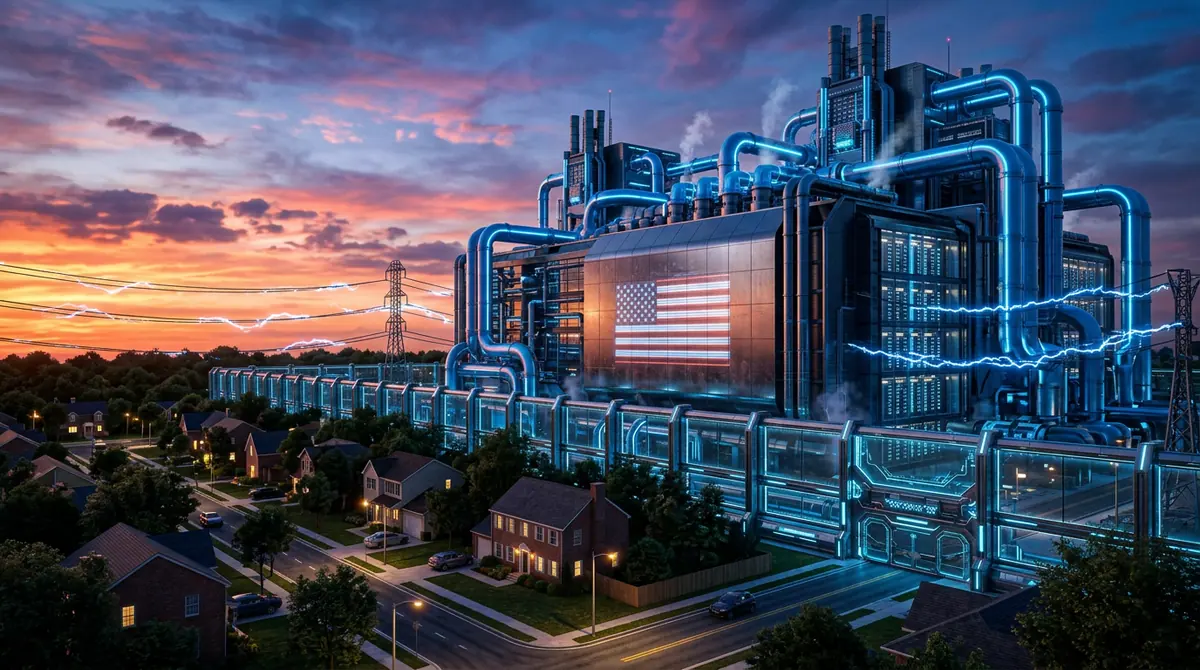
Your local electricity bill might be the next casualty of the artificial intelligence revolution, and the White House is drawing a line in the sand to prevent it. While we often think of AI as ethereal code living in the cloud, it is actually rooted in massive, humming physical structures: data centers. These facilities require astronomical amounts of electricity to cool servers and process the complex calculations that power modern chatbots. Now, a friction point has arrived. The Trump administration is making it clear that while it wants the United States to lead in innovation, the days of tech giants building at the expense of the average citizen are over.
According to a report by 13WHAM and Fox 17, Michael Krastios, the director of the White House Office of Science and Technology Policy, recently appeared before a House subcommittee to outline the next stages of the administration's AI Action Plan. The strategy is clear: accelerate American leadership in AI, but do so with a newfound focus on the physical infrastructure that makes it possible. This testimony comes at a time when lawmakers are mulling over new regulations to manage the explosive growth of the sector.
The Mandate: Pay Your Own Way
The push for regulation reached a fever pitch this week when President Trump took to Truth Social to address the strain on the national power grid. In a post that has sent shockwaves through the tech industry, the President signaled that tech companies must ensure their data centers do not drive up utility costs for nearby residents. He stated quite plainly that the big technology companies who build these facilities must pay their own way. It is a populist approach to high tech infrastructure, suggesting that the era of massive corporate subsidies and unchecked power consumption may be coming to an end.
The industry is already beginning to pivot. In a blog post and series of policy pledges made this week, Microsoft announced new measures intended to prevent its data centers from becoming a burden to local communities. This proactive stance is likely a response to the growing threat of a moratorium on new data center construction. Some lawmakers are currently considering a complete freeze on new projects due to rising concerns over grid stress and the financial impact on individual households.
Context: Why Data Centers Are Energy Hogs
Data centers are the engine rooms of the digital economy. Training a single large language model can consume as much energy as hundreds of homes use in a year. Once these models are live, every single query requires a burst of electricity. This constant demand puts immense pressure on local utilities, sometimes forcing providers to keep aging, dirty power plants running longer than planned or to raise rates on residents to fund grid upgrades that primarily benefit the tech giants.
The Ban on Claude: A Military Guardrail Dispute
The tension between the federal government and the AI industry is not limited to electricity. Innovation is also hitting a wall of national security and military utility. CBS News recently reported that President Trump has ordered federal agencies to cease using Claude AI, the popular tool developed by Anthropic. The decision follows a high profile dispute with the Pentagon over the guardrails built into the software.
Anthropic, like many AI startups, has implemented safety filters designed to limit the use of its technology for lethal or military applications. However, the administration argues that these self imposed restrictions may hamper the efficiency of federal agencies and military research. The ban highlights a growing philosophical divide: should AI companies have the right to dictate how their tools are used by the government, or does the state have the final say in the interest of national dominance?
What Changed: A Shift Toward Accountability
Until recently, the conversation around AI was focused almost entirely on software, safety, and the fear of job displacement. What has changed is the recognition of AI as a resource intensive physical industry. We have moved from the digital era into the infrastructure era. The delta here is the transition from encouraging growth at any cost to demanding that tech companies internalize the externalities of their business models, specifically their energy footprints.
Why It Matters
For the average consumer, this policy shift could be the difference between a stable monthly budget and a skyrocketing utility bill. If the government successfully forces tech firms to build their own power sources or pay for grid upgrades, it could slow down the roll out of some AI services but would protect the economic stability of local communities. For the industry, this signals that the path to a multi trillion dollar AI economy must be paved with sustainable energy solutions, not just better algorithms.
What to Watch Next
Expect to see a massive surge in tech companies investing directly in energy production, including small modular nuclear reactors and private solar farms. The next battleground will be in the courts and state legislatures, where the proposed moratoriums on data center construction will either be defeated by tech lobbyists or signed into law by governors responding to angry voters. Furthermore, watch for the administration to favor AI companies that are willing to strip away safety guardrails in exchange for lucrative federal contracts, potentially creating a tiered market of restricted and unrestricted AI models.
As we move deeper into 2026, the definition of innovation is changing. It is no longer just about who can build the smartest machine; it is about who can build the smartest machine without breaking the world that supports it.
Sources (5)
Discussion (0)
Commenting as
No comments yet. Be the first to share your thoughts!
The discussion could not be loaded. Please refresh the page.
Mobile ecosystem analyst and smartphone reviewer


