
The Invisible Shield: How eLearning is Saving Remote Companies from Legal Chaos
As remote work shatters geographic boundaries, educational technology is transforming from a simple training tool into a high-stakes legal safeguard for the modern workforce.
Key takeaways
- eLearning is evolving from a skills-based platform to a critical control layer for managing payroll and legal risks.
- Remote and hybrid work have made multi-state compliance significantly more complex, requiring dynamic rather than static training solutions.
- Organizations are moving toward living compliance systems that use automation and role-based learning paths to ensure audit-ready documentation.
The New Reality of the Borderless Office
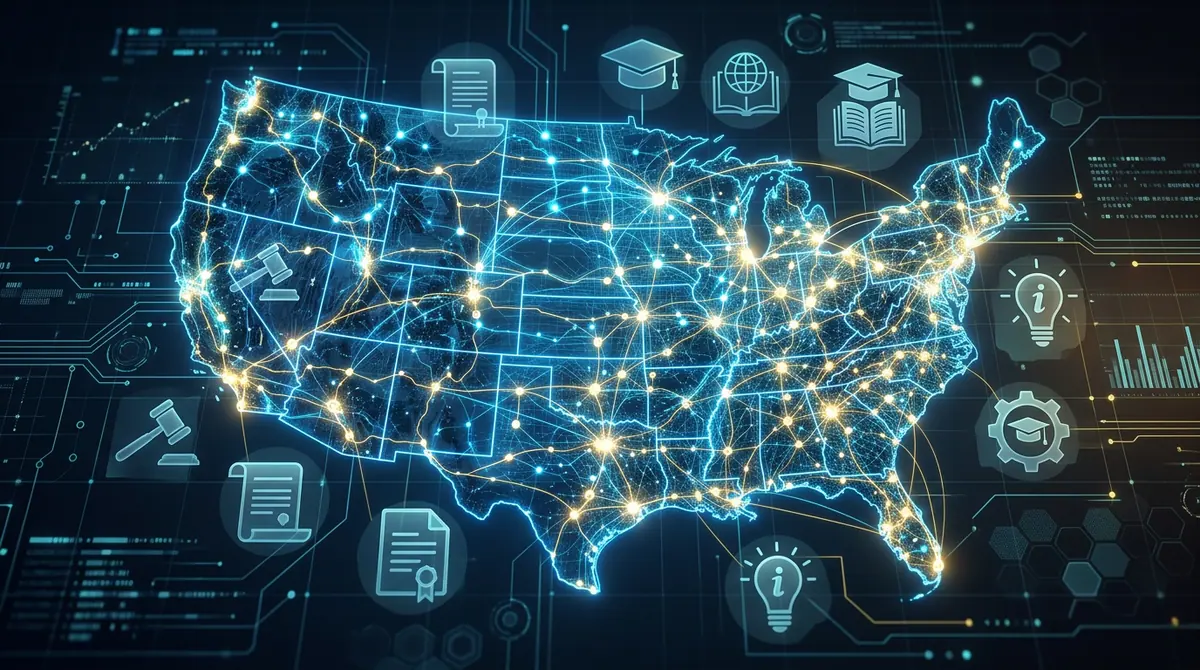
Imagine hiring a talented developer in Oregon, a marketing lead in Texas, and a designer in Florida, only to realize your company is now accidentally violating three different sets of labor laws. In the modern era of remote work, a single employee moving across state lines can trigger a cascade of complex payroll tax obligations, residency determinations, and specific local withholding rules. What was once a simple administrative task has become a minefield of legal risk. However, a new shift in educational technology is providing the solution. Organizations are no longer using eLearning just to teach skills; they are deploying it as a sophisticated control layer to mitigate payroll and employment law risks.
Why Generic Training Is No Longer Enough
For years, corporate training was often viewed as a checkbox activity, something employees completed once a year and promptly forgot. According to a recent analysis by eLearning Industry, that model is officially dead for high-growth companies. The new standard is the living compliance system, a dynamic educational framework that adapts to the specific roles and locations of every employee. This approach is essential because, as researchers at PayrollOrg have documented, U.S. payroll rules vary wildly across jurisdictions. From pay frequency and final pay deadlines to wage statements and paid leave requirements, there is no such thing as a one-size-fits-all compliance strategy anymore.
Moving from Compliance-First to Capability-First
There is currently a fascinating split in how leaders view this technology. As noted in recent HR compliance guides, some organizations take a compliance-first approach, prioritizing the avoidance of penalties through correct registrations and withholding. In contrast, the most forward-thinking institutions are adopting a capability-first mindset. This means training is not just about staying out of trouble; it is about building an operational readiness that allows a company to scale anywhere without hesitation. As the experts at Brightmine emphasize in their multi-state employer compliance research, the priority is shifting toward recurring education that treats compliance as a durable professional skill rather than a one-time hurdle.
What Changed: The Shift to Living Systems
In the past, training was static, often delivered via a PDF or a pre-recorded video that was outdated by the time it was viewed. Today, the delta is clear. New learning management systems act as a living compliance system with automated assignments triggered by employee relocation, real-time update alerts when state laws change, and robust audit records that can be presented to regulators at a moment's notice. This operationalization of learning means that technology is moving closer to the core business stack, integrating directly with payroll and finance software to ensure that no one is caught off guard by a new local tax or a change in reciprocity rules.
Why It Matters: The High Cost of Ignorance
For students and early-career professionals, this shift means that understanding the mechanics of how a business operates across borders is becoming a vital skill. For parents and educators, it highlights the importance of data literacy and legal awareness in the modern curriculum. The consequences of failing to adapt are significant. According to practical implementation guides from vendors like LiftHCM and MyHRProfessionals, employers who fail to track nexus and registration requirements when employees move face heavy fines and potential lawsuits. When education technology is used effectively, it serves as a form of insurance, protecting both the employer's bottom line and the employee's rights.
What to Watch Next
As we look toward the future, the expansion of state-level leave laws, pay transparency mandates, and complex local tax obligations will only increase. We should expect to see learning platforms use artificial intelligence to predict which employees will need specific training based on their travel patterns or residency changes. The market is already showing a stronger expectation for measurable outcomes and deep integration. Generic engagement claims are being replaced by demands for proof of usage and operational value. In this new landscape, the most successful companies will be those that view their learning platform not as a library, but as a critical piece of infrastructure.
The Bottom Line
The transformation of EdTech into a risk-management powerhouse proves that learning is the ultimate competitive advantage. By treating education as a continuous, role-based necessity, organizations can navigate the complexities of a multi-state workforce with confidence. In the end, the companies that thrive in a remote-first world will be those that realize the best way to protect their future is to never stop teaching their people how to navigate the present.
Sources (6)
Discussion (0)
Commenting as
No comments yet. Be the first to share your thoughts!
The discussion could not be loaded. Please refresh the page.
AI researcher turned science communicator