
The High Ground: US Officially Confirms Weapons Deployment in Orbit
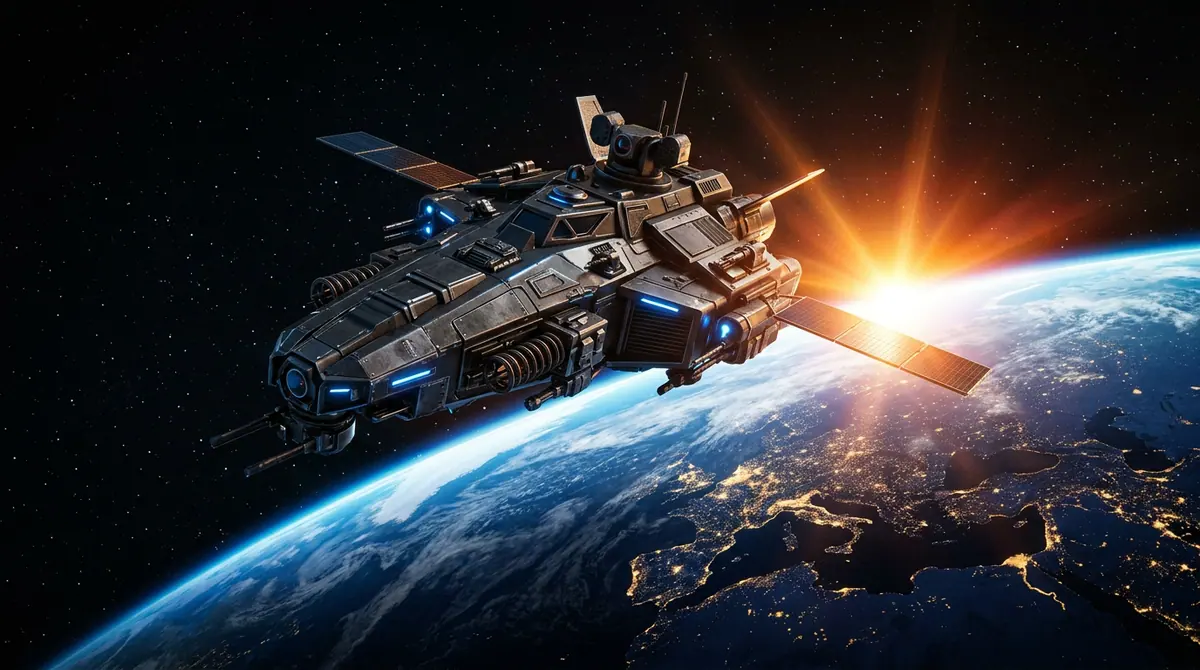
A historic shift in military strategy has occurred as the Pentagon finally admits to having operational weapons systems in space, marking the end of a decades long era of strategic ambiguity.
Key takeaways
- U.S. Air Force Secretary Troy Meink officially confirmed the deployment of on-orbit space control weapons on September 14, 2026.
- The announcement represents a strategic shift from ambiguity to public deterrence regarding space-based warfare capabilities.
- While the existence of weapons is confirmed, the specific technical details, names, and deployment dates of these systems remain classified.
The Final Frontier Becomes a Front Line
The silence of the vacuum has never been so loud. For years, rumors circulated in the halls of the Pentagon about secret assets orbiting the Earth, but on Monday, September 14, 2026, the veil of secrecy finally dropped. Speaking at the Air and Space Forces Association’s Air, Space, and Cyber conference in National Harbor, Maryland, Air Force Secretary Troy Meink confirmed what many had suspected: the United States has officially deployed on-orbit space control weapons. This announcement, as reported by DefenseScoop, marks a historic shift in how the military discusses its capabilities beyond the atmosphere.
While the concept of space based warfare was once the stuff of science fiction or 1980s defense fantasies, it is now a documented reality. The confirmation signals a major evolution in the U.S. Space Force’s mission, transitioning from mere observation and satellite management to active defense and potential offense. According to reports from the Washington Times, the disclosure is likely part of a larger strategic signaling push designed to deter adversaries by admitting that the U.S. is not just watching the stars; it is armed among them.
What Changed: From Observation to Action
Until this week, the official stance regarding orbital weaponry was one of carefully guarded silence. While the military would discuss terrestrial systems that could reach into space (such as ground based anti-satellite missiles) the existence of weapons actually stationed in orbit remained a classified mystery. The announcement by Secretary Meink changes that paradigm entirely. The U.S. military now publicly acknowledges that it has the capability to defend the joint force against hostile action through systems that reside permanently in the orbital environment.
However, the revelation was tempered by a high degree of strategic vagueness. As noted by analysts at Le Monde, Meink did not identify the specific systems, explain the mechanics of their operation, or disclose when they were originally deployed. This leaves a massive question mark regarding the scale and lethality of the American orbital arsenal. By acknowledging the existence of these weapons without detailing their functions, the Pentagon is playing a sophisticated game of psychological warfare: telling the world they have the gun, but not showing the caliber.
Context: The New Space Race
For newcomers to the defense sector, it is important to understand that space has long been considered the ultimate high ground. Global positioning systems (GPS), banking transactions, and military communications all depend on a fragile network of satellites. For decades, the international community treated space as a sanctuary, but as countries like Russia and China developed their own counter space capabilities, the U.S. felt compelled to respond. This new era of space control is not about Star Wars style lasers in a cinematic sense; it is about protecting the vital infrastructure that keeps modern life functioning.
Why It Matters: The End of Space Sanctuary
The implications of this confirmation are profound for global security and the future of innovation. By admitting that weapons are in orbit, the United States has effectively ended the era of space as a perceived sanctuary. According to coverage from Ars Technica, this moves the conversation from whether space will be weaponized to how it will be regulated. The risk of kinetic conflict in orbit is significant; a single collision could create a cloud of debris that remains for centuries, potentially rendering certain orbits unusable for commercial satellites and scientific research.
For the average person, this might feel distant, but it directly affects the reliability of every technology we use on the ground. A conflict in space could mean the loss of internet connectivity, global navigation, and weather forecasting. The confirmation of these weapons suggests the military believes the best way to prevent such a catastrophe is through a posture of strength and visible deterrence.
What to Watch Next
As the international community reacts to this news, we should expect a flurry of diplomatic activity at the United Nations regarding the prevention of an arms race in outer space. Domestically, the U.S. Space Force is likely to see increased budget allocations as these formerly secret programs move into the light. The next major milestone to watch for will be the first public demonstration of these capabilities or the release of declassified footage, which would signal that the Pentagon is ready to move from verbal confirmation to visible evidence. For now, the world must grapple with the reality that the high ground is no longer just a place for looking down; it is a place for looking out.
Sources (6)
Discussion (0)
Commenting as
No comments yet. Be the first to share your thoughts!
The discussion could not be loaded. Please refresh the page.
AI researcher turned science communicator