
The GTA VI Warp: Why One Game is Redrawing the Global Entertainment Map
Grand Theft Auto VI isn't just a video game release; it's a gravitational force. Discover how Rockstar's next hit is forcing a multi-billion dollar industry to rewrite its entire schedule.
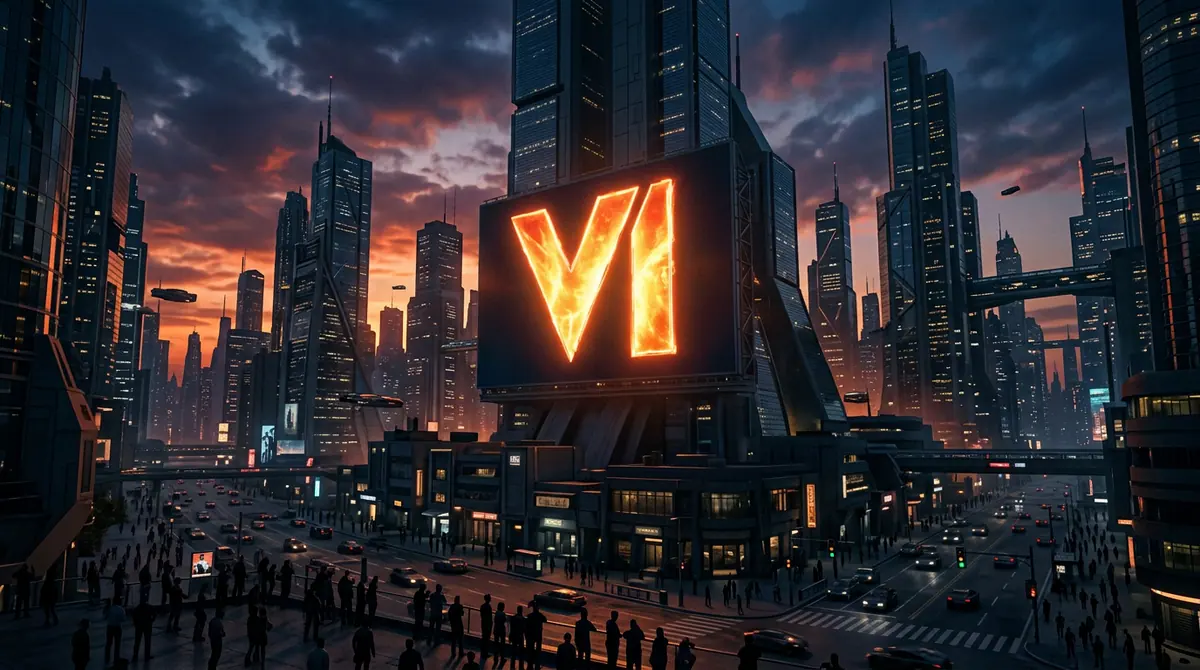
Key takeaways
- Grand Theft Auto VI is causing a 'crowding out' effect where other publishers are delaying their games to avoid competition.
- This market distortion affects marketing spend, preorder timing, and even hardware sales cycles.
- The trend signals a shift toward a 'winner-take-all' entertainment economy where one product can dictate the industry's quarterly planning.
- Publishers are shifting toward safer 'windows' in the early year or late holiday periods to protect their financial investments.
The Black Hole of Attention
Imagine a product so powerful that its mere existence on a calendar causes an entire multi-billion dollar industry to freeze in place. According to a recent report by The Verge, we are currently witnessing this exact phenomenon as the release of Grand Theft Auto VI (GTA VI) looms on the horizon. This isn't just about a popular video game; it is about a seismic shift in how tech and entertainment companies manage risk, capital, and consumer attention. When Rockstar Games moves, the rest of the world gets out of the way.
The sheer scale of the Grand Theft Auto franchise has created what industry analysts are calling a "crowding out" effect. As The Verge notes, major publishers are now actively warping their release calendars, moving long-awaited projects to avoid direct competition with the Rockstar behemoth. This behavior reflects a new reality in the attention economy: in a world of limited time and fixed entertainment budgets, nobody wants to be the one standing in the shadow of a giant.
The New Calendar Logic
For years, the video game industry followed a predictable seasonal cycle, with blockbuster releases clustered around the holiday shopping window. However, the anticipated launch of GTA VI has shattered that tradition. Smaller publishers and even rival titans are now forced into a complex game of strategic retreat. By moving releases earlier into the year or pushing them back into the following spring, companies are trying to ensure their marketing dollars aren't wasted in a month where every headline is dominated by a single title.
This "warp effect" extends beyond just the software itself. It impacts hardware sales, cloud computing demand, and even social media advertising rates. When a title of this magnitude launches, it consumes the air in the room, making it nearly impossible for other tech innovations to gain traction. The Verge's reporting suggests that even marketing reallocation is taking place, with trailers and preorder campaigns being rescheduled to minimize overlap with Rockstar's dominant tentpole events.
What Changed: The End of the Parallel Blockbuster
In previous decades, it was common for multiple "AAA" titles to launch within weeks of each other, each finding its own slice of the market. What is new here is the disappearance of that co-existence. The data indicates that the modern entertainment landscape has become so winner-take-all that the risk of launching near a Rockstar title is now considered financially irresponsible by most boards of directors. This represents a clear delta from previous console generations where competition was seen as a way to drive overall foot traffic to retailers.
Why It Matters: Financial Risk Management
This development matters because it reveals the fragility of the current entertainment ecosystem. When a single product can influence quarterly planning across an entire global industry, it shows just how much power resides in a few specific intellectual properties. For the consumer, this means "release droughts" followed by overwhelming floods of content as every company tries to find the perfect window of safety. For the developers, it means their hard work might be delayed not because it isn't ready, but because a competitor's shadow is simply too large.
Context Box: The Rockstar Legend
Rockstar Games, a subsidiary of Take-Two Interactive, has built a reputation for perfectionism and massive open-world environments that set the technical bar for the entire industry. Their previous entry, Grand Theft Auto V, remains one of the most profitable entertainment products in history, crossing billions of dollars in revenue and maintaining a massive player base for over a decade. This track record is exactly why competitors are so hesitant to challenge them directly in 2026.
What to Watch Next
As we move closer to the official launch date, watch for a cascade of further delays from other major publishers. We are likely to see a significant spike in releases during the first quarter of the year as companies try to "clear the deck" before the GTA VI marketing machine enters its final, most aggressive phase. Furthermore, keep an eye on how this affects subscription services; platforms may lean heavily on their back catalogs to retain users who are spending all their "new game" budget on a single Rockstar title.
The Bottom Line
The GTA VI release calendar effect is a masterclass in market dominance. It proves that in the modern digital age, innovation isn't just about the technology inside the box; it's about the ability to command the global conversation so effectively that the rest of the world has no choice but to wait. We are no longer just looking at a game release; we are looking at a total restructuring of the entertainment economy, driven by the gravity of a single, unprecedented event.
Discussion (0)
Commenting as
No comments yet. Be the first to share your thoughts!
The discussion could not be loaded. Please refresh the page.
EdTech specialist and former computer science educator


