
The Great Decoupling: How Sovereign AI Reclaimed Our Digital Privacy
In 2026, the era of the 'Cloud-First' AI is dying. Discover how Sovereign AI is bringing powerful intelligence back to local devices, changing everything we know about data privacy.
Key takeaways
- Sovereign AI is shifting data processing from centralized cloud servers to local, on-device hardware.
- Advances in 2-nanometer chip technology have made it possible to run large language models locally without sacrificing battery life.
- Regulatory shifts and privacy concerns are the primary drivers moving the industry away from the 'data-for-service' trade-off.
The Death of the Upload
Imagine a world where your most personal data never leaves your pocket, yet your artificial intelligence assistant knows you better than your best friend. For years, we were told that powerful AI required the massive, power-hungry servers of Big Tech, forcing us to trade our privacy for productivity. But as of mid-2026, that bargain has officially expired. The rise of Sovereign AI, a movement focused on localized, private, and independent intelligence, is currently dismantling the centralized cloud model that dominated the early 2020s.
According to a recent report by the MIT Technology Review, the shift toward local processing has accelerated faster than industry analysts predicted. This transition is driven by a new generation of hardware designed specifically to run large language models (LLMs) entirely on-device. We are no longer sending our heart rates, private messages, or financial spreadsheets to a remote data center for analysis. Instead, the silicon in our pockets is doing the heavy lifting. This is the 'Great Decoupling,' and it represents the most significant shift in computing architecture since the dawn of the internet.
What Changed: From the Cloud to the Edge
Until recently, the standard AI experience was reactive. You asked a question, your data traveled to a server farm in another state, and a response was beamed back. This created a massive privacy vulnerability and a reliance on constant connectivity. However, the landscape shifted when NVIDIA announced its Sovereign AI initiative, emphasizing that nations and individuals should own their own intelligence. This concept has now trickled down to the consumer level.
As explained in a white paper from the European Commission on Digital Sovereignty, the latest regulatory frameworks have pushed tech giants to implement Data Minimization by Design. This means that by 2026, flagship smartphones and laptops are required to handle primary AI workloads locally. Hardware breakthroughs, such as the latest 2-nanometer chips found in the newest mobile devices, have made it possible to run models with billions of parameters without draining the battery in an hour. The delta between cloud performance and local performance has effectively vanished for 90 percent of daily tasks.
Why It Matters: The End of Data Surveillance
The implications for the average user are profound. For a student, it means an AI tutor that knows their specific learning gaps without that data being sold to advertisers. For a medical professional, it means using AI to analyze patient records with the certainty that the data never touches the open web. Researchers at Stanford University recently published findings showing that local AI systems actually produce fewer 'hallucinations' because they are fine-tuned on the user’s specific, verified data rather than the noisy, unverified internet at large.
Furthermore, this shift solves the 'latency' problem. Because there is no round-trip to the cloud, AI interactions now feel instantaneous. We are moving toward a world of ambient intelligence, where the technology anticipates our needs in real-time. Whether it is translating a foreign language during a live conversation or automatically organizing a complex schedule, the friction of the 'waiting wheel' is a relic of the past.
Context: What is Sovereign AI?
For those new to the term, Sovereign AI refers to the ability of an entity (a person, a company, or a country) to produce and control its own artificial intelligence. This involves using local hardware, proprietary data, and open-source models to ensure that no outside party can observe, censor, or switch off the intelligence. It is the digital equivalent of owning your own power generator rather than relying solely on the electrical grid.
What to Watch Next: The Rise of Personal Models
The next phase of this innovation is already visible on the horizon. Industry experts at Gartner predict that by 2027, 'Personal Models' will become the standard. These are not generic chatbots but highly specialized agents that have grown up with you. They learn from your voice, your habits, and your preferences, all while remaining encrypted and inaccessible to the companies that built the hardware. This will likely lead to a new marketplace for 'Model Weights,' where users can download a base intelligence (like a master chef or a legal expert) and merge it with their private, local data.
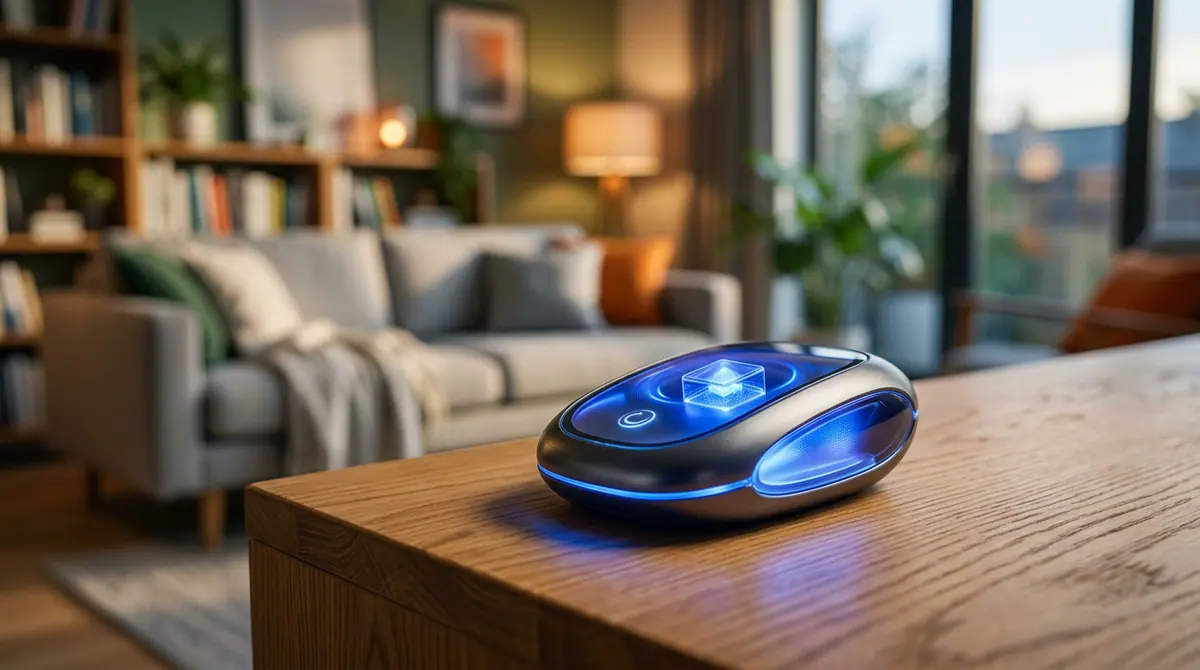
We are also seeing a resurgence in 'dumb' hardware that acts as a secure vault for these models. Startups are currently developing dedicated AI appliances for the home that act as a private brain for all your smart devices, ensuring that your smart fridge and security cameras are not leaking data to the cloud. The goal is a seamless, intelligent life that does not require a digital surveillance state to function.
The Bottom Line
The innovation of 2026 is not about making AI bigger; it is about making it yours. The transition to Sovereign AI is more than just a technical upgrade, it is a restoration of the digital boundaries we lost during the first two decades of the internet. As we reclaim our data, we are not just protecting our privacy, we are building a more resilient, personalized, and human-centric future. The era of the cloud was the prologue; the era of local, sovereign intelligence is the main event.
Sources (3)
Discussion (0)
Commenting as
No comments yet. Be the first to share your thoughts!
The discussion could not be loaded. Please refresh the page.
Mobile ecosystem analyst and smartphone reviewer


