
The Ghost in the Machine: Why Robotaxis are Struggling with Your Lost Wallet
Uber has found thousands of items left in robotaxis, revealing a massive new hurdle for autonomous fleets: solving the human mess of lost property without a human driver.
Key takeaways
- Uber has discovered that robotaxis are generating a massive volume of lost property, creating a new operational crisis for autonomous fleets.
- The absence of a human driver removes the primary safeguard for property recovery, leading to concerns about privacy and the chain of custody for sensitive items.
- Platform trust is at risk; if passengers do not feel secure about their belongings, long-term adoption of autonomous ride-hailing could be hindered.
- This problem reflects a wider trend of 'platform dependency,' where users and even governments (like the UK with Palantir) become vulnerable due to reliance on automated, proprietary systems.
The New Panic of the Driverless Exit
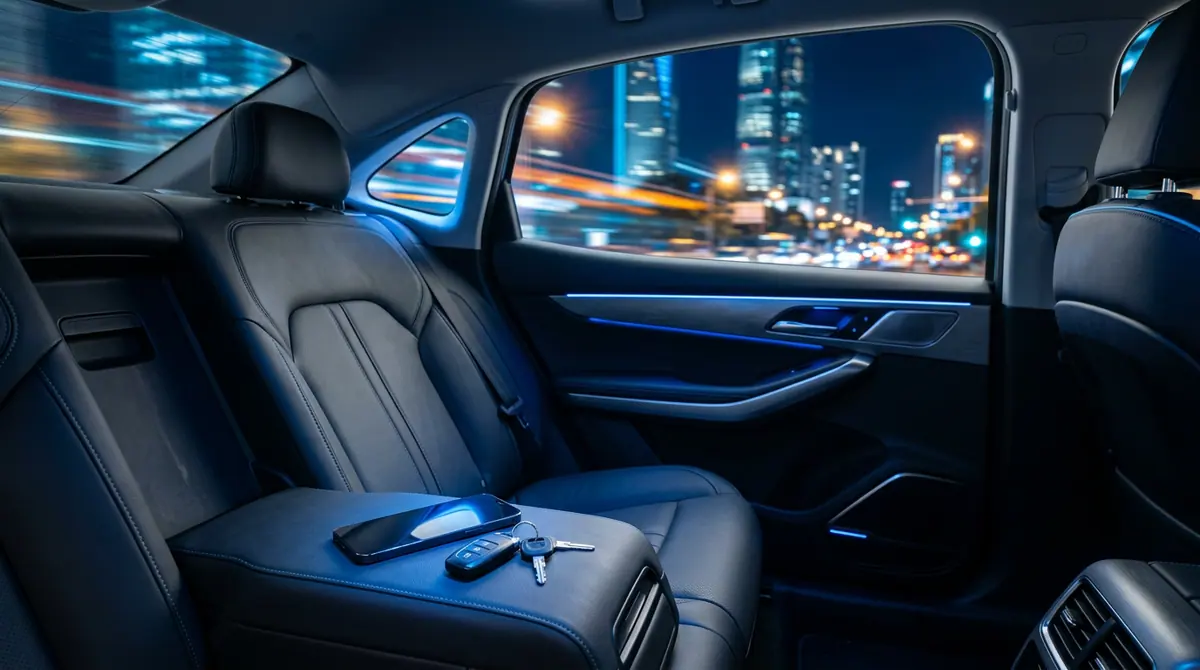
Imagine stepping out of a sleek, driverless taxi only to realize your wallet is still on the back seat. With no human driver to check the mirror or shout after you as you walk away, that split second of realization represents the newest and perhaps most frustrating frontier in the autonomous vehicle revolution. While we have spent a decade worrying if a computer can navigate a four-way stop, we are suddenly facing a much more human dilemma: what happens to the stuff we leave behind? According to a recent report by TechCrunch, the scale of this problem is already staggering. Uber has found that passengers have left thousands of items in its fleet of robotaxis, ranging from smartphones to sensitive documents. This discovery underscores a critical shift in the industry; the hardest part of the robotaxi business might not be the driving itself, but the messy, unpredictable reality of human passengers.
The Invisible Roommate Problem
For years, the ride-sharing industry relied on a simple social contract. If you left your keys in the car, the driver would often notice immediately or, at the very least, could be contacted to arrange a return. Robotaxis eliminate this human safeguard. TechCrunch notes that these autonomous services are already generating operational issues familiar to human-driver rideshares, but at a potentially greater volume due to high utilization rates and the novelty-driven behavior of riders who might be too distracted by the tech to remember their belongings.
What is New?
What has changed is the fundamental scale of the property recovery challenge. In a traditional Uber, the car has a custodian. In a robotaxi, the car is an unmonitored shared space. The lack of a human driver means there is no one to perform a quick visual sweep between passengers. This creates a logistical nightmare for operators who must now manage a growing mountain of lost property without a clear chain of custody. It is not just about a missing umbrella anymore; it is about how a platform manages thousands of items across a city without a physical human presence in the vehicle.
Why It Matters: The Trust Gap
This is not just a customer service annoyance; it is a fundamental issue of platform trust. If passengers believe that robotaxis are less forgiving for forgotten belongings, adoption may slow. For a commuter, the risk of losing a laptop or a set of house keys to a driverless void might be enough to push them back to traditional transit. Beyond the loss of property, there is the mounting concern regarding privacy and safety. Tech analysts have pointed out that items left in vehicles often include sensitive personal goods or electronic devices. Without a driver to secure these items, the next passenger to enter the vehicle essentially has access to the previous rider's lost property. This raises significant questions about how much access employees or contractors have to passenger property once a car is finally pulled from the fleet for cleaning and retrieval.
Context: The Rise of the Autonomous Fleet
The transition to autonomous ride-hailing is no longer a science fiction concept. Companies like Uber, through various partnerships and technological integrations, are moving toward a model where vehicles are high-utilization assets. These cars are designed to be on the road for as many hours as possible to maximize revenue. However, as the TechCrunch data suggests, higher utilization leads to more human interaction, which inevitably leads to more human error. The tech might be perfect at lane changes, but it is currently blind to the phone wedged in the seat cushions.
The Dependency Dilemma
This issue fits into a broader trend of platform dependency that is currently under fire across the globe. Just as Uber riders are dependent on a platform to recover their lost goods, governments are finding themselves increasingly tethered to complex tech providers. For instance, Wired recently reported that UK politicians are warning that dependence on Palantir for sensitive public-sector data has become an unacceptable point of weakness. Whether it is a government relying on a single software vendor for defense or a commuter relying on an algorithm to return their keys, the central question is the same: who controls the system when something goes wrong? When the human element is removed, the fallback options often disappear with it.
What to Watch Next
The next phase of robotaxi innovation will likely focus on the interior of the car rather than the exterior. Watch for the introduction of advanced interior sensors and computer vision systems designed specifically to scan the cabin for forgotten items before a car is allowed to pick up its next passenger. We are also likely to see the development of more robust retrieval workflows, such as automated lockers where cars can drop off found items. Until then, the burden remains on the passenger. In the world of autonomous innovation, the most important piece of technology might still be your own memory.
A Thought-Provoking Conclusion
As we move toward a world where the steering wheel is obsolete, we are discovering that the most difficult things to automate are not the mechanics of driving, but the nuances of human care. A robotaxi can see a pedestrian from three blocks away in a fog, but it cannot yet tell you that your glasses are still on the armrest. As we solve the grand challenges of AI and robotics, it may be these small, tactile failures that define the success or failure of the autonomous age. After all, a ride is only successful if you arrive with everything you started with.
Discussion (0)
Commenting as
No comments yet. Be the first to share your thoughts!
The discussion could not be loaded. Please refresh the page.
Open source advocate and full-stack developer


