
The Chip That Changes Everything: Inside the Nvidia RTX Spark Revolution
Nvidia and Microsoft have just unveiled RTX Spark, a powerhouse Arm-based chip that promises to turn the Surface Laptop Ultra into a true MacBook Pro killer for the AI era.
Key takeaways
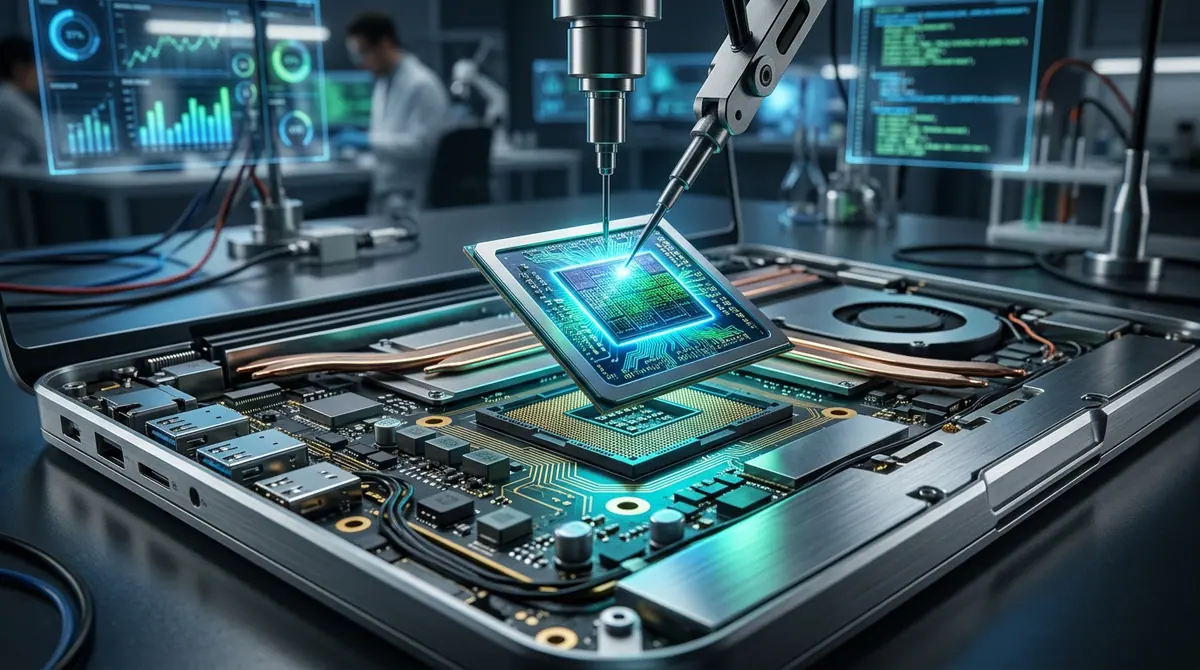
- Nvidia has launched RTX Spark, an Arm-based chip that combines Grace CPU cores and Blackwell GPU architecture for Windows PCs.
- The Microsoft Surface Laptop Ultra is the primary showcase for this chip, featuring up to 20 CPU cores and 128GB of unified memory.
- This move represents a direct challenge to Apple Silicon, aiming for thin-and-light designs with high-end workstation performance.
- Unlike Nvidia's push for a hardware reset, AMD is focusing on continuity and the reliability of its existing x86 platforms.
- The shift focuses on local AI agents, allowing computers to handle complex intelligence tasks without relying on cloud processing.
The End of the PC as We Know It
Imagine a laptop that handles the world’s most demanding artificial intelligence agents while sipping battery life like a smartphone, all while delivering the raw gaming power of a high-end desktop. This is no longer a Silicon Valley fever dream. According to a joint announcement by Nvidia and Microsoft on Monday, the era of the personal AI computer has officially arrived with the launch of the RTX Spark chip family. This move marks a seismic shift in the industry, as Nvidia transitions from being a specialized graphics card provider to a primary platform supplier for the next generation of Windows hardware.
The Surface Laptop Ultra: A New King of Portability
The centerpiece of this announcement is the Microsoft Surface Laptop Ultra, a device that researchers and industry insiders are already calling a MacBook Pro contender. As reported by Tom’s Guide, this new flagship is the most ambitious hardware pivot Microsoft has attempted in years. By ditching traditional x86 architecture for a custom Nvidia-designed Arm chip, Microsoft is aiming for the holy grail of computing: extreme power paired with incredible efficiency. Under the hood, the high-end configuration is a beast. PC Gamer reports that the system features an Nvidia Spark chip boasting up to 20 Grace CPU cores and a staggering 6,144 RTX Blackwell GPU cores. With support for up to 128 GB of unified memory, this machine is designed for creators and developers who need to run complex AI models locally rather than relying on the cloud.
Why RTX Spark is a Game Changer
Nvidia is marketing the RTX Spark as the most efficient PC chip ever built, a claim highlighted in a recent press release via GlobeNewswire. While efficiency is often a marketing buzzword, the technical specs suggest a genuine leap forward. By integrating the CPU, GPU, and AI acceleration into a single, tightly controlled platform, Nvidia is following the blueprint laid out by Apple with its M-series silicon. This integration allows for a 14-inch laptop that is only 14 millimeters thick and weighs roughly three pounds, yet can purportedly deliver 100 frames per second in the latest games at 1440p resolution. As noted by Windows Central, this hardware shift puts the Surface line back on the forefront of innovation, potentially ending a decade of playing catch-up to Apple’s hardware performance.
What Changed: The Shift to Personal AI
In the past, AI on a laptop usually meant a simple background blur for video calls or a slightly smarter search bar. The new RTX Spark ecosystem changes this by focusing on agentic workloads. This means the computer isn't just a tool you use, but a system that can perform tasks on your behalf locally and securely. Unlike previous years where AI was a secondary feature, Microsoft and Nvidia are positioning these machines as local AI powerhouses where the silicon is specifically tuned for constant, real-time intelligence. This is a move away from the discrete GPU model toward a unified, efficient architecture where the AI engine is as central as the keyboard itself.
A Divided Industry: AMD’s Strategy
Not everyone is rushing to reinvent the wheel, however. While Nvidia and Microsoft are pushing for a platform reset, AMD is taking a notably different path. Recent reporting suggests AMD is emphasizing maturity and stability over radical shifts. Instead of forcing users onto entirely new architectures that might face software compatibility hurdles, AMD is doubling down on the reliability of its existing Ryzen and Radeon strengths. This creates a fascinating tension in the market: do you jump into the Arm-based AI future with Nvidia, or do you stick with the proven, high-performance x86 ecosystem that AMD has refined over decades?
What to Watch Next
As these devices begin to hit the market, the real test will be software compatibility. Windows-on-Arm has historically struggled with legacy apps, but the sheer power of the RTX Spark might finally provide the overhead needed for seamless emulation. Watch for the first independent benchmarks to see if Nvidia’s efficiency claims hold up under real-world stress. Additionally, keep an eye on how Dell and other manufacturers respond. With Dell recently positioning its XPS 13 as a direct competitor to the MacBook, the industry is clearly in the middle of a price and performance war that benefits the consumer.
The Future is Local
The launch of RTX Spark signifies that the battle for the future of the PC will be won on the edge, not in the cloud. By bringing high-end graphics and massive AI compute power into thin, light laptops, Nvidia and Microsoft are essentially giving every user a supercomputer that fits in a backpack. Whether you are a student looking for a machine that can last through two days of classes or a professional developer training local neural networks, the landscape of computing has just been permanently altered. The era of the general-purpose PC is fading, replaced by the era of the personal AI partner.
Sources (6)
Discussion (0)
Commenting as
No comments yet. Be the first to share your thoughts!
The discussion could not be loaded. Please refresh the page.
Education technology researcher and policy analyst


