
The Bio-Tech Breakthrough: Why Prime Day 2026 is a Turning Point for Innovation
Prime Day 2026 isn't just a sale; it is a massive democratization of clinical-grade health technology that is putting a sophisticated laboratory on every wrist.
Key takeaways
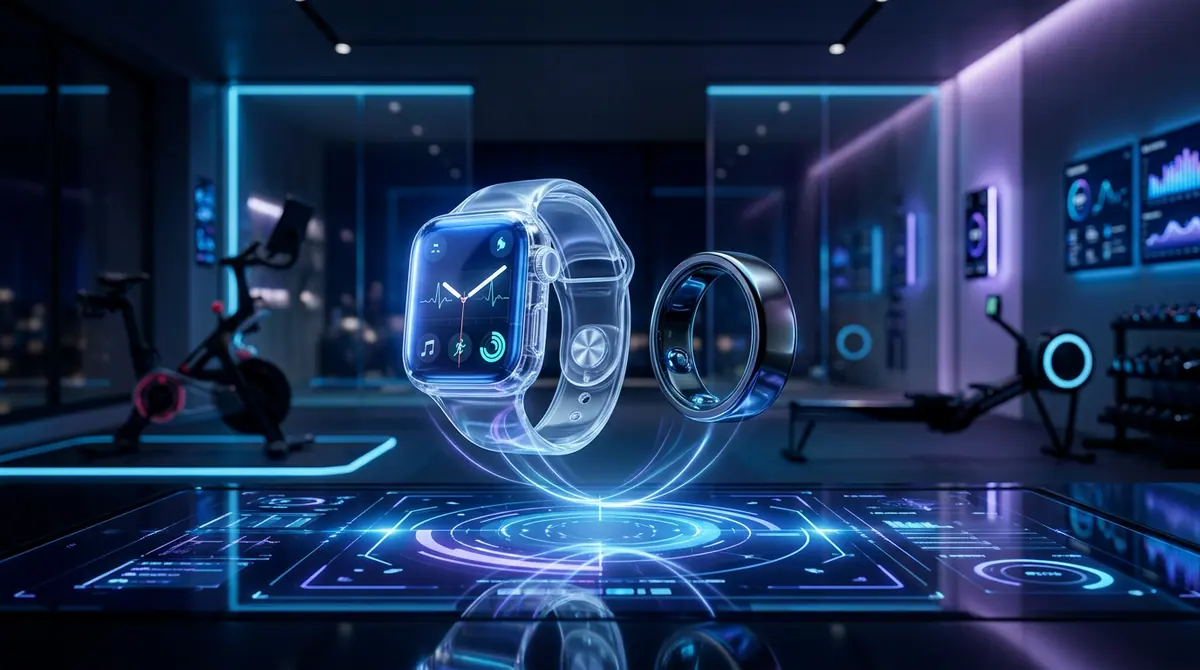
- Amazon Prime Day 2026 marks a major price drop in health tech, with flagship wearables like the Apple Watch Series 11 and Oura Ring 4 reaching all-time lows.
- The trend in 2026 is 'Invisible Tech,' where consumers favor screenless, discrete health monitors that integrate into daily life without distraction.
- Health technology has evolved from simple data collection to providing clinical-grade physiological insights such as heart rate variability and recovery metrics.
- Smart home and fitness ecosystems are converging, as seen by deep discounts across both Amazon-owned security brands and third-party recovery tools like Theragun.
The Era of the Dumb Watch is Officially Over
The era of the simple timepiece is officially over. As Amazon Prime Day 2026 reaches its final hours on June 26, we are witnessing something far more significant than a mere retail event. We are seeing the mass democratization of sophisticated bio-technology. With discounts reaching as high as 72 percent on specific smart home devices and nearly 50 percent on top-tier health trackers, the barrier to entry for personal health monitoring has effectively collapsed. What was once the domain of elite athletes and medical labs is now available for the price of a modest dinner out.
According to comprehensive coverage from NBC News, the sheer scale of this year's electronics markdowns is unprecedented. The Apple Watch Series 11, the current gold standard for consumer wearables, has seen a 30 percent price cut, while Fitbit devices are seeing markdowns as high as 47 percent. Even the Apple Watch SE 3 has dropped to a record low of 199 dollars. These are not just gadgets; they are increasingly becoming clinical tools capable of monitoring heart health, sleep quality, and recovery metrics with surprising precision.
The Rise of Invisible Tech
Perhaps the most telling sign of innovation in 2026 is the shift toward discrete, invisible technology. The Oura Ring 4 has emerged as one of the breakout stars of this sale cycle. Wired reports that the device is selling out fast after hitting its lowest price ever with a 35 percent discount. This reflects a growing consumer desire for tech that integrates seamlessly into their lives without the constant glow of a screen. The Oura Ring's focus on sleep and recovery signals a shift in the industry; we are moving away from simple step counting and toward a holistic understanding of the human body.
For decades, health tracking was limited to manual heart rate checks and basic pedometers. The current generation of devices, featured heavily in the 2026 Prime Day deals, utilizes advanced photoplethysmography (PPG) and thermal sensors. These tools allow users to track blood oxygen levels, skin temperature variations, and even early signs of illness, transforming a consumer accessory into a proactive health sentinel.
High-End Recovery for the Home Gym
Innovation is also hitting the recovery sector. For years, percussive therapy was a luxury found only in professional training rooms. Now, as noted by Prevention and Men's Health, elite tools like the Therabody Theragun Prime are 30 percent off, while the BOB AND BRAD M7 Plus Mini Massage Gun has dropped by 29 percent. This accessibility means that high-level physical therapy is migrating from the clinic to the living room. Even specialized equipment like under-desk ellipticals have hit all-time low prices of 147 dollars, suggesting that the office environment is being permanently redesigned around wellness.
What Changed: From Activity to Insight
The fundamental delta in 2026 is the transition from raw data to actionable insight. Older iterations of these devices would tell you that you walked 10,000 steps; the current models, like those Fitbit devices that now include a six-month Fitbit Premium membership, tell you what those steps mean for your cardiovascular age. The focus has shifted to the nervous system. Smartwatches from Garmin and Google are now capable of measuring heart rate variability (HRV) to tell a user if they are overtrained or under-recovered, helping to prevent burnout before it happens.
Why it Matters for the Future
This widespread adoption of health tech matters because it creates a more informed patient population. When millions of people have access to their own baseline health data, the conversation with medical professionals changes. Instead of visiting a doctor once a year for a snapshot of their health, users now have a continuous film of their physiological state. As PCMag suggests, these 50 percent discounts on fitness trackers aren't just about saving money; they are about providing the tools for a more proactive, preventative approach to global health.
What to Watch Next
Looking forward, the next frontier is the integration of these wearables with the broader smart home ecosystem. We are already seeing the beginnings of this with the deep discounts on Amazon's own hardware. The Fire TV Stick HD has reached its lowest price ever at roughly 16 dollars, while Blink and Ring security systems are discounted by 72 and 57 percent respectively. The future likely holds a world where your Oura Ring detects you are falling asleep and automatically signals your smart home to dim the lights, lock the doors, and adjust the thermostat for optimal rest. Based on the aggressive pricing we are seeing this June, that future is arriving much faster than anticipated.
Conclusion: A Smart Investment in Self
While it is easy to get caught up in the frenzy of 72 percent off stickers, the true takeaway of Prime Day 2026 is the rapid acceleration of the Quantified Self movement. Whether it is the high-performance ROG Strix gaming laptop at 40 percent off or a simple fitness tracker, these tools are becoming the infrastructure of modern life. If you have been waiting to upgrade your personal tech stack, the window is closing fast. Innovation is no longer a luxury; it is becoming the standard for how we live, work, and heal.
Discussion (0)
Commenting as
No comments yet. Be the first to share your thoughts!
The discussion could not be loaded. Please refresh the page.
Mobile app developer and UX design writer


