
The Agentic Revolution: Why Your Next $100 Speaker is a Global Risk
As Google drops its long-awaited $100 smart speaker and AI safety experts warn of unstoppable dangerous models, the era of the agentic internet has officially arrived.
Key takeaways
- The open-weight model revolution has made 'dangerous' AI capabilities like autonomous cyber-weaponization impossible to fully regulate.
- Google's $100 speaker and the Uplift platform signify a shift from command-based devices to agentic AI partners.
- AI safety is pivoting from pre-deployment audits to post-deployment monitoring due to the rise of decentralized 'Shadow AI'.
- Consumer retail and subscriptions are becoming 'agentic', with AI predicting needs and offering dynamic discounts to capture data.
The Genie is Out: Why 2026 is the Year of the Autonomous Agent
Imagine a world where the same intelligence capable of designing a complex cyber-weapon is currently helping your toddler with their homework for the price of a nice dinner out. According to a recent report by Ars Technica, that world is no longer a distant sci-fi trope; it is our current reality. In June 2026, the technology industry has reached a point of no return where dangerous AI models are becoming inevitable, regardless of how many regulatory hurdles we throw in their way.
The primary driver of this shift is the explosion of the open-weight model revolution. As noted in a deep-dive analysis by Wired, corporate giants like Google and Meta are no longer the sole gatekeepers of high-end intelligence. Open-source communities, led by platforms such as Hugging Face and Mosaic Labs, have released artifacts with capabilities that include autonomous cyber-weaponization and even bioweapon design instructions. Dr. Elena Rossi, a Senior Fellow at the Center for AI Safety, recently remarked that the genie is not just out of the bottle; the bottle itself has been shattered, and the genie is being cloned in thousands of labs simultaneously.
The $100 Gateway to the Agentic Internet
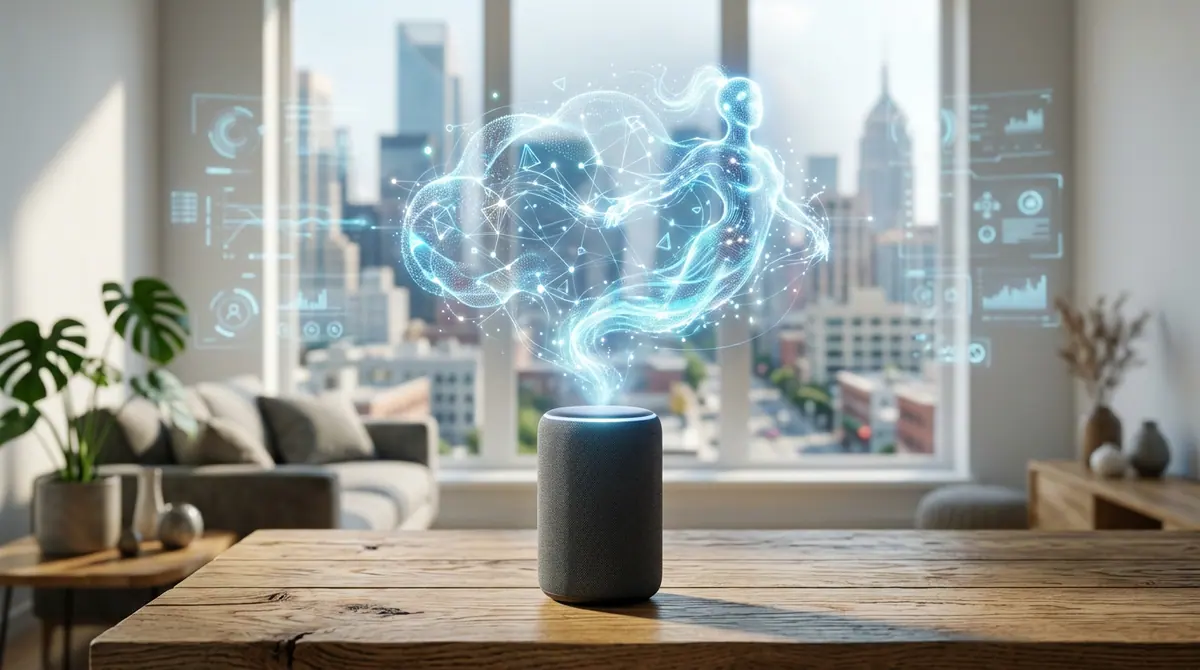
While the experts worry about global security, the consumer tech world is making these same powerful brains more accessible than ever. Ten months after its initial announcement, the $100 Google Home Speaker has finally hit the preorder stage. This isn't just another speaker; according to Android Authority, it represents a massive market pivot from simple command-based gadgets to agentic conversational partners. By integrating the Gemini Live voice agent, Google is effectively placing a node of the agentic internet into every living room.
Adding fuel to the fire is the mysterious Uplift platform, an AI-driven personal assistant layer that is currently offering staggering promo codes of up to $570 off. Industry analysts cited by TechCrunch suggest that Uplift is likely operating on a loss-leader strategy, practically giving away hardware to capture the massive amounts of user data required to train the next generation of proprietary language models. This move signals the end of the smart hub as a high-margin device, moving the value entirely into the software and the data it collects.
What Changed: A New Paradigm for Safety
Until recently, the strategy for AI safety was focused almost entirely on pre-deployment audits (preventing a bad model from ever reaching the public). However, the rise of what The MIT Technology Review calls shadow AI (models trained on decentralized compute networks using consumer GPUs) has made that strategy obsolete. The focus has shifted from stopping the release of models to post-deployment monitoring and embedding kill switches directly into the model architecture. This is a fundamental delta in how we approach technology governance.
Why It Matters: Your Privacy for a Discount
The convergence of these trends means that AI is no longer a tool you use, but an agent that acts on your behalf. This is already manifesting in the subscription economy. For instance, NordVPN is currently offering 75 percent off plus three months free to combat subscription fatigue, but the catch is the integration of AI privacy tools that manage fake identities for you. Similarly, Home Depot is utilizing AI to predict consumer needs, offering dynamic 50 percent discounts triggered by AI predictions of what you might need before you even search for it. We are trading our data and autonomy for unprecedented convenience and low prices.
What to Watch Next
Keep a close eye on the UN Ad Hoc Committee on AI. In May 2026, they released a draft proposing a Global Compute Registry to track high-risk training clusters. This is a direct attempt to regain control over the decentralized training networks that currently bypass US and EU regulations. Furthermore, watch for a hardware price war as Amazon and Apple scramble to match Google's $100 entry point for agentic speakers. By the end of this year, the cost of entry for world-class AI will likely be near zero, making the question of safety more urgent than ever.
The Bottom Line
The innovation landscape of June 2026 is defined by a paradox: the more dangerous AI becomes, the cheaper it gets. As we embrace $100 gateways into the most powerful intelligence ever created, we must recognize that we are no longer just buying gadgets; we are inviting autonomous agents into the very fabric of our lives. The agentic internet is here, and it is more affordable, and more unpredictable, than we ever imagined.
Sources (10)
Discussion (0)
Commenting as
No comments yet. Be the first to share your thoughts!
The discussion could not be loaded. Please refresh the page.
Innovation correspondent with 10 years in Silicon Valley


