
The Age of Autonomous AI: Inside the GPT-5.4 and Genie 3 Breakthroughs
A new era of artificial intelligence has arrived, moving beyond simple chat to autonomous agents that can work for hours and generate entire interactive 3D worlds from scratch.
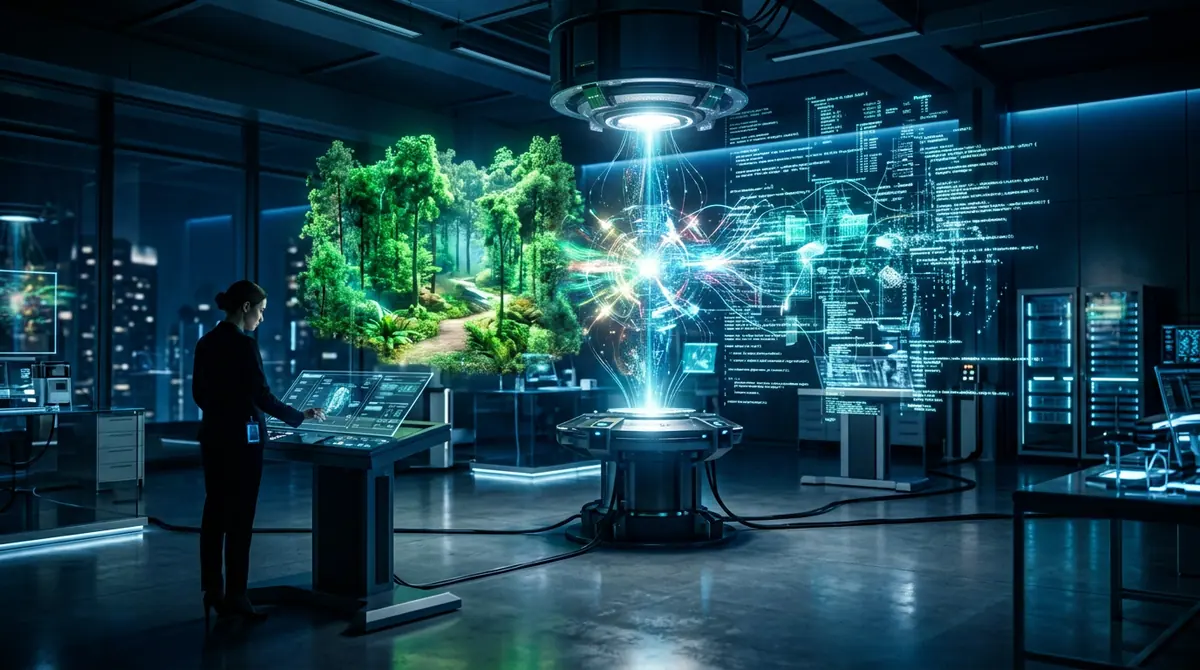
Key takeaways
- OpenAI GPT-5.4 sets new records in professional benchmarks like GPQA Diamond and SWE-Bench Pro.
- Google DeepMind's Genie 3 enables the generation of interactive 3D worlds from simple text prompts with physics support.
- Anthropic Claude Opus 4 introduces 7-hour autonomy, marking a shift from chatbots to independent AI agents.
- Global competition is intensifying with China's ban on foreign AI chips and massive investments in startups like Kling AI.
The Great AI Acceleration
Your computer is no longer just a tool; it is becoming a colleague that can build entire worlds while you sleep. In an unprecedented 72-hour window of innovation, the landscape of artificial intelligence has shifted from static chatbots to autonomous agents capable of independent reasoning and real-time world construction. According to a report by LinkedIn on the latest innovation trends, the release of OpenAI GPT-5.4 and Google DeepMind Genie 3 marks a definitive turning point in what we expect from machine intelligence.
The Power of OpenAI GPT-5.4
OpenAI has once again raised the bar with its newest frontier model, GPT-5.4. This is not just a marginal improvement over its predecessors. Instead, it is a model specifically engineered for complex, professional-level tasks that require high-order logic. In benchmark tests shared by OpenAI, the model scored a staggering 92.8 percent on the GPQA Diamond, a test designed to challenge experts in chemistry, biology, and physics. More impressively, it achieved 57.7 percent on SWE-Bench Pro, indicating a massive leap in the ability to solve real-world software engineering issues autonomously. For developers and researchers, this means an AI that does not just suggest code, but actually understands the architecture of entire systems.
Genie 3: From Text Prompts to Interactive Worlds
While OpenAI dominates professional logic, Google DeepMind is redefining visual creativity. Their new model, Genie 3, can generate fully interactive 3D environments at 720p resolution and 24 frames per second from a simple text prompt. Unlike traditional video generators that create static clips, Genie 3 incorporates physics support and memory. As noted in recent technical analysis, this allows users to enter and interact with the generated world as if it were a video game. This has profound implications for robotics training, education, and the future of game design, where a single sentence could create a playable universe.
The Rise of the Seven-Hour Worker
Perhaps the most shocking development comes from Anthropic with the launch of Claude Opus 4. In a move that challenges the very nature of human-AI interaction, Opus 4 can now operate autonomously for up to seven hours on long-running tasks. According to reporting from industry observers, this model outperforms competitors like Gemini 2.5 Pro in coding and complex tool use while maintaining high context retention over extended periods. We are moving away from the "prompt and response" era toward the "assign and review" era, where an AI can be tasked with a project in the morning and present a finished result by the afternoon.
Context Box: From Chatbots to Agents
For those new to the field, it is important to understand the shift from "Generative AI" to "Agentic AI." Early models like the original ChatGPT were designed to predict the next word in a sentence. Agentic AI, like the new Claude Opus 4 or GPT-5.4, is designed to pursue a goal. These agents can use tools, browse the web, and correct their own mistakes over hours of independent work without needing a human to guide every step.
What Changed and Why It Matters
The delta from just a few months ago is staggering. Previously, AI models were limited by their "context window," often losing the thread of a conversation after an hour of interaction. The new breakthroughs in memory and autonomy have largely solved this. Why does this matter? It means that AI is no longer a toy or a simple search engine; it is becoming a functional layer of global infrastructure. According to Reuters, the massive 2.8 billion dollar investment in Kling AI by Alibaba and Tencent highlights that the race is no longer just about who has the best chatbot, but who can build the most robust autonomous ecosystem.
What to Watch Next
Keep a close eye on the hardware sector. Anthropic is reportedly in early talks with Samsung to develop a custom AI chip to reduce its reliance on Nvidia, signaling a move toward vertically integrated AI companies. Simultaneously, the geopolitical landscape is heating up. According to reports from TechCrunch, China has recently banned foreign AI chips in state data centers, which will likely accelerate the development of domestic alternatives like Hangzhou-based DeepSeek, a startup that is already outperforming GPT-4 in reasoning and math benchmarks. The future of AI is not just about software; it is a battle for the very silicon it runs on.
A Final Thought
We are witnessing the birth of a new kind of digital life: one that doesn't wait for us to speak, but works alongside us to solve the world's most complex problems. Whether it is predicting 100 years of climate patterns in 25 hours or diagnosing retinal detachment with photonic AI, the boundaries of what is possible are dissolving before our eyes. The question is no longer what AI can do, but how we will choose to live in a world where it can do almost anything.
Sources (8)
Discussion (0)
Commenting as
No comments yet. Be the first to share your thoughts!
The discussion could not be loaded. Please refresh the page.
EdTech specialist and former computer science educator


