
The $63 Million Bet: Why Silicon Valley is Rewiring India’s Travel Infrastructure
A massive investment from General Catalyst signals a shift in global fintech: the battle for the future of travel isn't happening on booking sites, but in the invisible pipes of payments.
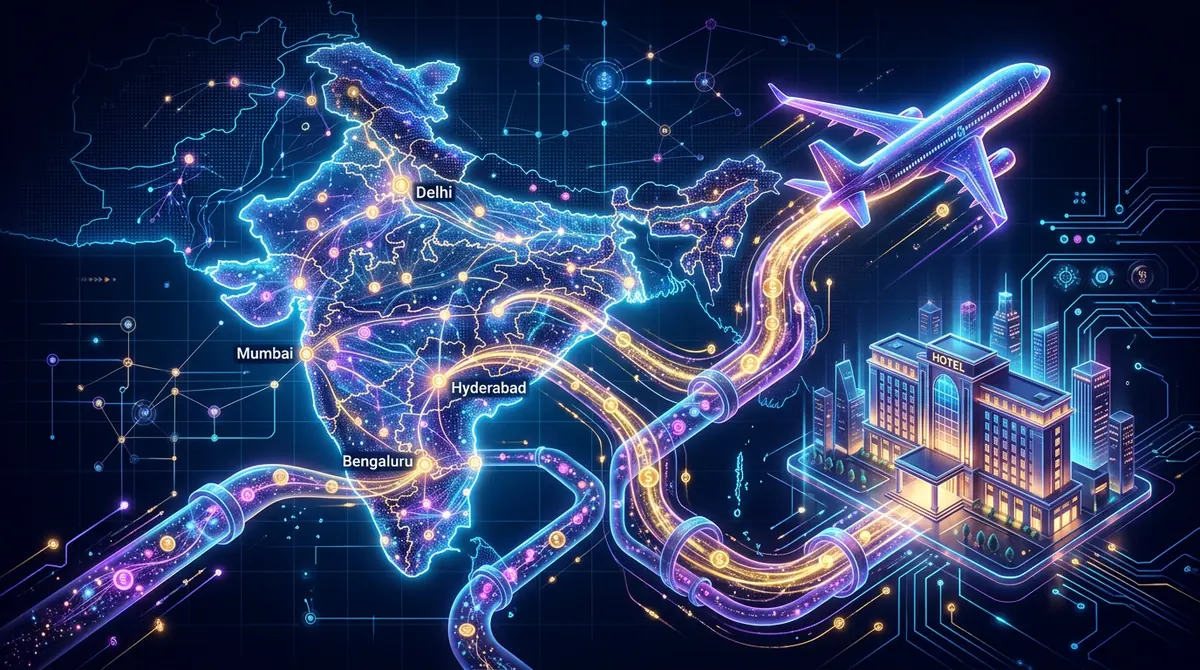
Key takeaways
- General Catalyst is pivoting toward fintech infrastructure rather than consumer-facing travel apps.
- India's travel market is a primary target due to its unique UPI-driven digital payment success.
- Solving the 'refund and cancellation' friction is the key to unlocking higher margins in the travel industry.
- Specialized payment layers are becoming more valuable than the booking platforms themselves.
The Invisible Revolution in Your Vacation Booking
Every traveler knows the specific anxiety of a canceled flight or a missing refund. While the front-end apps we use to book hotels and planes look sleek, the underlying financial plumbing is often a tangled web of legacy systems, currency conversions, and high-risk merchant accounts. This friction is exactly what a major new investment seeks to eliminate. According to a report by TechCrunch, the venture capital giant General Catalyst has led a 63 million dollar investment into an Indian company focused specifically on the travel payments market. This move signals a massive shift in how the tech industry views the future of global movement (and the money that fuels it).
Why Travel Payments Are a Different Beast
Unlike buying a pair of shoes online, travel transactions are uniquely complex. They involve long lead times between purchase and consumption, a high frequency of cancellations, and the constant need for multi-currency processing. For a merchant, managing the risk of a refund three months after a booking is a logistical nightmare. In India, this complexity is magnified by a rapidly digitizing population that is moving toward mobile-first commerce at a record-breaking pace.
The investment led by General Catalyst suggests that the industry is moving away from simply building better booking websites. Instead, the focus has shifted to building the infrastructure that allows travel companies to handle payments more efficiently. This includes solving the headache of cross-border settlements and providing better installment or credit options for consumers who want to book big-ticket trips without the immediate financial sting.
Context: The Indian Fintech Powerhouse
To understand why this 63 million dollar bet matters, one must look at the unique environment of the Indian market. Over the last decade, India has become a global leader in digital payments, largely thanks to the Unified Payments Interface (UPI). This system has made instant, mobile-to-mobile payments the standard for everything from street food to luxury goods. As domestic and outbound travel from India continues to surge, the need for a payment system that can bridge the gap between local UPI convenience and global travel standards has become a multi-billion dollar opportunity.
What Changed: From Consumer Apps to Infrastructure Gold
For years, venture capital flooded into Online Travel Agencies (OTAs) and booking platforms that competed for your attention with flashy ads. This latest deal marks a distinct pivot. Investors are now looking at the backend. By funding the payment layers that OTAs and airlines use, General Catalyst is betting on the "shovels" of the travel gold rush. This approach recognizes that no matter which booking site wins the popularity contest, the company providing the secure, efficient payment pipe will take a slice of every transaction.
Why It Matters for the Industry
This development is more than just a corporate balance sheet update; it is a signal to the entire fintech sector. It proves that specialized payment infrastructure for high-friction industries (like travel or healthcare) is the next frontier of growth. For the travel industry, better payment tech means higher conversion rates, fewer abandoned carts at checkout, and significantly lower operational costs related to fraud and refunds. For the consumer, it eventually means more transparent pricing and faster, automated refunds when things go wrong.
What to Watch Next
As this 63 million dollar infusion hits the market, keep a close eye on the "platformization" of travel. We are likely to see this Indian fintech model expand its footprint into Southeast Asia and the Middle East, where similar payment frictions exist. Additionally, watch for major global banks and card networks to either partner with or acquire these specialized infrastructure players. The goal is clear: a world where booking a flight across the globe is as seamless and risk-free as buying a cup of coffee at the corner store.
In the coming months, the success of this venture will be measured by how many travel intermediaries (the hotels and agencies you never see) adopt this new payment standard. If successful, the ghost in the machine of travel finance may finally be exorcised, leading to a smoother experience for millions of global travelers.
Discussion (0)
Commenting as
No comments yet. Be the first to share your thoughts!
The discussion could not be loaded. Please refresh the page.
Machine learning engineer and technical writer


