The 2026 Gift Revolution: How Innovation Is Redefining Your Daily Gear
Forget the generic gadgets of the past. New 2026 data shows a massive shift toward high-tech lifestyle integration that is transforming how we work, live, and give.
Key takeaways
- Innovation in 2026 has shifted from flashy novelty gadgets to integrated, practical lifestyle tech.
- Major media outlets like ABC News and Men's Health are prioritizing durability and utility in their tech coverage.
- The 20s demographic is a primary driver for the adoption of tech that blends professional competence with digital sophistication.
- Future trends point toward 'invisible interfaces' where technology anticipates user needs without constant notifications.
The 2026 Shift: Innovation as a Lifestyle
Your next favorite piece of technology might not look like a computer at all. In fact, it might look like a wallet, a pair of glasses, or even a simple piece of home decor. As we move through the middle of 2026, the line between technology and lifestyle has finally evaporated. According to a report by ABC News, the latest trends in consumer products show a move away from flashy, one-off novelties toward deeply integrated tech that solves real-world problems. This is not just a seasonal shopping spike; it is a fundamental shift in how innovation reaches the hands of the public.
For years, the tech industry focused on raw power, more megapixels, faster processors, and bigger screens. However, the data coming from major media outlets suggests that the modern consumer has reached a utility plateau. They no longer want a faster phone; they want a smarter life. This sentiment is echoed by Men's Health, which recently published a comprehensive guide to the gear that defines the current year. Their findings suggest that the most successful innovations are those that disappear into the user's routine, providing value without demanding constant attention.
What Changed: From Novelty to Necessity
In previous years, gift guides and innovation roundups were often filled with what industry insiders called landfill tech: cheap, battery-powered gadgets that were fun for a week before being tucked away in a drawer. The delta in 2026 is the focus on longevity and multi-purpose utility. The ABC News analysis points out that consumers are now prioritizing durability and software ecosystems over pure aesthetic appeal. We are seeing a rise in what designers call friction-less innovation, where the technology anticipates a need before the user even realizes it exists.
Additionally, the demographic focus of these innovations has widened. While tech was once seen as a playground for the young, outlets like Grown and Flown are documenting how these high-tech lifestyle improvements are being marketed to men in their 20s who are navigating the transition to professional life. This group is looking for products that signify both competence and sophistication, blending the digital and physical worlds seamlessly.
Why It Matters: The Tech-Lifestyle Convergence
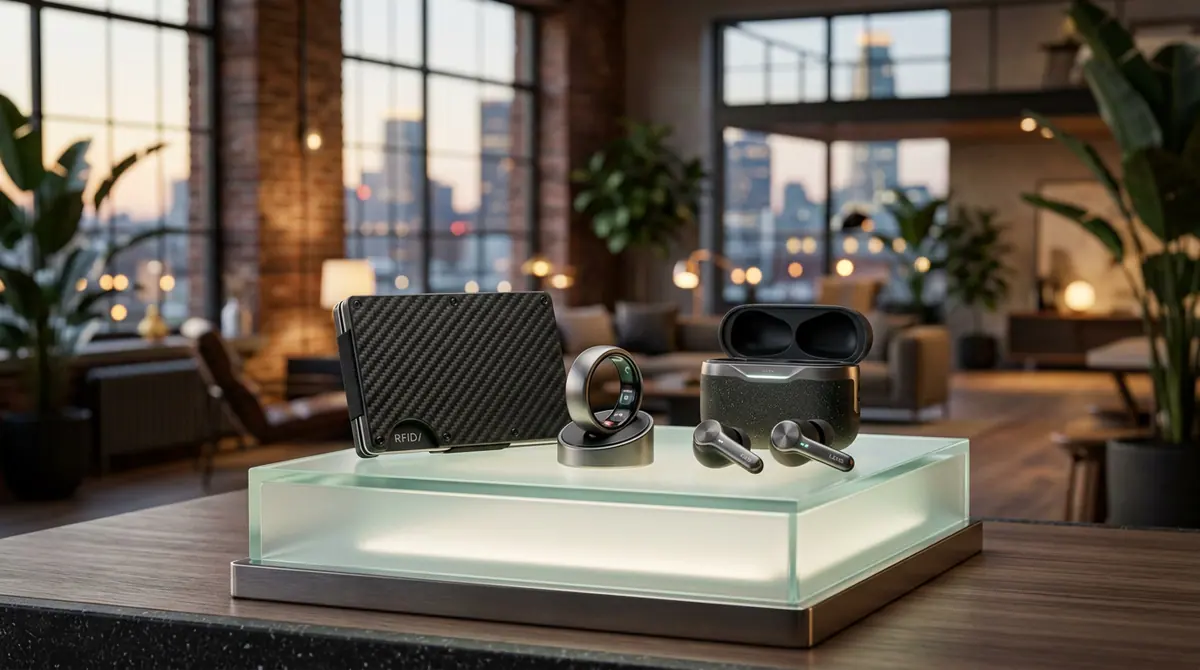
This trend matters because it signals the maturity of the Internet of Things (IoT) and wearable sectors. When Men's Health highlights a product as a must-have, it is no longer just about the hardware specs; it is about the data-driven insights that hardware provides. Whether it is a smart ring that monitors stress levels during a commute or a kitchen tool that uses AI to minimize food waste, the innovation is in the service, not just the device. This shift represents a trillion-dollar opportunity for companies that can master the art of the invisible interface.
For the average person, this means that the tools we use daily are becoming more empathetic. We are moving away from the era of notification fatigue and toward an era of quiet assistance. The innovation here is psychological as much as it is technological, as developers realize that the most valuable commodity in 2026 is not data, but human attention.
Context Box: The Evolution of the Consumer Guide
Consumer gift guides have evolved from simple catalog inserts into sophisticated data-driven reports. In the early 2010s, these lists were primarily driven by advertiser relationships. By 2026, however, they have become essential barometers for the technology industry. Major publishers now use complex analytics to determine which products actually improve quality of life, making these guides a vital part of the innovation feedback loop between manufacturers and the public.
What to Watch Next: The Era of Predictive Gifting
As we look toward the horizon of 2027, the next big leap will be predictive gifting and hyper-personalization. We are already seeing the seeds of this in the 2026 recommendations. As noted by current consumer trends, the move toward practical, tech-integrated items is only the beginning. Expect to see the rise of modular hardware that can be upgraded via software subscriptions, reducing electronic waste while keeping the user at the cutting edge. The focus will shift even further from what a device does to how a device feels, as emotional design becomes the new frontier of the tech industry.
The takeaway for everyone is simple: the most innovative tool in your life should be the one you forget you are even using. As the latest reports from ABC News and Men's Health demonstrate, the future of innovation is not about more noise; it is about better harmony between our digital tools and our physical lives. Whether you are a student, a professional, or a tech enthusiast, the message is clear: the best technology is the kind that helps you be more human.
Sources (4)
Discussion (0)
Commenting as
No comments yet. Be the first to share your thoughts!
The discussion could not be loaded. Please refresh the page.
How-to guide expert and developer advocate