
The $130 Billion Battle: Inside the Musk v. Altman Courtroom Drama
New testimony reveals Elon Musk tried to recruit Sam Altman for Tesla while claiming to protect OpenAI's nonprofit mission. Is this about ethics or high-stakes competition?
Key takeaways
- Testimony reveals Elon Musk attempted to recruit Sam Altman to Tesla, challenging his image as a purely mission-driven nonprofit defender.
- OpenAI's defense is focused on the 'Two Elons' narrative, arguing that Musk is a direct competitor via his company xAI.
- The lawsuit, seeking up to $130 billion, centers on whether OpenAI's shift from a nonprofit to a capped-profit model was a breach of fiduciary duty.
- The outcome of this trial will set a major legal precedent for how AI research labs are governed and funded in the future.
The $130 Billion Battle for the Soul of AI
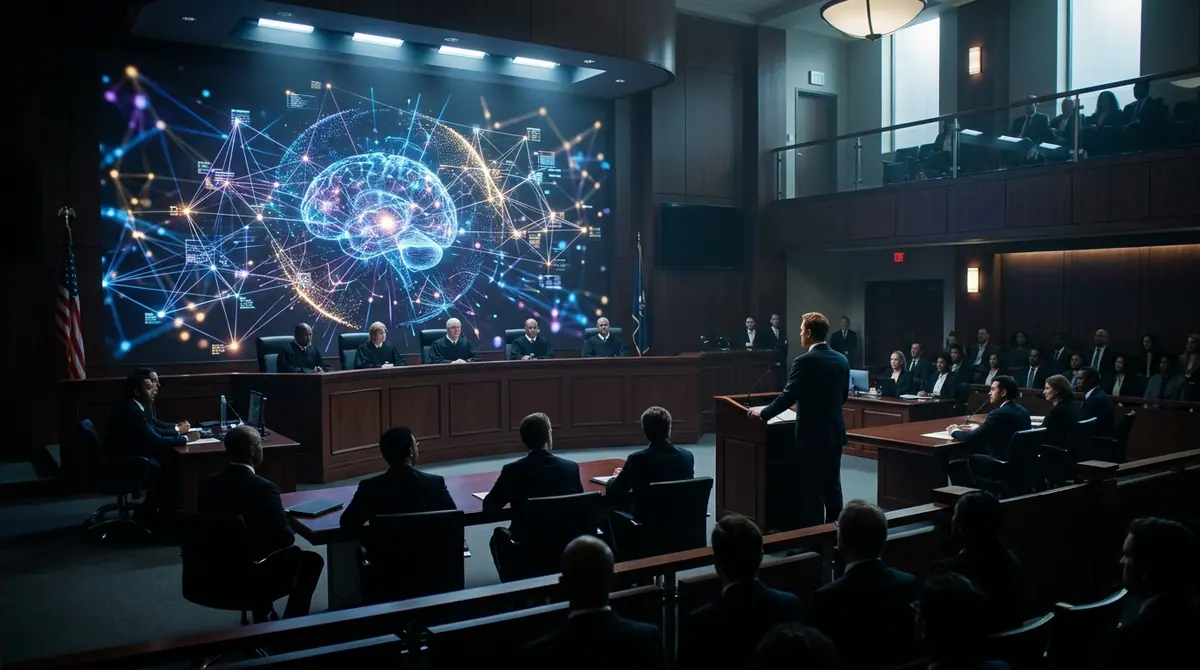
Imagine helping build the most powerful artificial intelligence laboratory on Earth as a selfless charity, only to find yourself suing that same organization for $130 billion a decade later. This is the staggering reality unfolding in a California federal courtroom where tech titan Elon Musk is locked in a legal war against OpenAI and its CEO, Sam Altman. According to day-to-day trial updates from ABC7 News, the second week of testimony has pulled back the curtain on the messy, high-stakes origins of the company that gave us ChatGPT.
Musk alleges that OpenAI and its founders breached their fiduciary duties by converting a charitable mission into a profit-driven enterprise. He claims that the original intent of OpenAI was to advance AI for the benefit of humanity, not to line the pockets of investors through a strategic partnership with Microsoft. However, as the trial enters its second week, the defense is painting a very different picture of Musk himself: one of a frustrated competitor rather than a betrayed benefactor.
The Witness at the Center of the Storm
The most compelling testimony this week came from Shivon Zilis, a former OpenAI board member and senior advisor to Musk at Tesla. Her dual role made her a bridge between the two camps during the years when their relationship soured. As reported by legal analysts at Bloomberg, Zilis was cross-examined on internal emails that suggest Musk was not merely a passive donor. Crucially, the evidence showed that Musk attempted to poach Sam Altman to join Tesla in the years following Musk's departure from the OpenAI board in 2018.
This revelation is a massive blow to the narrative that Musk was purely a guardian of the nonprofit flame. OpenAI's legal team is leveraging these documents to show that Musk had his own commercial ambitions for artificial general intelligence (AGI) and was actively trying to pull talent away from the lab he now claims to be protecting. When Zilis testified about voting for the $10 billion Microsoft deal in 2023, she admitted to consulting Musk on how to handle "tricky trust issues," highlighting the entangled interests of everyone involved.
The "Two Elons" Narrative
OpenAI's defense strategy has pivoted to a framing they call the "Two Elons" narrative. According to an analysis by MIT Technology Review, the defense describes the first Elon as the early benefactor who publicly championed open-source research. The second Elon, they argue, is the founder of xAI (a direct competitor to OpenAI) who is only litigating because he was outpaced in the race to build a frontier model.
The defense argues that Musk knew about the pivot to a capped-profit structure and even considered investing in it himself. Reuters has tracked financial filings showing that while Musk eventually declined to invest further, he remained supportive of the shift until OpenAI's valuation skyrocketed. This suggests that the current lawsuit may be motivated by "sour grapes" rather than a sudden realization of a lost mission.
Context Box: The Foundation of OpenAI
OpenAI was founded in 2015 as a non-profit research laboratory with the explicit goal of ensuring that AGI benefits all of humanity. Its early backers, including Musk, Peter Thiel, and Reid Hoffman, pledged over $1 billion to keep the lab independent of corporate influence. However, the sheer computational cost of training models like GPT-4 necessitated a radical change. This led to the creation of a "capped-profit" subsidiary in 2019, allowing the company to raise billions in capital from Microsoft while technically remaining under the control of the original nonprofit board.
Why It Matters: Setting the Rules for AGI
This case is about much more than money; it is a test of how the legal system treats the governance of future superintelligence. If the court rules in Musk's favor, it could create massive legal barriers for other AI nonprofits attempting to restructure or seek corporate funding. It raises the question: can a mission-driven organization ever truly survive the capital-intensive reality of modern machine learning?
While the lawyers argue, OpenAI is still attempting to prove its commitment to safety. In a recent blog post titled "Running Codex safely at OpenAI," the company detailed how it uses internal tools to monitor AI-generated code for malicious exploits and bias. They frame this as part of a "responsible scale" strategy, attempting to signal to the court and the public that despite their massive valuation, the safety-first mission remains intact. However, critics noted in reports from The Information that these safety protocols often take a backseat to product release cycles.
What to Watch Next
As the trial moves into its third week, expect the focus to shift toward Greg Brockman, OpenAI’s president, and the specific terms of the Microsoft agreement. The court must decide if OpenAI’s original charter constitutes a legally binding contract with its donors. If the jury finds that the founders misled Musk about the permanence of the nonprofit structure, the resulting damages could reshape the entire AI industry. For now, the world is watching as the pioneers of the AI age turn on one another, proving that even as we build machines that think, human nature remains as predictable and litigious as ever.
Sources (2)
Discussion (0)
Commenting as
No comments yet. Be the first to share your thoughts!
The discussion could not be loaded. Please refresh the page.
Cybersecurity and privacy journalist


