
OpenAI’s New Global Classroom: The High-Stakes Bet on National AI Education
OpenAI is moving beyond apps to partner with entire nations, deploying GPT-5.2 to classrooms from Italy to Estonia. Is this a learning revolution or a new form of digital dependency?
Key takeaways
- OpenAI is pivoting to country-level partnerships to embed AI into national education systems and workforce training.
- The program includes advanced tech like GPT-5.2 and ChatGPT Edu, offering official certifications for students.
- First-mover countries include Estonia, Italy, and the UAE, signaling a shift toward 'Sovereign AI' where governments treat AI as a public utility.
- While the program aims to reduce teacher workload, it raises concerns about long-term vendor dependency and the lack of independent longitudinal studies on learning outcomes.
The Sovereignty of Intelligence
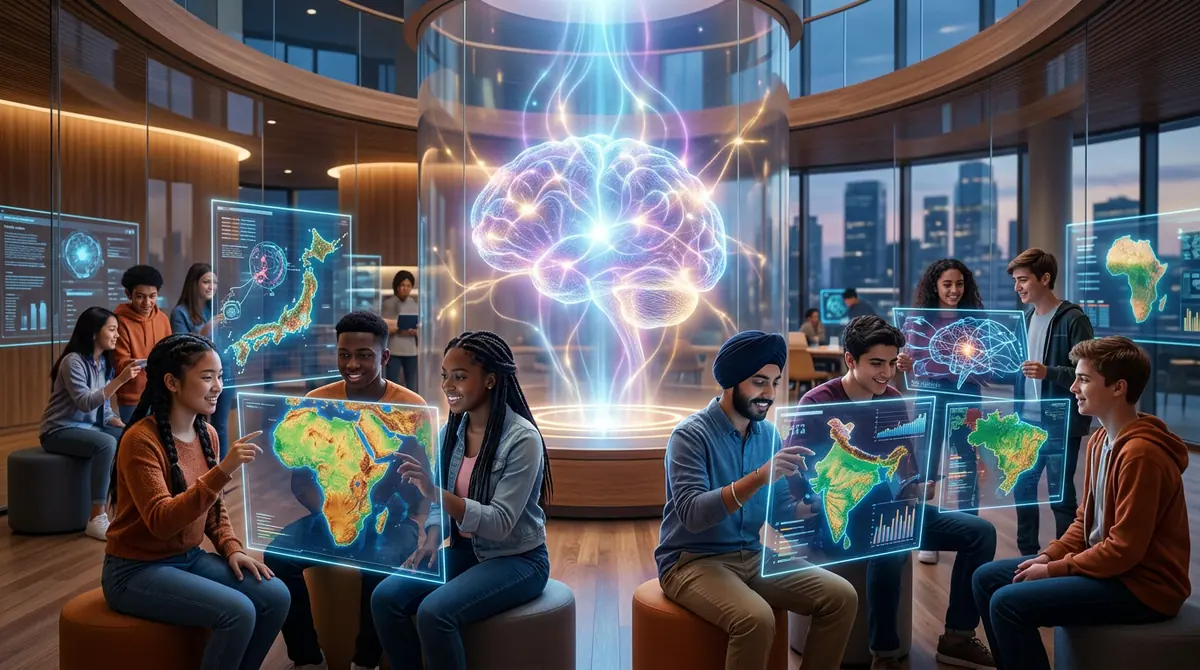
Imagine a classroom where every student, regardless of their background, has an elite tutor available 24 hours a day, tailored specifically to their learning pace and cultural context. This is the vision OpenAI is pitching to world leaders as it moves from being a Silicon Valley startup to a pivotal piece of national infrastructure. Through its newly announced Education for Countries program, the company is effectively attempting to install an AI operating system for the next generation of the global workforce.
A Blueprint for National Learning
OpenAI has officially entered a new phase of its global strategy, shifting away from individual subscriptions toward massive, country-level partnerships. According to an announcement on the OpenAI Blog, the company is collaborating with governments and university systems to integrate advanced tools directly into the fabric of public education. This initial rollout includes a diverse cohort of nations: Estonia, the United Arab Emirates, Greece, Italy, Jordan, Kazakhstan, Slovakia, and Trinidad and Tobago. As reported by Hyperight, these partnerships are designed to help governments scale AI literacy while providing students with job-ready skills for an economy that is changing by the week.
The Context: From App to Infrastructure
For newcomers to the AI space, it is important to understand the shift occurring here. For the last several years, AI has primarily lived in apps or browser tabs that individuals choose to use. Sovereignty-style partnerships represent a pivot where AI becomes a public utility, much like electricity or the internet. Instead of students just using ChatGPT for homework, governments are now looking to embed these models into the official curriculum and teacher training workflows to ensure no part of their population is left behind in the automation age.
What Changed: The Introduction of GPT-5.2
What makes this specific rollout different from previous initiatives is the sheer scale of the technology being deployed. This program is not just about the standard version of ChatGPT that most users know. According to reports from the EdTech Innovation Hub, OpenAI is providing partner countries with access to GPT-5.2, a more advanced iteration of its flagship model. Additionally, these nations will receive ChatGPT Edu, specialized Canvas interfaces, and a new Study Mode designed specifically for academic environments. This package also includes official training and certifications for students, marking the first time OpenAI has offered a formalized path to AI accreditation through government channels.
Why it Matters: The Risks of Digital Dependency
The move to embed proprietary AI into national education systems carries profound implications for the future of global policy. According to TechRadar Pro, while this initiative could help equalize AI usage between wealthy and developing nations, it also creates a significant risk of vendor dependence. If a country builds its entire teacher training and student assessment infrastructure on OpenAI’s proprietary models, switching to another provider or a local alternative becomes nearly impossible. Furthermore, as noted by the Conference of University Rectors in Italy (CRUI), these deployments are beginning at the university level to ensure that the highest levels of research and workforce preparation are aligned with the latest technological capabilities.
The Teacher Burden vs. The Data Gap
One of the primary selling points for these governments is the promise to reduce the administrative burden on educators. OpenAI claims its tools can handle grading, lesson planning, and personalized feedback, allowing teachers to focus on mentorship. However, as highlighted in reporting from Tech News TT, there is still an evidence gap regarding long-term learning outcomes. While OpenAI has committed to running national research to study productivity gains, critics remain concerned about whether these studies will be sufficiently independent or transparent to satisfy the needs of public ministries. There is a delicate balance between efficiency and the potential for a curriculum to be subtly shaped by the biases and limitations of a single company's algorithm.
What to Watch Next
The education world should prepare for a second, even larger wave of partnerships. OpenAI has already confirmed that a next cohort of partner countries will be announced later in 2026. Experts believe this will likely include more nations from Southeast Asia and South America. We should also watch for the emergence of specific national models. For example, the OpenAI for Greece program already includes an AI accelerator for local startups, suggesting that these educational partnerships are just the first step in a broader plan to build entire national AI ecosystems around OpenAI’s architecture.
Conclusion
We are witnessing the birth of a new social contract between Silicon Valley and the nation-state. By providing the tools that define how a generation learns to think and work, OpenAI is positioning itself as more than just a software provider; it is becoming a foundational architect of human capital. Whether this leads to a golden age of personalized learning or a new era of digital monopolies will depend on how rigorously these governments hold their AI partners accountable in the years to come.
Sources (6)
Discussion (0)
Commenting as
No comments yet. Be the first to share your thoughts!
The discussion could not be loaded. Please refresh the page.
AI researcher turned science communicator


