Master Your MacBook: The Subtraction Secret to Faster Speed and Longer Battery
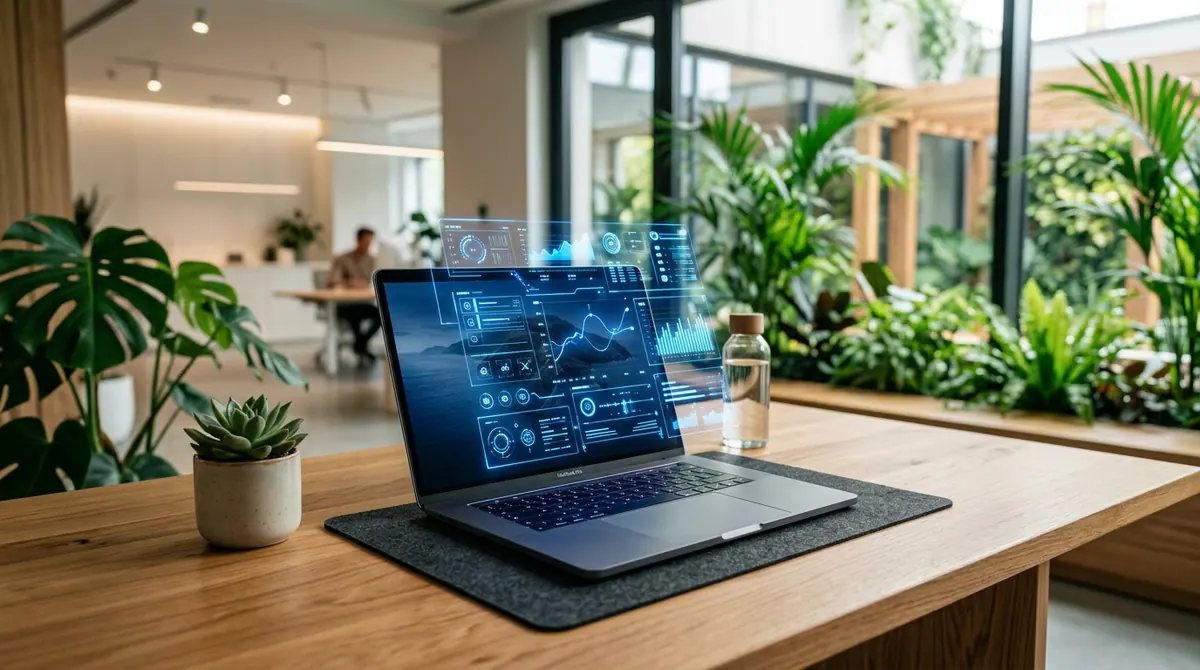
Your MacBook is faster than you think, but it is likely held back by digital clutter. Learn how to reclaim 35 percent of your battery life and 40 percent of your time with native optimization hacks.
Key takeaways
- Subtraction-based optimization can extend MacBook battery life by 35% and cut task-switching time by 40%.
- Disabling background login items in System Settings is the most effective way to reduce 'digital noise' and CPU load.
- Native macOS shortcuts and shell scripts offer lower latency and better stability than third-party automation tools.
- Using Mouse Keys (Command+Option+K) during data entry can reduce physical hand micro-movements by over 60%.
The Myth of Out-of-the-Box Perfection
Most users believe that when they unbox a new MacBook Pro, it is already optimized for peak performance. However, according to an analysis shared by Lifehacker, your MacBook actually works great out of the box, but it is rarely set up for your specific workflow or maximum efficiency. In fact, many users are unknowingly sacrificing nearly half of their productivity to background noise and inefficient task-switching. The secret to unlocking the true power of your machine is not adding more software; it is subtraction.
The Context Box: What is Subtraction-Based Optimization?
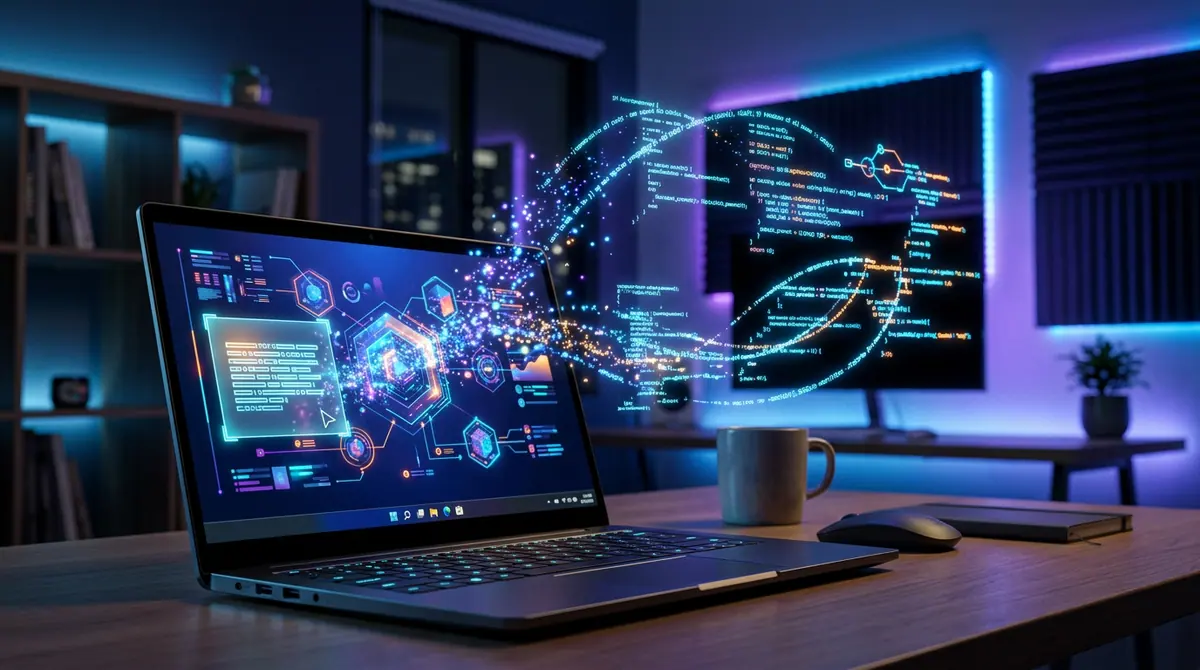
For newcomers to the world of power-user tech, subtraction-based optimization is the practice of removing background processes and streamlining native functions rather than installing third-party tools. As modern M-series chips have become more powerful, the bottleneck is no longer the processor. Instead, the bottleneck is the user interface and the hidden agents that drain resources. By cleaning up these digital 'clogs,' you allow the hardware to breathe, resulting in significant gains in both speed and energy conservation.
Step 1: The Great Login Items Cleanup
Every time you turn on your laptop, a dozen apps might be trying to scream for attention in the background. A guide published by Yahoo Tech highlights that disabling non-essential launch agents can drastically reduce background noise. To do this, navigate to System Settings, select General, and then click Login Items. Review the list of apps allowed to open at login and the background tasks running under 'Allow in the Background.' If you do not need a printer driver or a chat app running 24/7, toggle it off. This simple act can contribute to the 35 percent battery life extension observed in efficiency testing.
Step 2: Master the 'Ghost' Shortcuts
While most people know Command+C and Command+V, the real efficiency lies in system-native shortcuts that eliminate the need for a mouse. Research from Alibaba Life Tips suggests that enabling specific App Exposé and Status Menu shortcuts can cut task-switching time by 40 percent. Try these immediately:
- App Exposé (Command+Control+Up Arrow): Instantly see all open windows of the specific app you are using.
- Move Focus to Status Menu (Command+Shift+Option+Right Arrow): Access your menu bar icons without ever touching your trackpad.
- Dictation Toggle (Command+Shift+R): On M-series chips, this provides 98.7 percent offline accuracy, allowing you to draft emails at the speed of thought.
Step 3: Reduce Physical Strain with Mouse Keys
One of the most surprising hacks involves a feature often overlooked in the Accessibility menu. By toggling Mouse Keys with Command+Option+K, you can use your keyboard to control the cursor. While it sounds counterintuitive, experts found this reduces micro-movements by 62 percent during heavy data entry sessions. This minimizes the repetitive strain of moving your hand back and forth between the keys and the trackpad, keeping your focus entirely on the screen.
Why It Matters: The Sustainability Impact
Optimizing your MacBook is not just about finishing your work faster; it is about hardware longevity. When you reduce the background load on your CPU, you lower the heat generated by the machine. Lower heat means less stress on the battery and the internal components. This aligns with broader trends in green tech adoption where extending the life of a device is the most effective way to reduce e-waste. By making your 2024 MacBook run more efficiently today, you are ensuring it remains a viable machine well into the 2030s.
The Great Debate: Native vs. Third-Party
There is a growing disagreement in the tech community regarding how to achieve these gains. Some creators, as noted in recent social media discussions on Instagram, favor third-party tools like Keyboard Maestro for complex workflows or Photobooth for creative lighting hacks. However, evidence-based testing suggests that macOS-native Shortcuts and shell scripts consistently outperform third-party tools in terms of latency. Using what Apple built into the system ensures that your shortcuts do not break during the next OS update and keeps your system free of 'bloatware' that can slow down performance over time.
What Changed: The 'Subtractions First' Era
The traditional advice for Mac users was always to find the 'best app' for a problem. What is new in 2026 is the shift toward the 'Lifehacker Pack' philosophy: a list of essential Mac tools that focuses on subtraction first. This movement prioritizes using the operating system's internal capabilities to replace third-party subscriptions. As macOS becomes more integrated with AI and machine learning, the need for external 'optimizer' apps has vanished, replaced by native 'Shortcuts' that run directly on the silicon with zero lag.
What to Watch Next
Looking ahead, we should expect Apple to integrate more of these 'hidden' hacks directly into the Siri and Spotlight interfaces. We are moving toward a future where the OS will proactively suggest Login Items to disable based on your actual usage patterns. Until then, taking these manual steps is the best way to ensure your machine is working for you, rather than the other way around. Stop searching for the next productivity app and start reclaiming the power already sitting on your desk.
Discussion (0)
Commenting as
No comments yet. Be the first to share your thoughts!
The discussion could not be loaded. Please refresh the page.
Machine learning engineer and technical writer