How to Build a Fail-Safe Home Power Backup System Without Gas
Stop worrying about power outages. Learn how to transition from noisy gas generators to a clean, solar-ready battery system that keeps your lights on and your food cold.
Key takeaways
- Prioritize Lithium Iron Phosphate (LFP) battery chemistry for a lifespan exceeding ten years.
- Calculate your 'essential load' plus a 20 percent buffer before choosing a power station capacity.
- Invest in a scalable ecosystem like EcoFlow to allow for future expansion with solar panels and extra batteries.
- Leverage tax incentives and retail bundle deals to offset the high initial cost of whole-home backup systems.
The Modern Way to Survive a Blackout
Most people realize they need a backup power plan only when the lights flicker and the refrigerator hums to a stop. For decades, the only solution was a heavy, loud, gas-guzzling generator that required constant fuel and a strong arm to start. But the landscape of home resilience is changing rapidly. You no longer have to store gallons of flammable liquid in your garage to keep your family safe during a storm. Instead, a new generation of portable power stations is allowing homeowners to build silent, emission-free backup systems that can be charged by the sun.
The Context: Battery Stations vs. Gas Generators
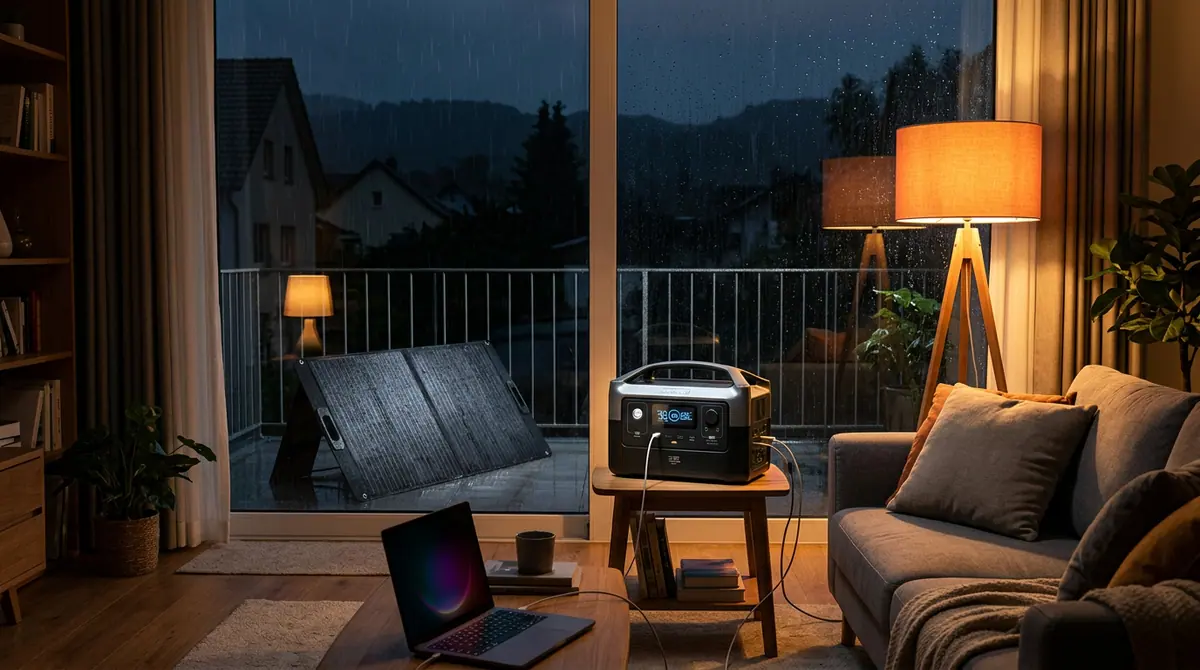
Traditional generators rely on internal combustion engines, which means they cannot be used indoors due to carbon monoxide risks. Portable power stations, like the EcoFlow Delta series, are essentially massive lithium batteries equipped with sophisticated inverters. They can sit right in your living room, powering your microwave or CPAP machine without a sound. According to research from Popular Mechanics, newer units like the Delta Pro 3 are now capable of basic whole-home backup, boasting a 3,600-watt output that handles heavy appliances with ease. This shift from fuel to electricity is not just a trend; it is a fundamental change in how we manage household emergencies.
Step 1: Calculate Your Essential Load
Before you buy any equipment, you must know what you are trying to save. Look at the back of your refrigerator, your router, and your lamps to find the wattage. A standard refrigerator usually draws about 100 to 200 watts while running, but it requires a much higher surge to start the compressor. When shopping, look for the peak output rating of your station. The EcoFlow Delta 2, for example, offers an 1,800-watt output, which is generally sufficient for individual appliances but might struggle if you try to run a space heater and a fridge simultaneously. Always aim for a capacity that is 20 percent higher than your calculated needs to ensure a safety margin.
Step 2: Choose Your Ecosystem Wisely
One of the most important lessons in modern tech is that you are not just buying a product; you are buying into an ecosystem. Lifehacker reports that retail deals on these systems often focus on price drops, sometimes exceeding 400 dollars, but the real value lies in scalability. Companies like EcoFlow design their products to work with extra batteries and solar panels. If you start with a base unit today, you should ensure it can be expanded later. This is similar to the strategy used by tool brands like Ryobi. As noted by Lifehacker, Home Depot often uses free tool promotions to lock users into a specific battery platform. Choose a power station brand that offers robust support for solar integration and modular battery add-ons so you do not have to replace the entire system as your needs grow.
Step 3: Integrate Solar for Indefinite Runtime
A battery is only as good as your ability to recharge it. During a multi-day outage, a standalone power station will eventually run dry. This is where solar panels become essential. Most modern stations include a built-in MPPT controller, which allows you to plug solar panels directly into the unit. According to product specifications from EcoFlow, their systems are frequently bundled with 400-watt solar kits. These can recharge a large station in a single day of clear sunlight. For those living in areas with frequent storms, consider a hybrid approach. The Smart Generator 4000, for instance, supports both gasoline and propane, acting as a secondary fail-safe to charge your batteries when the sun is not shining.
Step 4: Maximize Value and Efficiency
High-end backup systems represent a significant investment, but there are ways to offset the cost. Many of these large-capacity batteries qualify for federal tax incentives if they are used as part of a residential solar setup. Furthermore, you should focus on battery chemistry. Look for units that use Lithium Iron Phosphate (LiFePO4 or LFP) cells. These batteries are rated for thousands of cycles, meaning they can last for a decade or more of regular use, unlike older lithium-ion versions that degrade much faster. This long-term durability is a key reason why independent reviews prioritize battery chemistry over mere brand recognition.
Why It Matters
This shift to battery-based backup systems is crucial because it democratizes energy independence. In the past, only those with the physical strength to manage gas engines and the space to store fuel could prepare for outages. Now, even apartment dwellers can have a reliable backup source. As modern vehicles and homes become more software-heavy and feature-rich, the number of potential failure points in our daily lives increases. Just as Toyota SUV buyers must now look at model-specific data rather than general brand reputation, power station buyers must look at specific output and chemistry to ensure their home remains functional.
What to Watch Next
Watch for the integration of Artificial Intelligence in home energy management. We are moving toward a future where your power station will communicate with your weather app, automatically topping off its charge when a storm is detected in the forecast. Additionally, as AI subscriptions become more common for creative and professional work, we may see power stations bundled with software that optimizes energy use based on your specific daily habits. The goal is no longer just to survive a blackout, but to live through one without even noticing the grid has gone down.
Conclusion
Building a home backup system is no longer about mechanical grit; it is about smart planning. By choosing a scalable battery ecosystem, integrating solar power, and focusing on long-lasting LFP chemistry, you can protect your home from the increasing instability of the power grid. The best time to prepare was yesterday, but the second-best time is today while technology is more accessible and affordable than ever before.
Sources (6)
Discussion (0)
Commenting as
No comments yet. Be the first to share your thoughts!
The discussion could not be loaded. Please refresh the page.
Open source advocate and full-stack developer