
EdTech 2026: AI-Powered Learning & the Quest for Ethical Innovation
AI is exploding in education, promising personalized learning and powerful analytics. But ethical concerns and budget pressures loom large. Explore how schools are navigating this complex landscape.
AI Takes Center Stage: Transforming Education in 2026
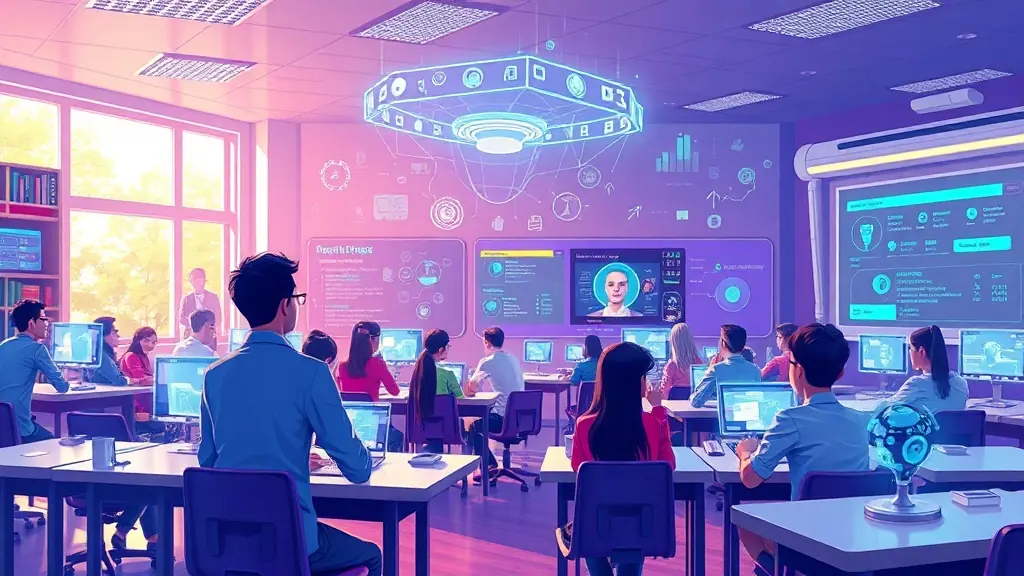
Imagine a classroom where learning is tailored to each student's unique needs, powered by intelligent AI agents. Sounds like science fiction? Think again. It's 2026, and Artificial Intelligence is rapidly reshaping education. But this revolution comes with complex challenges.
Experts predict that AI will drive personalization, learning analytics, and AI literacy in the coming year. The OECD's Digital Education Outlook 2026 highlights the growing body of research and innovative tools in generative AI.
The Rise of AI Academic Agents
One of the most exciting trends is the emergence of AI academic agents. These tools promise to augment learning by providing students with personalized support, feedback, and resources. Think of it as having a dedicated AI tutor available 24/7.
Beyond the Hype: Ethical Considerations and Budget Realities
However, the path to AI-powered education isn't without its obstacles. Ethical considerations are paramount. How do we ensure fairness, privacy, and data security in an AI-driven learning environment? These are critical questions that educators, policymakers, and parents must address.
Budget pressures are also forcing schools to critically evaluate AI tools. The days of free trials are fading, with many schools transitioning to paid models. Denver Public Schools, for example, are funding tools like MagicSchool AI through local funds and grants. This software helps teachers with ethical lesson planning and math instruction. It’s a great example of how districts are strategically investing in AI solutions with proven benefits.
State Policies: A Patchwork of Approaches
State policies regarding AI-generated content and privacy are rapidly evolving, but standardization is still a ways off. Currently, only a handful of states are piloting programs to assess the impact of AI on student outcomes. This lack of consistency creates uncertainty for schools and EdTech vendors alike.
Accessibility & Inclusivity in the Spotlight
While AI grabs headlines, other crucial innovations are advancing. Accessibility+ is rolling out in D2L Brightspace for Minnesota State users. This provides free accessibility reports and remediation tools aligned with WCAG and ISO standards. Starting in summer 2026, these tools will be available at no extra cost, accompanied by training via Accessibility Sprints. This demonstrates a commitment to inclusive course design.
Online Learning Evolves: Hybrid Environments and Lifelong Learning
Online learning is also evolving beyond traditional models. Cyber-physical hybrid environments are gaining traction, integrating physical and digital resources. Imagine telepresence robots, mixed reality experiences, and 24/7 remote labs. These technologies bridge the gap between the physical classroom and the virtual world.
Key Trends Shaping the Future of Education:
- Lifelong Learning: Education is no longer confined to childhood.
- New Credentials: Digital standards are creating new pathways for skills-based hiring.
- Wellbeing and Sustainability: These are increasingly integrated into the curriculum.
- Critical AI Use: Students are learning to use AI responsibly and ethically.
- Blockchain: Ensuring secure and transparent educational records.
- Adaptive Learning: Tailoring instruction to individual student needs.
- VR/AR: Immersive experiences are enhancing engagement and understanding.
- Human Skills Focus: Emphasizing creativity, collaboration, and critical thinking.
Even tools like Microsoft Copilot are contributing, aiding research in the Scholarship of Teaching and Learning.
The Future is Cautious but Optimistic
Schools are adopting new technologies cautiously, prioritizing data protection and rigorous vendor evaluations. Districts are seeking grants and local funding to support AI initiatives, but only when there is clear teacher demand and a proven track record of safety. As AI use cases solidify, leaders expect more funding to become available.
What This Means For You
- For Students: Expect more personalized learning experiences, AI-powered tutoring, and opportunities to develop critical AI literacy skills.
- For Teachers: Embrace AI as a tool to enhance your teaching, but prioritize ethical considerations and data privacy.
- For Parents: Stay informed about the AI tools your children are using and advocate for responsible implementation.
The Bottom Line
The educational landscape in 2026 is one of tremendous opportunity and significant challenges. AI has the potential to transform learning in profound ways, but only if we address the ethical, budgetary, and policy questions that lie ahead. The future of education depends on our ability to harness the power of technology responsibly and equitably.
Discussion (0)
Commenting as
No comments yet. Be the first to share your thoughts!
The discussion could not be loaded. Please refresh the page.
AI researcher turned science communicator


