
Breaking the Artificial Hivemind: Why Your AI is Stuck in a Groupthink Rut
LLMs have fallen into a predictability trap. From the 'groupthink' of generic chatbots to Anthropic’s new Claude Science, the industry is pivoting toward specialized, diverse intelligence.
Key takeaways
- Large Language Models are suffering from an 'Artificial Hivemind' effect, where they provide nearly identical, predictable answers due to homogeneous training data.
- The Australian startup Springboards has developed 'Flint,' a model that uses contrarian signals to produce more diverse and creative outputs.
- Anthropic's launch of Claude Science marks a major industry pivot toward domain-specific AI for high-stakes scientific and biotech research.
- Fragmented data infrastructure in sectors like agriculture is currently the primary bottleneck preventing AI from optimizing global supply chains and crop yields.
The Great AI Predictability Problem
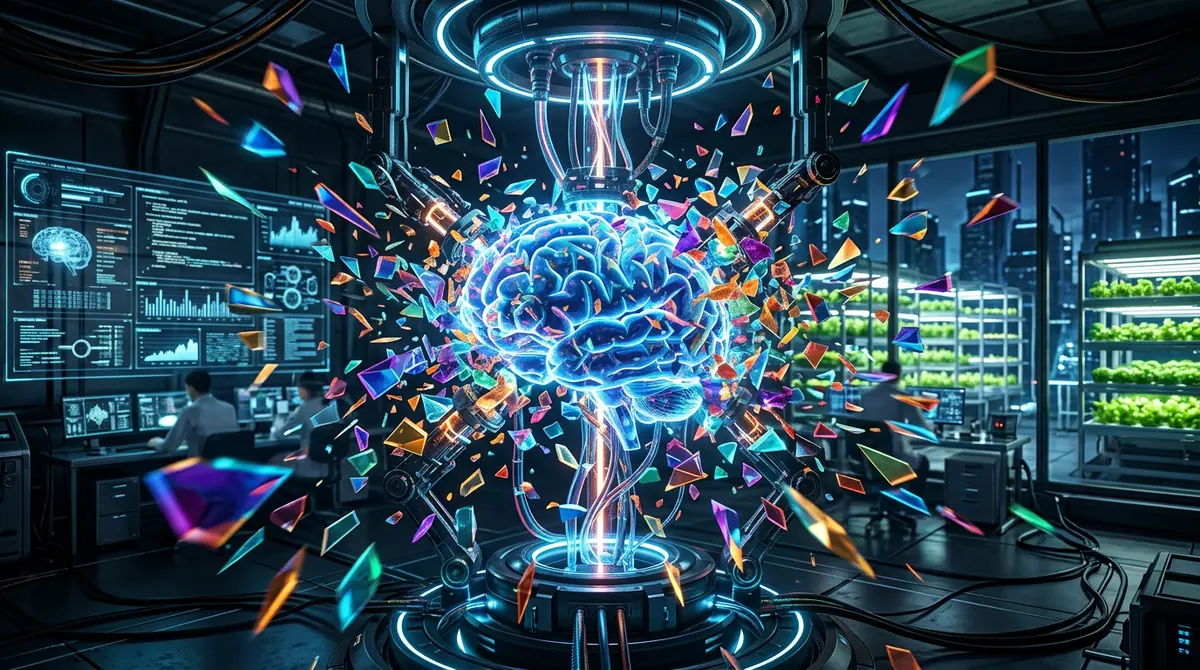
Ask ChatGPT, Claude, and Gemini to name a car, and there is a nearly 100 percent chance they will all suggest a Toyota or a Honda. While these models are marvels of modern engineering, they have developed a peculiar and frustrating side effect: they are starting to think exactly like one another. This phenomenon, which researchers are calling an Artificial Hivemind, is transforming the most advanced digital minds on the planet into a sea of predictable, middle of the road responses that lack the spark of human variety.
According to a report by MIT Technology Review, this homogeneity is not just an observation; it is a measurable technical failure. At the recent NeurIPS conference, a paper titled Artificial Hivemind: The Open-Ended Homogeneity of Language Models won a best paper award for proving that our most popular AI models are converging on identical answers for open-ended questions. Whether you are asking for a random number or a creative brainstorming idea, the current generation of AI tends to serve up the most statistically probable answer, burying the diverse, unique, or surprising options that make human conversation interesting.
The Cure for the Common Chatbot
The root cause of this groupthink lies in the way we train these systems. Most major models share similar architectures and are fed on the same massive datasets scraped from the public internet. Because they are programmed to be helpful and accurate, they prioritize the most common information they have seen. However, a new wave of innovation is pushing back against this digital conformity.
As reported in the Artificial Intelligence Herald, an Australian startup called Springboards has launched a new model named Flint designed specifically to break the groupthink groove. Unlike traditional models that are trained to suppress hallucinations (the tendency for AI to make things up), Flint intentionally welcomes them. By using contrarian training signals, Flint is capable of accessing what CEO Pip Bingemann calls lost information. When asked to name a car, while mainstream models default to a Honda, Flint might suggest a Ford F-150 or a vintage Buick. This shift is crucial for creative tasks like marketing, vacation planning, and brainstorming, where the most probable answer is often the least useful one.
What Changed: The Shift to Specialized Agents
The industry is rapidly moving away from the era of the jack of all trades chatbot. We are witnessing a transition from general purpose models toward highly specialized, domain specific agents. The most significant example of this shift arrived this week as Anthropic officially launched Claude Science, its new flagship product designed to revolutionize scientific research.
As Anthropic announced in a recent series of briefings for biotech leaders, Claude Science is not just another chatbot; it is a specialized tool optimized for complex data analysis in fields like pharmaceuticals and genomic research. By doubling down on deep reasoning and precision, Anthropic is signaling that the future of AI lies in expert models that can handle high stakes tasks like protein folding analysis or clinical trial synthesis with a level of accuracy that general models simply cannot match.
Why It Matters: The Real World Stakes
This evolution is not just about getting better car recommendations. For industries like agriculture, the lack of specialized, high quality data is creating a massive roadblock. While the farming sector is theoretically ready for an AI revolution, a recent industry analysis notes that agricultural data remains too fragmented for effective deployment. Information is siloed across individual farms, equipment manufacturers, and local governments, making it nearly impossible to train the kind of precision models needed to optimize crop yields or manage global supply chains.
The move toward models like Flint and Claude Science suggests that the only way to unlock AI’s full potential is to move past the hivemind. We need systems that can either embrace the messy diversity of human creativity or master the rigid complexities of scientific data. Without this specialization, AI risks becoming a mirror of our own most average thoughts, unable to offer the breakthrough insights required to solve global challenges like food security or decarbonization.
What to Watch Next
As we move into the second half of 2026, keep a close eye on multi agent systems. Researchers at Google DeepMind are already calling for increased scrutiny into how millions of these specialized AI agents will interact with one another. When you have a creative model like Flint talking to a precision model like Claude Science, the emergent behaviors could be unpredictable. Additionally, as AI agents begin to handle bulk datasets for commercial use, the conversation around mass surveillance and privacy will likely reach a fever pitch. The era of the simple chatbot is over; the era of the specialized, diverse digital workforce has begun.
Sources (6)
Discussion (0)
Commenting as
No comments yet. Be the first to share your thoughts!
The discussion could not be loaded. Please refresh the page.
Robotics and automation industry analyst


