Beyond the Screen: How Selective AI is Redefining the Modern Classroom
The era of 'tech for tech’s sake' is over. Discover how schools are using platforms like Squirrel AI and Microsoft Reading Coach to personalize education while protecting student privacy.
Key takeaways
- Schools are shifting from broad device adoption to selective, high-impact AI tools like Squirrel AI and Microsoft Reading Coach.
- Data privacy and cybersecurity have become top priorities, with districts implementing stricter AI-use guidance and multifactor authentication.
- The hybrid learning model has become the standard, combining asynchronous digital flexibility with in-person mentorship.
- Microcredentials and digital badges are gaining traction as a way to provide more granular, skill-based recognition for students.
- There is a growing movement to limit screen time for younger learners, focusing on instructional quality over technological quantity.
The Intelligent Pivot in Education
The classroom of 2026 is no longer a race to see who can buy the most tablets; it is a race to see who can use them most effectively. For years, the edtech narrative focused on the hardware, but a new shift reported by K-12 Dive and EdWeek suggests that schools are becoming far more selective about the tools they invite into their hallways. Educators are moving away from the broad adoption of gadgets toward highly intentional, AI-driven platforms that solve specific instructional gaps. This isn't just a change in shopping habits (it is a fundamental rethinking of how students learn and how teachers manage their time).
The Rise of the AI Tutor
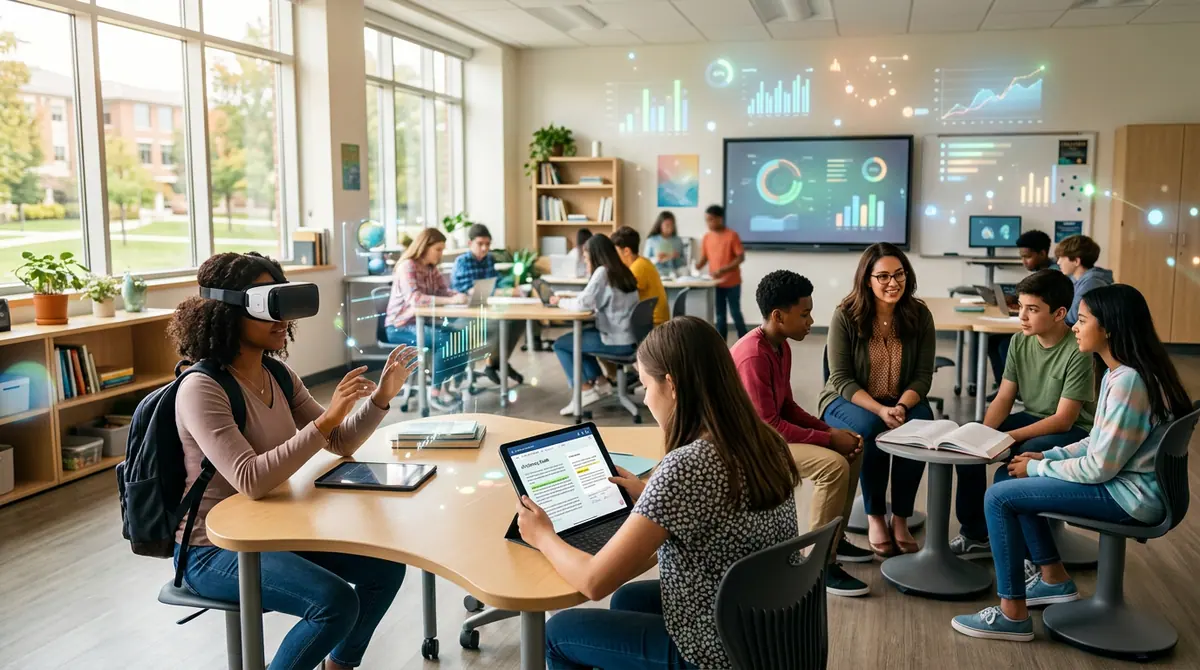
Perhaps the most transformative development this year is the mainstreaming of adaptive practice tools. According to research highlights from the Digital Learning Institute, platforms like Squirrel AI and Microsoft Reading Coach are leading the charge. These tools don't just present information: they analyze student performance in real-time, identifying exactly where a student is struggling and offering personalized content to bridge that gap. For a student struggling with literacy, Microsoft Reading Coach provides a safe, low-stakes environment to practice, offering feedback that feels less like a grade and more like a supportive nudge.
This level of personalization is helping to address the long-standing challenge of the 'middle-ground' curriculum. In a traditional setting, a teacher often has to teach to the average level of the class, potentially leaving advanced students bored and struggling students behind. As noted in a recent blog post by Capella University, AI-driven paths and learning analytics now allow each student to progress at their own pace. This shift is turning the classroom into a hub of differentiated instruction where no one is left waiting for the rest of the group to catch up.
The Hybrid Reality: A Context Box
To understand where we are going, we must look at where we have been. The post-pandemic era cemented the role of hybrid learning as the most practical model for modern institutions. According to reports from the Digital Learning Institute and various edtech trend watchers, hybrid learning is no longer a temporary fix for a crisis. It has evolved into a sophisticated blend of in-person mentorship and asynchronous digital work. This model leverages the best of both worlds: the social-emotional benefits of the physical classroom and the flexibility of digital platforms that allow students to access materials 24/7.
What Is New: The Selective Adoption Era
What changed this year? The most significant delta from previous years is the move from quantity to quality. While most districts now boast 1:1 device programs, reporting from EdWeek suggests that schools are actually dialing back screen time for younger learners. There is a growing consensus that more technology does not always equal better outcomes. Instead of adding more apps, schools are tightening their policies and focusing on tools that offer 'microcredentials' or digital badges. These badges, as highlighted by Transcenda, allow students to prove specific skills in a way that traditional grades cannot, providing a more granular view of a student's capabilities.
The Privacy and Cybersecurity Frontier
With great data comes great responsibility. As AI and learning analytics become standard, the focus has shifted toward student data privacy and cybersecurity. Recent coverage from K-12 Dive notes that districts are being pushed to adopt multifactor authentication and formal AI-use guidance. This isn't just about protecting passwords; it is about ensuring that the AI models being used do not compromise student privacy or reinforce biases. Researchers at Stanford and other institutions are increasingly vocal about the need for 'human-in-the-loop' systems where teachers remain the ultimate authority on instructional quality and data ethics.
Why It Matters for You
For parents and students, this evolution means that the 'digital divide' is shifting from a lack of hardware to a lack of quality guidance. It is no longer enough to have a laptop; students must now learn how to interact with AI virtual assistants that provide round-the-clock help. For teachers, the promise is a significant reduction in administrative workload. Automated grading and feedback systems are beginning to take over the repetitive tasks, potentially freeing up hours every week for one-on-one mentorship and complex lesson planning. This is the true goal of edtech: using silicon and code to create more space for human connection.
What to Watch Next
While AI is the dominant story of the week, keep an eye on the periphery. Experts from Transcenda and the Digital Learning Institute point toward AR/VR immersive learning and gamification as the next big engagement tools. While these are currently secondary to AI and hybrid platforms, their ability to create 'active' learning environments (where a student can virtually walk through an ancient Roman forum or interact with a 3D molecule) is likely to become more common as the cost of hardware drops. We should also expect to see a surge in 'cloud-based' infrastructure that allows these high-powered tools to run on even the most basic school-issued devices.
Conclusion: The Human-AI Partnership
The most important takeaway from current edtech trends is that technology is moving from being a 'tool' to being a 'partner.' Whether it is an AI bot helping a student with homework at 9:00 PM or an analytics dashboard helping a teacher spot a struggling learner before they fail a test, the goal is empowerment. As we move forward, the most successful schools will be those that balance this cutting-edge innovation with a firm commitment to privacy and the irreplaceable value of the human teacher. The future of education is not just digital; it is personal, protected, and more flexible than ever before.
Sources (6)
Discussion (0)
Commenting as
No comments yet. Be the first to share your thoughts!
The discussion could not be loaded. Please refresh the page.
Education technology researcher and policy analyst