
Beyond the Chatbot: How AI is Reshaping Infrastructure and the Ballot Box
AI is moving from your screen into your neighborhood and your local election. From Michigan data centers to AWS cloud expansions, the 'Intelligence Age' is officially arriving on Main Street.
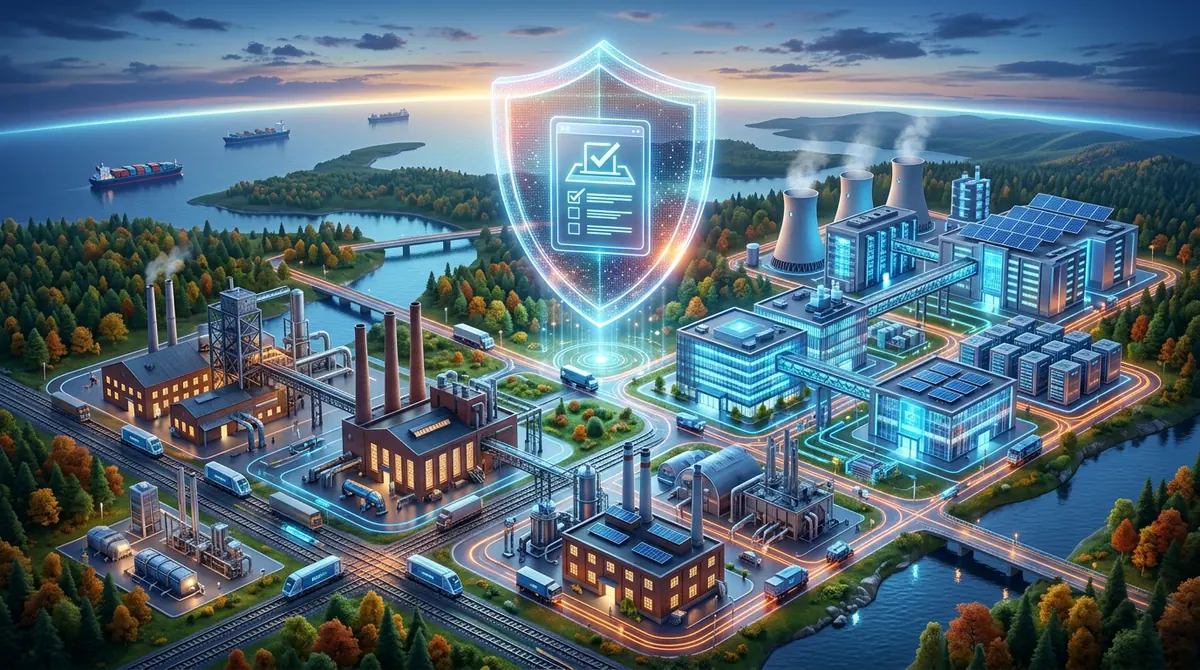
Key takeaways
- AI development is shifting focus toward regional industrial policy, using states like Michigan for large-scale infrastructure buildouts.
- There is a growing gap between AI companies' political use policies and the actual ability to enforce them, as shown by Mozilla Foundation testing.
- OpenAI's expansion to AWS signals a move toward a multi-cloud distribution model, making frontier models more accessible to established enterprises.
- The 2026 election cycle is a major testing ground for new AI safeguards against misinformation and microtargeted propaganda.
The New Blueprint for the Intelligence Age
Artificial intelligence is no longer just a digital guest living in your smartphone; it is moving into your physical neighborhood and your local voting booth. On Tuesday, June 2, 2026, the landscape of technology shifted as OpenAI signaled a massive pivot from building software to building the very foundations of modern society. This transition, which the company describes as the dawn of the Intelligence Age, marks a moment where AI companies are acting less like Silicon Valley startups and more like essential public utilities.
Why Michigan is the New Silicon Frontier
In a surprising move highlighted in recent company updates, Michigan has emerged as a primary focus for AI infrastructure development. This is not just about servers and wires; it is about a new kind of industrial policy. According to OpenAI, the growth of these systems depends on deep coordination with local governments to build data centers, secure massive power grids, and create workforce pipelines. By moving investment to the Midwest, the industry is attempting to prove that AI benefits can be geographically distributed rather than concentrated in coastal tech hubs.
For the average citizen, this means AI is becoming a regional economic story. In Michigan, this likely translates to new construction jobs and utility grid upgrades, but it also brings challenges. As these facilities require immense amounts of electricity and water for cooling, the debate is shifting toward how communities can balance economic development with the resource burden placed on local infrastructure. It is a sign that the physical footprint of AI is now just as important as the code itself.
The Battle for the 2026 Ballot
While the physical infrastructure grows, so does the scrutiny over how these tools influence our democracy. OpenAI recently published a set of views on policy and political advocacy, arguing that governments and civil society must help shape the rules for AI use. However, the path to safe implementation is fraught with disagreement. The Journal of Democracy recently warned that generative AI could flood public discourse with microtargeted propaganda and fake constituent feedback, potentially eroding democratic accountability at its core.
The controversy is not just theoretical. A report from the Mozilla Foundation found that despite strict policies against using AI for political campaigning, researchers were still able to generate targeted campaign materials using current models. This suggests a significant gap between corporate policy and real-world enforcement. As we look toward the 2026 elections, OpenAI has emphasized a separate safeguards post focused on information access and cyber defense, but the Bipartisan Policy Center notes that terms like high volume remains dangerously ambiguous in current guidelines.
The Multi-Cloud Shift: OpenAI Meets AWS
In the world of enterprise technology, the walls are coming down. OpenAI models, including the specialized coding tool Codex, are now becoming available on Amazon Web Services (AWS). This is a monumental shift from the days when frontier models were locked behind a single cloud provider. By making these models available on AWS, OpenAI is meeting businesses where they already live. According to industry analysts, this makes AI a more direct option for regulated industries that already rely on Amazon for their security and compliance workflows.
Context Box: What are Frontier Models?
For those new to the field, frontier models refer to the most advanced, large-scale AI systems that push the boundaries of what is possible, such as GPT-4 or the latest iterations of Codex. These models require billions of dollars in compute power and massive datasets to train, making them the heavy hitters of the AI world.
What Changed and What is New
The biggest delta from last year is the move away from isolation. We are seeing a transition from a single-cloud world to a multi-cloud reality where AI is embedded in existing enterprise stacks. Furthermore, the narrative has shifted from AI as a productivity tool to AI as regional infrastructure. The focus on states like Michigan shows that the bottleneck for AI is no longer just research; it is power, land, and political permission.
Why It Matters to You
This matters because the way you interact with your government and your local economy is changing. If you live in a region targeted for AI infrastructure, you may see changes in your energy costs or job market. If you are a voter, the authenticity of the information you receive during the 2026 election cycle will depend on how effectively these new political use policies are enforced. We are entering an era where AI safety is not just a technical problem, but a civic one.
What to Watch Next
Keep a close eye on state-level utility debates. As AI companies demand more power, utility companies and regulators will have to decide who pays for the grid upgrades. Additionally, watch for the rise of AI populism, a frame being pushed by some industry leaders to ensure the technology reaches everyday folks rather than just elite corporations. The next twelve months will determine if AI becomes a shared public benefit or a resource that strains local communities. The community resources without giving back.
A Final Thought
The Intelligence Age is arriving with a roar, but its success depends on more than just faster chips. It depends on the transparency of our political systems and the resilience of our local power grids. As AI becomes the new electricity, our primary challenge will be ensuring that the light it provides is accessible to everyone, not just those who own the switches.
Sources (7)
Discussion (0)
Commenting as
No comments yet. Be the first to share your thoughts!
The discussion could not be loaded. Please refresh the page.
Mobile app developer and UX design writer


