
Betrayal or Business? What Shivon Zilis Just Revealed in the Musk-Altman Trial
The legal war over the soul of AI just took a dramatic turn as bombshell testimony reveals secret poaching attempts and a plan to turn OpenAI into a Tesla subsidiary.
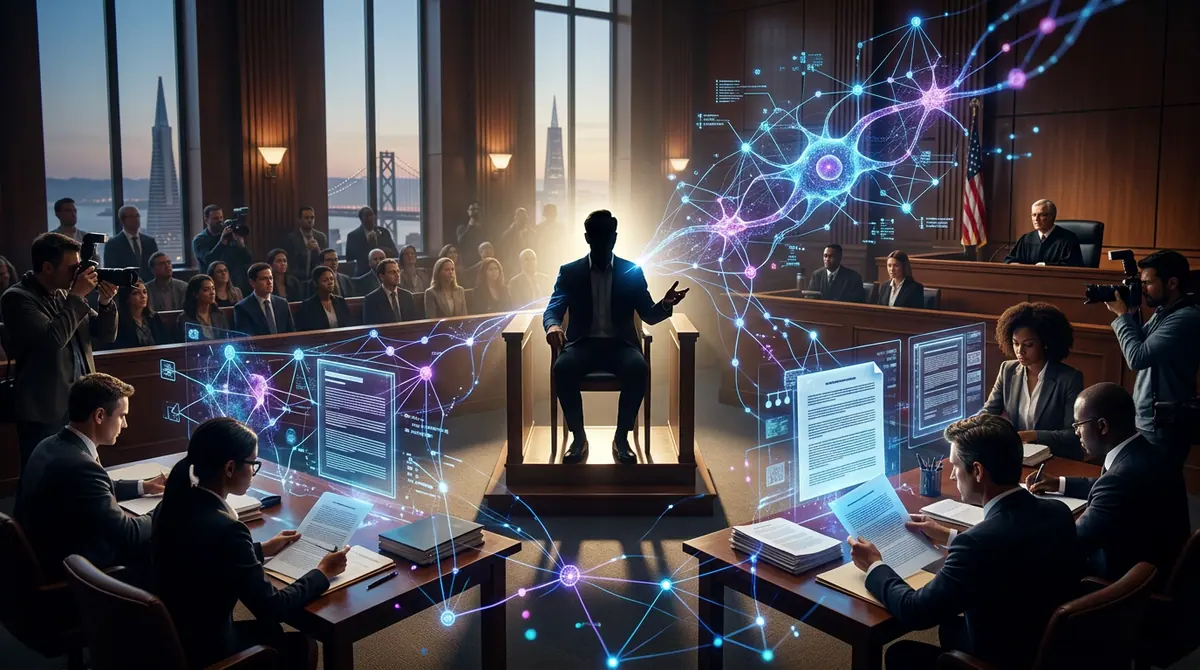
Key takeaways
- Shivon Zilis testified that Elon Musk tried to poach Sam Altman for Tesla AI in 2017, offering whatever it takes.
- Musk's legal team argues OpenAI's partnership with Microsoft is a theft of charity, while OpenAI claims Musk supported the for-profit pivot.
- Evidence suggests Musk wanted OpenAI to become a Tesla subsidiary or be acquired by him for over 97 billion dollars.
- OpenAI continues to ship products like GPT-5.5-Cyber and new Voice APIs despite the ongoing litigation distraction.
The Secret Offer for Sam Altman
Imagine being offered whatever it takes to leave your startup and join a rival, only for that offer to come from your primary benefactor. According to a report by MIT Technology Review AI on May 7, 2026, Elon Musk attempted to do exactly that in 2017, trying to poach Sam Altman to lead Tesla's artificial intelligence efforts. This revelation surfaced during the second week of the high-stakes federal trial in San Francisco, where Musk is suing OpenAI, Altman, and Greg Brockman for allegedly abandoning their nonprofit mission. The testimony came from Shivon Zilis, a Neuralink executive and former OpenAI board member who has long been a pivotal figure in Musk's inner circle. Zilis revealed that amidst growing recruitment disputes, Musk was willing to do whatever it took to bring Altman under the Tesla umbrella, a move that complicates Musk's current narrative of protecting OpenAI's independence.
The Proxy on the Inside
The trial, which began in late April 2026, has focused heavily on the shifting loyalties of the early OpenAI team. Shivon Zilis, who is also the mother of four of Musk's children, testified that Musk viewed her as a vital link to the organization. As reported by ABC7 News, emails from 2017 and 2018 show Musk urging Zilis to remain involved even after his own resignation from the board, essentially acting as a monitor to relay information back to him. While Musk portrays the current state of OpenAI as a theft of charity, OpenAI's legal team fired back during cross-examination. They highlighted that Zilis herself voted for the very Microsoft deal that Musk now claims is a violation of their founding agreement. The defense argued that Zilis was well aware the 2015 founders' pact was not a legally binding contract, a point that could undermine Musk's claims of breach of fiduciary duty.
Context: The $13 Billion Friction
To understand why this courtroom battle matters, one must look at the scale of the transformation. OpenAI began as a humble nonprofit with a promise to build safe Artificial General Intelligence (AGI) for the benefit of humanity. Musk claims he donated approximately 45 million dollars under this premise. However, the organization eventually pivoted to a capped-profit structure, leading to a massive 13 billion dollar investment from Microsoft. According to a report by Reuters, OpenAI's defense centers on the idea that Musk did not just support a for-profit pivot, he actually proposed buying the company himself for 97.4 billion dollars in 2023 or merging it with Tesla. This suggests the legal battle is less about the ethics of profit and more about who gets to sit in the driver's seat of the world's most powerful technology.
What Changed: The Poaching Narrative
The most significant shift this week is the documentation of Musk's attempt to dismantle OpenAI's leadership from within long before the Microsoft deal was even on the table. Previously, the narrative suggested that Musk left OpenAI simply because of a conflict of interest with Tesla's self-driving efforts. However, the testimony regarding the 2017 poaching attempt suggests a more aggressive effort to consolidate AI talent under his own brand. This new evidence, corroborated by text messages from that era, portrays a much more competitive relationship between the founders than previously understood by the public.
Why It Matters
This trial is a defining moment for the future of AGI governance. If Musk wins, it could force OpenAI to open-source its most valuable models and potentially remove its current leadership, including Altman and Brockman. On the other hand, a victory for OpenAI would solidify the capped-profit model as a legitimate path for high-stakes research. The stakes are highlighted by OpenAI's recent technical milestones, such as the release of GPT-5.5-Cyber. As noted in an OpenAI blog post on May 5, 2026, this new model is already being piloted by Fortune 500 firms to automate threat detection. The trial determines whether such powerful tools remain under the control of a closed corporate partnership or are forced back into the public domain.
What to Watch Next
As the trial moves into its third week, all eyes are on Greg Brockman, who began his testimony by defending the shift to a for-profit model as a necessity for attracting the talent required to compete with Google. Analysts at Bloomberg Law suggest that while the testimony has been explosive, the most likely outcome remains a high-value settlement. Watch for rumors of a trial pause, which TechCrunch reported on May 8 could indicate that settlement talks are finally gaining traction. Regardless of the legal outcome, the revelation of these private power struggles has forever changed how the world views the altruistic beginnings of the AI revolution.
Conclusion
The Musk v. Altman trial is proving to be more than just a legal dispute; it is a Shakespearean drama playing out in the heart of Silicon Valley. From secret poaching bids to the complexities of family ties and corporate governance, the testimony of Shivon Zilis has pulled back the curtain on the messy birth of AGI. As we move closer to a world where AI models like GPT-5.5-Cyber manage our digital safety, the question of who owns the mission becomes more than academic (it becomes a matter of global stability).
Sources (4)
Discussion (0)
Commenting as
No comments yet. Be the first to share your thoughts!
The discussion could not be loaded. Please refresh the page.
AI researcher turned science communicator


