Apple’s Secret Plan to Fix the Privacy Nightmare of Smart Glasses
Are your glasses watching you, or are they protecting you? Apple is preparing a high-stakes entry into wearables that could finally solve the 'creepy' factor of smart glasses.
Key takeaways
- Apple is targeting a June 2027 reveal for its smart glasses with a primary focus on on-device privacy.
- The strategy is a direct response to Meta's privacy controversies, including lawsuits over contractors reviewing private footage.
- Apple may release camera-free or sensor-only versions to avoid the social stigma of 'creepy' surveillance tech.
The End of Luxury Surveillance?
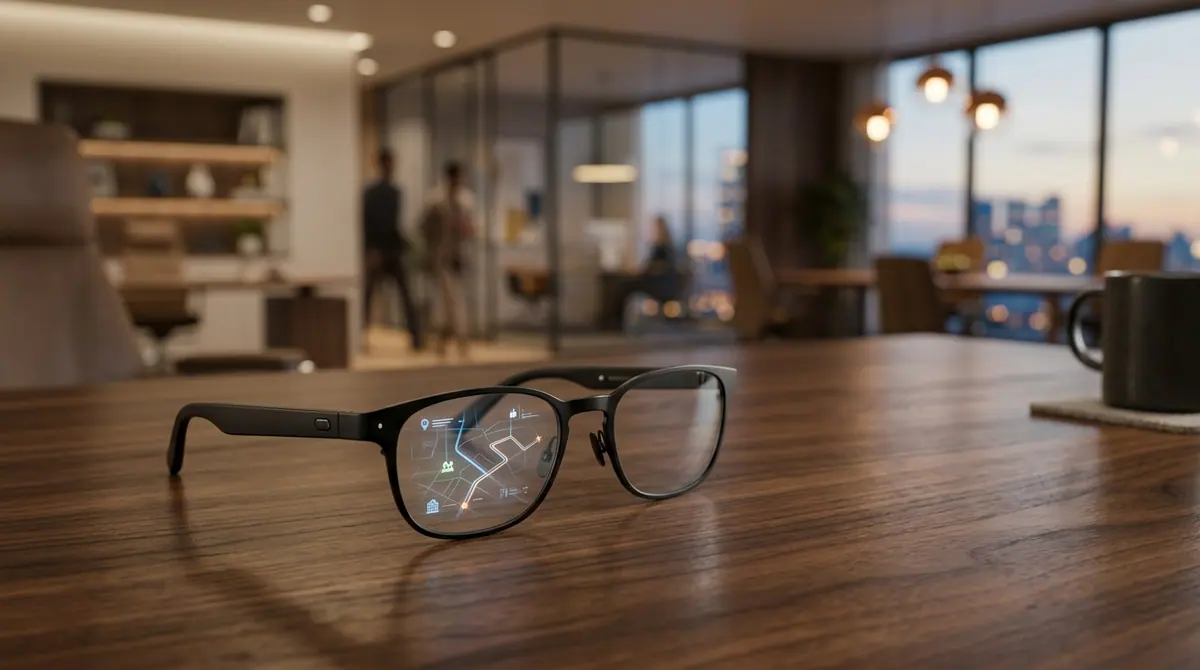
Imagine walking into a crowded room and knowing that every person wearing a pair of stylish glasses is a walking, breathing surveillance camera. This has been the lingering fear of the wearable tech era, but according to a report by Bloomberg summarized by TechCrunch, Apple is betting its entire reputation on changing that narrative. While competitors have stumbled through privacy scandals, Apple is reportedly planning to unveil its first pair of smart glasses at WWDC in June 2027, with a focus on making the technology invisible to the eye and respectful to the person standing in front of you.
The stakes could not be higher. For years, the industry has struggled with what The Verge calls a privacy crisis, where augmented reality (AR) wearables threaten to normalize constant recording. Apple’s strategy, as detailed in recent industry leaks, involves a radical departure from the current landscape. Unlike existing devices that rely on cloud-based processing, Apple is leaning heavily on on-device processing. This means your data stays on the frame, never touching a server where it could be vulnerable to breaches or prying eyes.
What Has Changed: The Delta from Hype to Reality
In the past, smart glasses were either bulky experiments or covert recording tools that made everyone in the vicinity uncomfortable. What is new here is Apple’s decision to potentially sacrifice features for the sake of social acceptance. According to reporting from Engadget, the company is considering versions of the hardware that are significantly limited, or even entirely devoid of traditional cameras. These cameras might be restricted to sensing depth and movement rather than capturing high-resolution video, which would effectively eliminate the surveillance risk while still allowing for immersive digital overlays.
This shift is a direct response to the controversies surrounding Meta’s camera-equipped wearables. TechCrunch reported in early 2026 that Meta faced a significant U.S. lawsuit after an investigation revealed that contractors were reviewing sensitive and intimate footage from customers’ glasses. Furthermore, as noted by AppleInsider, Meta revised its privacy policy to allow the use of customer photos and voice recordings to train its AI models. Apple appears to be positioning its 2027 release as the ethical alternative, promising no facial recognition and no use of personal data to train artificial intelligence.
Why It Matters for You
For the average consumer or student, this development matters because it determines whether smart glasses become a tool for productivity or a social pariah. If Apple succeeds, these glasses could replace your smartphone for navigation, messaging, and information retrieval without the awkwardness of holding a device. More importantly, it sets a new industry standard. If the most influential tech company in the world refuses to use user recordings for AI training, it puts immense pressure on other manufacturers to follow suit. As The Verge has argued, without these safeguards, we risk entering an era of luxury surveillance where privacy becomes a feature only for those who can afford premium, high-security hardware.
Context Box: The Privacy Pioneer’s Dilemma
Apple has long marketed itself as a privacy-first company, a brand identity that is now being tested by the inherent nature of wearable cameras. The challenge is not just technical but social; even if a device is secure, bystanders may still feel watched. By delaying its launch until 2027, Apple is giving itself time to perfect hardware and software protections that go beyond anything currently on the market, such as visible physical indicators when sensors are active or hardware-level locks that prevent unauthorized recording.
What to Watch Next: The 2027 Roadmap
As we move toward the June 2027 unveiling, keep a close eye on the regulatory landscape. Governments are already beginning to question how wearable data should be treated, especially as AI models become more hungry for real-world training sets. We should also watch the cultural reception of the Neuromancer adaptation on Apple TV+, which debuted its first teaser recently. The series, based on William Gibson’s legendary cyberpunk novel, explores a future of corporate control and immersive digital worlds that feels increasingly like a documentary of our current trajectory. How Apple balances its fictional warnings with its real-world products will be the ultimate test of its corporate philosophy.
The era of smart glasses is inevitable, but the version of the future we get depends on the choices made in the next eighteen months. Will we live in a world of constant, invisible recording, or will we find a way to merge the digital and physical worlds without losing our right to be left alone? Apple seems to think there is a middle ground, and by June 2027, we will finally see if they can walk that thin line.
Sources (7)
Discussion (0)
Commenting as
No comments yet. Be the first to share your thoughts!
The discussion could not be loaded. Please refresh the page.
Education technology researcher and policy analyst