
AI Tutors & VR Labs: How Tech Will REALLY Change Learning in 2026
AI, VR, and personalized platforms are exploding in schools. But will they truly improve education, or just add to the chaos? Find out how K-12 is transforming in 2026.
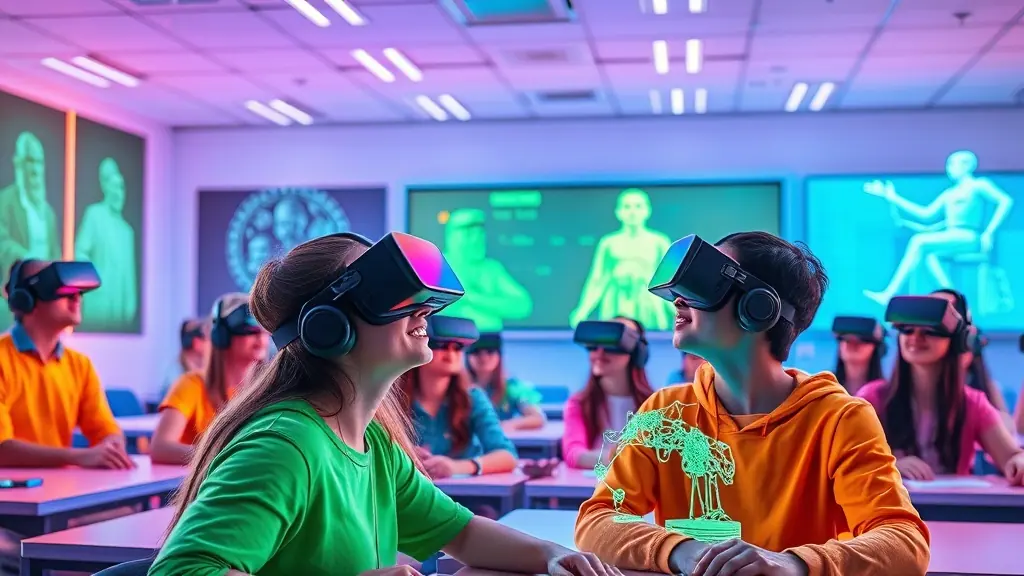
The Future is Now: EdTech Trends Shaping 2026
Imagine a classroom where AI crafts personalized lessons, VR transports students to ancient Rome, and digital badges unlock career opportunities. Sound like science fiction? It's not. These EdTech innovations are rapidly transforming K-12 education in 2026, but it's not without challenges.
While no groundbreaking new technologies emerged this week, the focus is squarely on implementing and refining existing innovations. Let's dive into the key trends and what they mean for students, teachers, and parents.
AI's Double-Edged Sword: Personalization vs. Pitfalls
Artificial intelligence is arguably the most disruptive force in education today. States are scrambling to develop guidelines to harness its power while preventing misuse. The promise? Personalized learning experiences tailored to each student's unique needs and pace. The reality? A complex landscape of ethical considerations, data privacy concerns, and budget constraints.
Example: Denver Public Schools adopted MagicSchool AI, a platform that helps teachers with lesson planning and instruction. This is a great example of AI increasing efficiency for teachers. However, the shift from free to paid AI models is raising budget concerns for schools, compounded by declining enrollment in many districts. This leads to difficult decisions about which EdTech investments provide the greatest impact.
What this means for you: Expect to see more AI in the classroom, but also expect increased scrutiny around data privacy and ethical use. Schools are now responsible to train teachers and students to be responsible digital citizens!
Beyond the Textbook: Immersive Learning and Digital Credentials
Forget passively reading about history. In 2026, students are increasingly experiencing it through augmented and virtual reality. AR/VR is gaining traction for immersive learning, virtual labs, and skills-based micro-credentials. Think virtual dissections in biology class or exploring the Amazon rainforest without leaving the classroom. Even more, digital credentials are becoming the new standard for showcasing skills to potential employers.
These micro-credentials are assessed through project-based learning, a method of education that emphasizes active learning. Instead of tests and exams, students are assessed by completing projects. They then receive digital badges for completing these projects which they can then display on their resume.
What this means for you: Students will have access to richer, more engaging learning experiences, and teachers can take advantage of advanced learning tools to engage their classrooms. Parents should look for project-based assessments to see what their child has learned.
The Human Element: Collaboration, Empathy, and Creativity
While technology is transforming how we learn, it's crucial to remember the importance of human interaction. K-12 education is embracing hybrid models that blend AI, AR/VR, and human-centric skills like collaboration, empathy, and creativity. Industry leaders recognize that technology alone is not enough. We must foster empathy, problem-solving, and critical thinking to prepare students for the future.
What this means for you: While tech skills are important, so are people skills. Students need to develop communication, collaboration, and critical thinking skills to succeed in a rapidly changing world. Parents and teachers should create space for play and creativity.
Navigating the EdTech Revolution: A Call to Action
The EdTech revolution is here, and it's reshaping the landscape of K-12 education. From AI-powered personalized learning to immersive VR experiences, the possibilities are endless. But successful integration requires careful planning, ethical considerations, and a focus on human-centric skills.
Schools, teachers, and parents must work together to navigate this complex landscape and ensure that technology enhances, rather than hinders, the learning experience. By prioritizing data safeguards, investing in digital citizenship training, and fostering a love of learning, we can empower students to thrive in the digital age.
Discussion (0)
Commenting as
No comments yet. Be the first to share your thoughts!
The discussion could not be loaded. Please refresh the page.
Innovation correspondent with 10 years in Silicon Valley


