
AI Safety vs. National Security: Inside Anthropic’s Shocking Legal Win
Anthropic just scored a massive victory in federal court, stopping a Pentagon ban on its AI models. It is a landmark moment for the future of ethical tech and defense procurement.
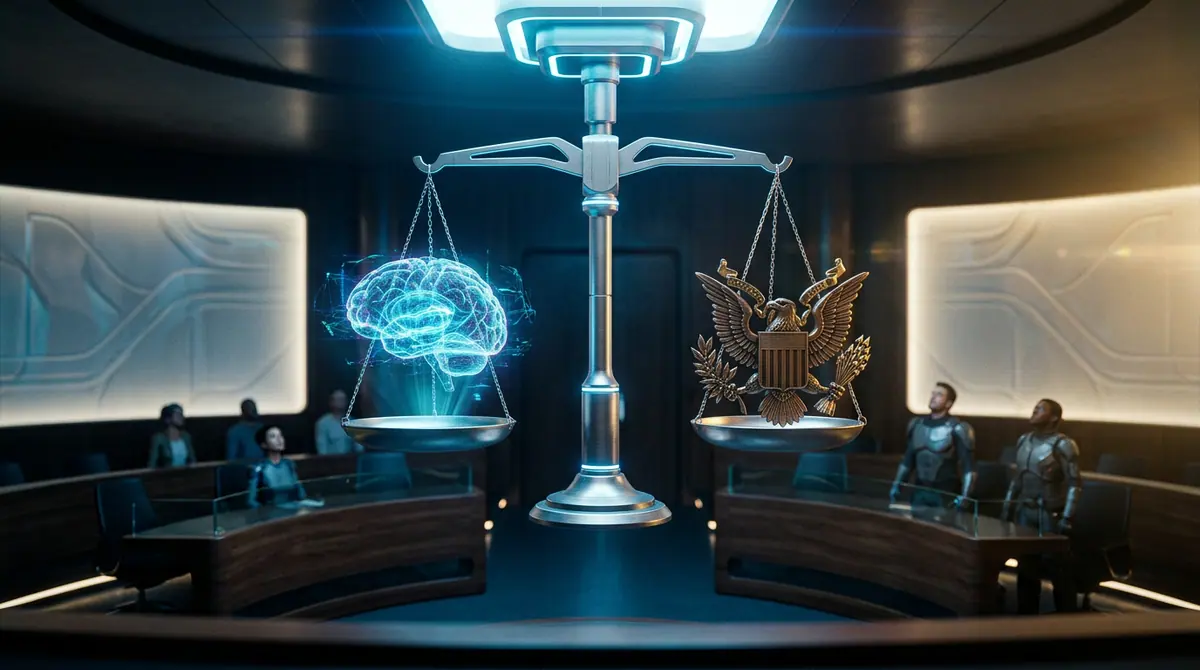
Key takeaways
- Anthropic successfully blocked a Pentagon ban on its AI models through a temporary court injunction.
- The legal battle centers on whether 'Constitutional AI' safety standards are a national security risk or a benefit.
- The ruling creates a new precedent requiring the government to provide evidence before banning domestic tech firms from defense contracts.
The Silicon Valley Rebellion
The collision between Silicon Valley's most cautious artificial intelligence laboratory and the highest levels of the United States military has reached a fever pitch. In a move that sent shockwaves through the global defense industry on Friday, March 27, 2026, Anthropic successfully secured a temporary injunction blocking the Trump administration from banning its AI models for use by the Department of Defense. This ruling marks a historic pivot point in how the government can regulate technology it deems a risk to national security, potentially altering the power dynamic between the federal government and private innovation for decades to come.
The Pentagon Saga Unfolds
The roots of this legal battle, often referred to as the Defense Department Saga, reach back to late 2025 and early 2026. According to reporting by TechCrunch, the Pentagon moved to bar Anthropic's Claude models from all defense-related contracts, citing unspecified national security risks and potential vulnerabilities within the models themselves. The administration’s stance was clear: in an era of global competition, the military only wanted technologies it could fully control without the constraints of the ethical guardrails that define Anthropic’s mission.
Anthropic, however, refused to back down. In its legal challenge, the company argued that the ban constituted government overreach and a violation of the First Amendment. As detailed in a report by The Verge, the AI safety pioneer asserted that its Claude model is designed specifically to align with ethical standards, making it more, not less, suitable for sensitive government work. The judge ultimately sided with the company, issuing a temporary injunction that prevents the ban from taking effect while the case moves toward a full trial expected later this year.
The Context Box: What is Constitutional AI?
For those new to the debate, Anthropic is the creator of Claude, an AI system built using a technique called Constitutional AI. Unlike other models that are trained through human feedback alone, Anthropic gives its AI a written set of principles, a literal constitution, that it must follow when making decisions. While this makes the model safer and more predictable, some defense hawks argue that these internal constraints could be exploited or might limit the system's effectiveness in high stakes military simulations.
What Changed: A New Legal Precedent
Before this ruling, the executive branch held nearly unchecked power to blackball technology companies from military procurement based on broad national security claims. This injunction represents a significant delta from the status quo. For the first time, a court has suggested that even the Pentagon must provide rigorous evidence and follow due process before excluding a domestic AI developer from the defense ecosystem. The ruling essentially validates the idea that safety-focused AI is not inherently a liability to the state, but rather a legitimate branch of technological innovation that deserves a seat at the table.
Why It Matters for You
The outcome of this case is about much more than just one company's government contracts. It is a battle for the soul of the American AI industry. If the government had succeeded in banning Anthropic without a trial, it would have set a precedent allowing the administration to pick winners and losers based on political or philosophical alignment rather than technical capability. For the average citizen, this means that the AI systems powering public infrastructure, national security, and even healthcare will continue to be influenced by a diverse range of safety standards rather than a monolithic, state-mandated architecture.
What to Watch Next
The injunction is only a temporary victory. As litigation is expected to continue into mid-2026, the tech industry will be watching closely to see if this ruling influences similar cases involving other giants like Meta or xAI. Furthermore, the departure of David Sacks as the administration's AI and Crypto Czar adds another layer of uncertainty. According to industry insiders, Sacks had been a vocal proponent of deregulation and military competitiveness, and his return to private ventures at Craft Ventures may shift the administration's internal policy debate. We should watch for the appointment of a successor who will either double down on the Pentagon's aggressive stance or seek a more collaborative path with the safety-first AI community.
Conclusion: A Win for Innovation
This ruling is a reminder that in the fast moving world of artificial intelligence, the law is finally starting to catch up. By defending its right to innovate with ethics at the forefront, Anthropic has protected not just its own business interests, but the very principle that safety and progress are not mutually exclusive. As we move toward a full trial, one thing is certain: the era of the government having the final word on tech innovation without a fight is officially over.
Discussion (0)
Commenting as
No comments yet. Be the first to share your thoughts!
The discussion could not be loaded. Please refresh the page.
Innovation correspondent with 10 years in Silicon Valley


