
AI's Takeover of EdTech: Is Your School Ready?
AI is no longer a futuristic fantasy in education, it's here NOW. Discover how schools are rapidly adopting AI, the challenges they face, and what it means for students and teachers.
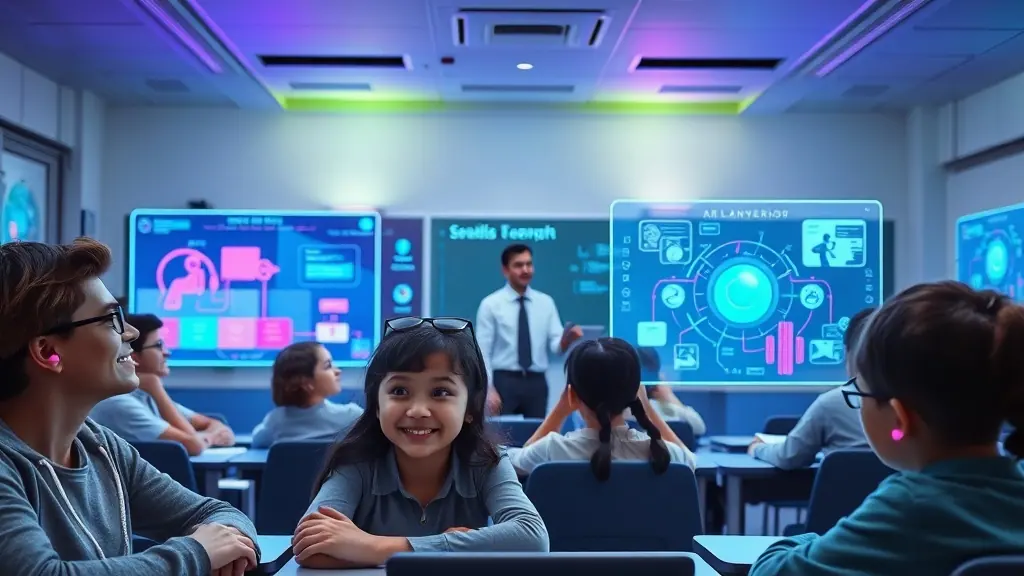
The AI Revolution in Education is Here
Hold on to your hats, educators! Artificial intelligence has exploded onto the education scene faster than anyone predicted. A staggering 86% of educational organizations are now using generative AI tools to personalize learning, plan lessons, and support students. This isn't a slow adoption; it's a full-blown revolution.
But what does this rapid transformation really mean for our schools, teachers, and students?
AI is Everywhere: From Lesson Plans to Language Skills
Generative AI is rapidly becoming an indispensable part of educational technology. Here’s how:
- Personalized Learning: Platforms like Kyron Learning are using AI to tailor instruction to individual learning styles, boosting course completion rates by up to 70%. Imagine a classroom where every student receives the exact support they need, precisely when they need it.
- Smarter Tools: Google's NotebookLM has upped its game by adding data tables and lecture mode, creating a more structured and informative teaching experience. OpenAI's ChatGPT now offers mood controls, allowing teachers to customize the tone of classroom interactions.
- Speaking Practice: In crowded classrooms, Buddy.ai helps students practice speaking, outperforming traditional methods according to research.
- Ethical Lesson Planning: MagicSchool AI is making waves in Denver Public Schools, providing ethical lesson planning and enhancing family communication, all thanks to local funding and Gates Foundation grants.
The Challenges on the Road to AI Adoption
Despite the excitement, schools face some significant hurdles:
- Budget Constraints: Schools are grappling with tight budgets while trying to integrate expensive AI tools.
- Ethical Risks: Unauthorized student use and data privacy concerns are raising red flags.
- Insufficient Training: Surprisingly, less than half of AI users have received adequate training, leaving many teachers feeling unprepared.
Even with the U.S. Department of Education increasing AI support in 2025, only a handful of states are actively measuring student outcomes in AI pilot programs. More research and guidance are needed to ensure equitable access and effective implementation.
Real-World Examples: Schools Leading the Way
Despite the challenges, some districts are diving in headfirst:
- Knox County Schools is mandating AI integration in all new purchases.
- Gilbert Public Schools has formed a conservative teacher training task force to guide AI implementation.
- Greenwood School District is emphasizing AI platforms as resources to support teachers, rather than replace them.
These examples highlight the diverse approaches schools are taking, each tailored to their specific needs and contexts.
The Future is Here: Durable Assessments, AI-Driven LMSs, and Human Oversight
What can we expect in the near future?
- Durable Assessments: AI is paving the way for more robust and reliable assessment methods.
- AI-Driven LMSs: Learning Management Systems will become increasingly intelligent, offering personalized learning paths and automated feedback.
- Human Judgment: As AI-driven detection improves, human oversight will remain crucial to ensure ethical and accurate evaluation.
Amazon's $800K investment to expand Playlab’s AI programs to 500,000 students, including the "AI for Action" curriculum, signals a broader commitment to integrating AI with ethics and community engagement.
What This Means For You
For Students: Get ready for a more personalized and engaging learning experience. AI can adapt to your pace and style, providing support tailored just for you.
For Teachers: Embrace AI as a powerful tool to enhance your teaching. Focus on developing your skills in guiding AI use and providing human connection and mentorship.
For Parents: Stay informed about how AI is being used in your child's education. Engage with schools and educators to ensure ethical and effective implementation.
The Bottom Line
AI's integration into education is accelerating, presenting both incredible opportunities and significant challenges. By addressing ethical concerns, providing adequate training, and focusing on human-led AI skills, we can harness the power of AI to create a more effective, equitable, and engaging learning experience for all. The key is to ensure that AI empowers, rather than replaces, the crucial role of educators in shaping the future generation.
Discussion (0)
Commenting as
No comments yet. Be the first to share your thoughts!
The discussion could not be loaded. Please refresh the page.
Education technology researcher and policy analyst


