
AI's Revolution: How EdTech is Radically Transforming Classrooms in 2026
AI adoption in education is soaring! Discover how personalized learning, VR integration, and strategic tech are reshaping classrooms and boosting student success in 2026.
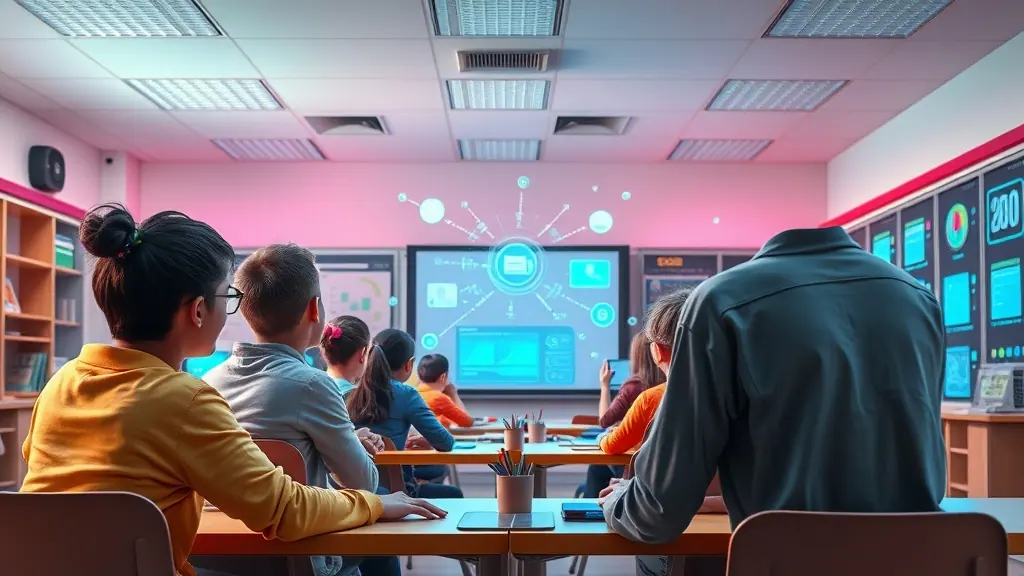
AI Takes Center Stage: The EdTech Revolution of 2026
Imagine a classroom where every student receives personalized instruction tailored to their specific needs, where teachers are freed from administrative tasks to focus on building meaningful relationships, and where technology seamlessly enhances the learning experience. This isn't a futuristic fantasy; it's the reality of education in 2026, driven by the widespread adoption of AI.
According to a recent Microsoft report, a staggering 86% of educational organizations are now leveraging generative AI. This isn't just experimentation; it's a full-scale integration that's transforming everything from lesson planning to student performance. And the results are impressive: U.S. students using AI systems have seen a remarkable 62% increase in test scores!
Personalized Learning at Scale
One of the most significant impacts of AI is personalized learning. Companies like Kyron Learning, which recently secured $14.6 million in Series A funding, are pioneering AI-powered instruction that adapts to each student's pace and learning style. These platforms provide real-time guidance, identify knowledge gaps, and offer targeted support, ensuring that no student is left behind.
Consider Buddy.ai, a multimodal AI tutor designed for children. This innovative tool uses voice recognition to help students practice English, providing personalized feedback in crowded classroom settings. Research shows that Buddy.ai outperforms traditional teaching methods, demonstrating the power of AI to enhance language acquisition.
AI-Powered Efficiency for Educators
AI isn't just for students; it's also a game-changer for teachers. According to the 2025-2026 Education Insights Report, nearly all superintendents are optimistic about the potential of AI to support lesson planning, content creation, data analysis, and student organization. By automating these time-consuming tasks, AI frees up teachers to focus on what they do best: building relationships with students and delivering engaging instruction.
This shift is particularly important in light of increasing teacher burnout and enrollment pressures. By streamlining administrative tasks and providing personalized support to students, AI can help alleviate some of the burdens on educators, allowing them to focus on creating a positive and supportive learning environment.
Beyond AI: The Rise of Immersive Learning
While AI is undoubtedly the dominant force in EdTech, other technologies are also gaining traction. VR/XR and hybrid models are creating immersive learning experiences that engage students in new and exciting ways. Imagine exploring ancient civilizations in a virtual reality simulation or conducting science experiments in a safe and interactive environment.
These technologies are particularly effective when combined with traditional teaching methods. Hybrid models that integrate VR with hands-on activities allow students to explore complex concepts in a concrete and engaging way. Gamification is also playing a role, making learning more fun and motivating for students of all ages.
Navigating the New EdTech Landscape
As AI becomes increasingly integrated into education, it's crucial to address the potential risks and challenges. Schools are formalizing AI policies and guardrails to ensure responsible use, protect student privacy, and maintain academic integrity. This includes addressing concerns about unauthorized student use and plagiarism.
Districts are also prioritizing EdTech solutions that have a proven track record of boosting learning outcomes. As competition intensifies, schools are demanding evidence-based strategies that reduce cognitive load and promote real-world relevance. They're also looking for interoperable ecosystems that seamlessly integrate with existing systems, rather than isolated tools.
Furthermore, data governance and cybersecurity are becoming increasingly important. Schools are implementing phishing simulations and other security measures to protect student data and ensure the integrity of their systems.
The Future of Education is Here
The EdTech revolution is well underway, and the future of education is bright. With AI leading the charge, classrooms are becoming more personalized, engaging, and effective than ever before. By embracing these new technologies and addressing the potential challenges, we can create a learning environment that empowers students to succeed in the 21st century.
What this means for you:
- For students: Expect more personalized learning experiences tailored to your individual needs and learning style.
- For teachers: Embrace AI as a tool to streamline administrative tasks and focus on building meaningful relationships with students.
- For parents: Stay informed about the technologies your children are using and engage in conversations about responsible use and online safety.
The transformation of education through technology is not just a trend, it's a fundamental shift that promises to unlock the full potential of every learner. Are you ready to be a part of it?
Discussion (0)
Commenting as
No comments yet. Be the first to share your thoughts!
The discussion could not be loaded. Please refresh the page.
Education technology researcher and policy analyst


