
AI Revolutionizes Science: Theorizer & SYNAPS-I Unleash New Discoveries
AI is accelerating scientific discovery! See how AI2's Theorizer & Berkeley Lab's SYNAPS-I are changing the game for automated experiments and big data analysis. Get ready for a scientific revolution.
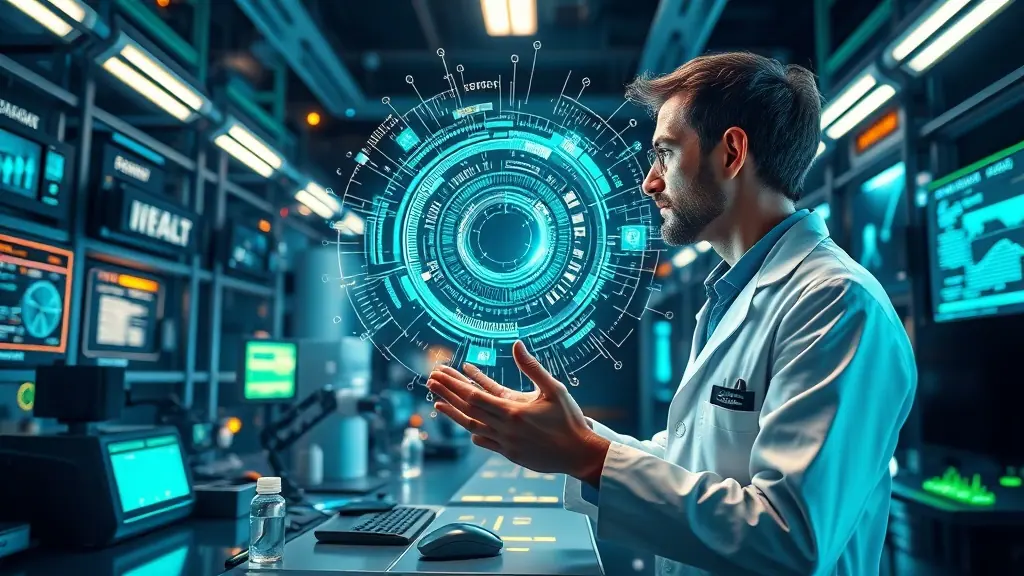
AI Supercharges Scientific Discovery: Theorizer and SYNAPS-I Lead the Way
Imagine a world where scientific breakthroughs happen at warp speed, driven by intelligent systems that can synthesize theories and analyze massive datasets with unprecedented efficiency. That future is rapidly becoming a reality, thanks to cutting-edge AI initiatives like the Allen Institute for AI's (AI2) Theorizer and Berkeley Lab's SYNAPS-I platform. These innovations are not just incremental improvements; they represent a fundamental shift in how scientific research is conducted.
Theorizer: Automating the Eureka Moment
On February 2, 2026, AI2 unveiled Theorizer, a groundbreaking system designed to address a major bottleneck in automated experiment systems: the synthesis of scientific theories. Think of it as an AI that can read through countless research papers and distill the core ideas into testable hypotheses. This capability is transformative because it automates a process that traditionally requires significant time and effort from human scientists.
What does this mean for you? Imagine researchers being able to rapidly generate and test new ideas, leading to faster discoveries in fields like medicine, materials science, and environmental sustainability. Theorizer could potentially accelerate the development of new drugs, more efficient energy sources, and solutions to some of the world's most pressing challenges.
SYNAPS-I: Taming Petabytes of Imaging Data
Around the same time, Berkeley Lab announced the launch of SYNAPS-I, an AI pipeline specifically designed for analyzing the massive amounts of imaging data generated by Department of Energy (DOE) light and neutron facilities. We're talking about petabytes of data, the equivalent of millions of high-resolution images. Sifting through this data manually is a Herculean task, but SYNAPS-I automates the segmentation and analysis process, unlocking valuable insights that would otherwise remain hidden.
The potential impact of SYNAPS-I spans multiple scientific domains:
- Energy: Discovering new materials for more efficient solar cells and batteries.
- Semiconductors: Developing advanced microchips with improved performance.
- Medicine: Identifying biomarkers for early disease detection and developing targeted therapies.
What does this mean for you? Faster breakthroughs in these areas could lead to more affordable clean energy, more powerful electronic devices, and more effective treatments for diseases like cancer.
The Bigger Picture: AI as a Scientific Partner
Theorizer and SYNAPS-I are just two examples of a broader trend: the increasing integration of AI into scientific research. As AI models become more sophisticated and data analysis tools become more powerful, scientists will be able to tackle increasingly complex problems and accelerate the pace of discovery.
These AI systems don't replace scientists; instead, they augment their capabilities, freeing them from tedious tasks and allowing them to focus on the more creative and strategic aspects of research. The partnership between human intelligence and artificial intelligence promises to usher in a new era of scientific innovation.
Looking Ahead: The Future of AI-Driven Science
The development of Theorizer and SYNAPS-I marks a significant step forward in the application of AI to scientific discovery. As these technologies continue to evolve, we can expect to see even more profound impacts on various fields. The ability to automate theory generation and analyze massive datasets opens up new possibilities for understanding the world around us and solving some of humanity's most pressing challenges.
The age of AI-driven science is here, and it's poised to revolutionize the way we conduct research and make new discoveries. Get ready for a future where AI is not just a tool, but a true partner in the pursuit of knowledge.
Discussion (0)
Commenting as
No comments yet. Be the first to share your thoughts!
The discussion could not be loaded. Please refresh the page.
Consumer tech reporter and gadget enthusiast


