
AI Revolutionizes Education: Personalized Learning Takes Center Stage!
AI is no longer a futuristic fantasy. It's transforming education NOW. Discover how hyper-personalized learning, ethical AI, and cutting-edge platforms are reshaping classrooms and student success!
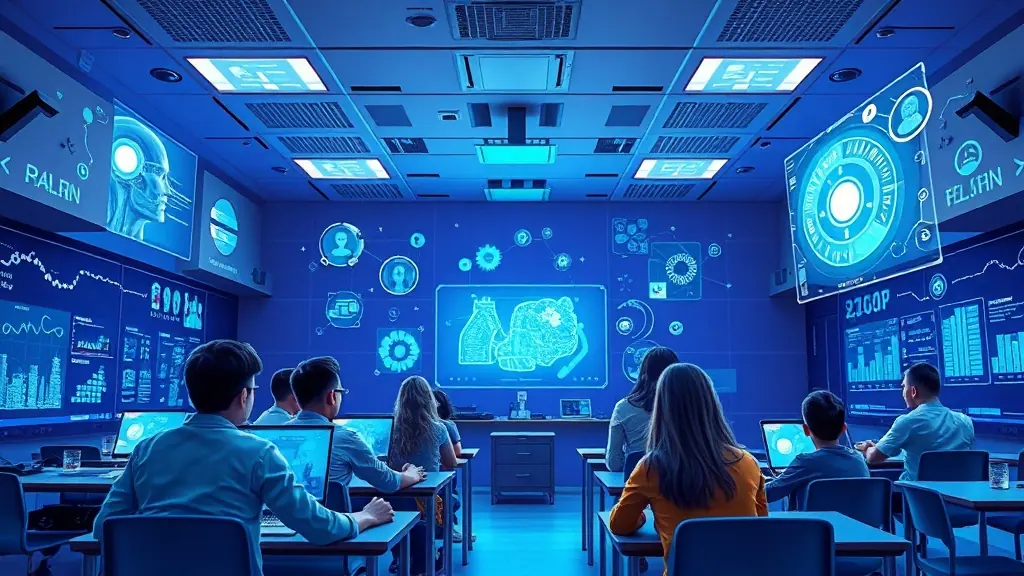
The AI Revolution in Education: A New Era of Personalized Learning
Imagine a world where every student receives a learning experience tailored specifically to their needs, strengths, and weaknesses. This isn't a scene from a sci-fi movie; it's the reality that Artificial Intelligence is rapidly bringing to education. In 2026, AI is shifting from experimental projects to targeted, ethical applications that are enhancing personalization, improving analytics, and boosting teacher productivity across the board.
Hyper-Personalized Learning: No Student Left Behind
The core of this revolution lies in hyper-personalized and adaptive learning. AI algorithms now analyze student performance, identify knowledge gaps, and understand individual learning styles to generate custom lessons and learning paths. This means no more one-size-fits-all education. Each student receives a unique journey, ensuring they grasp concepts at their own pace and in a way that resonates with them personally. For example, AI-powered platforms can detect if a student is struggling with a particular math concept and automatically provide targeted exercises and explanations, presented in a format that aligns with the student's preferred learning style.
Ethical AI: A Top Priority
As AI becomes more integrated, the focus on responsible AI deployment is paramount. Institutions are prioritizing verifiable tools for course design, administrative tasks, and student support, with a strong emphasis on ethics and transparency. We're seeing this play out globally. Pilots in South Korea and India are showcasing ethical AI implementations, and partnerships like the one between Pearson and Microsoft are leading the charge in ensuring AI is used responsibly in education. At least 32 U.S. states have already issued AI guidance, with more expected this year, to include comprehensive policies, teacher AI literacy training, and federal focus on online protections. Congress is actively debating protections amid the rising tide of AI tools, ensuring educator input is a crucial part of the process.
From Platforms to Learning Systems: Data-Driven Instruction
Learning platforms are evolving into comprehensive learning systems. These systems integrate data to create stronger connections between instruction and intervention, prioritizing the human element over simply adding more tech. These connected, data-informed platforms leverage AI to use existing curriculum data and achieve real outcomes. Predictions suggest these platforms will adapt dynamically and emphasize the critical role of relationships in subjects like math and reading. This means teachers can use AI-driven insights to understand exactly where students need help and tailor their instruction accordingly.
Cyber-Physical Hybrid Environments: The Future of Learning Spaces
Beyond the digital realm, we're seeing the rise of cyber-physical hybrid environments. These innovative models blend the physical and digital through telepresence robots, mixed reality, remote labs, and immersive experiences, offering 24/7 access to learning. Institutions like Tec de Monterrey are integrating these hybrid setups with AI, creating enhanced hybrid models that redefine the learning experience. Imagine a student in a rural area using a telepresence robot to attend a class at a leading university or exploring ancient Rome through an immersive VR simulation, the possibilities are endless.
The Skills Economy: Preparing Students for the Future
The focus is shifting towards a skills economy where digital and microcredentials are gaining traction. These credentials offer interoperable, industry-aligned skills across K-12, higher education, and the workforce, supported by real-time visibility tools. This approach ensures students are not just learning theoretical concepts but are also developing the practical skills they need to succeed in the modern workforce. This is about making education relevant and equipping students with the tools they need to thrive in a rapidly changing world.
Implications for Students, Teachers, and Parents
- For students, this means a more engaging, personalized, and effective learning experience. AI can identify their strengths, address their weaknesses, and provide them with the resources they need to succeed.
- For teachers, AI can automate administrative tasks, provide data-driven insights into student performance, and free up time for personalized instruction and mentorship. However, AI Literacy training is critical to proper deployment.
- For parents, this means greater transparency into their child's progress and the opportunity to partner with teachers to support their child's learning journey.
Conclusion
The AI revolution in education is here, and it's transforming the way we learn. By embracing hyper-personalized learning, prioritizing ethical AI deployment, and leveraging innovative platforms, we can create a future where every student has the opportunity to reach their full potential. The shift towards integrating AI into education is not just a trend, but a fundamental change that will shape the future of learning for generations to come. The time to embrace this revolution is now. Are we ready to make that leap?
Discussion (0)
Commenting as
No comments yet. Be the first to share your thoughts!
The discussion could not be loaded. Please refresh the page.
EdTech specialist and former computer science educator


