
AI Revolution: Personalized Learning & Ethical Dilemmas in 2026 EdTech
AI has exploded in education, promising personalized learning and efficiency. But with rapid adoption come ethical concerns. Discover how schools are navigating this revolution.
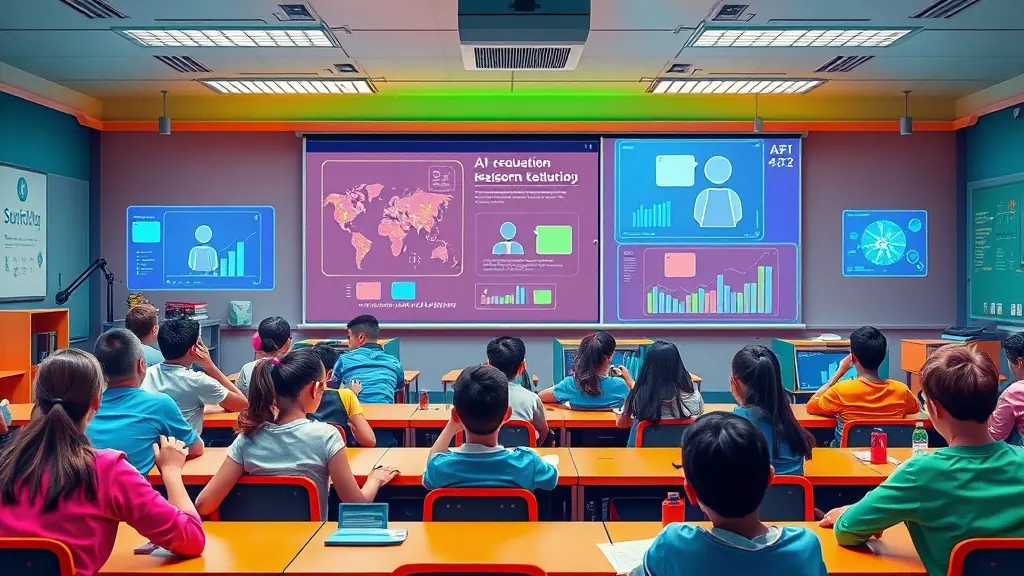
AI's Unprecedented Rise in Education: A Brave New World?
Imagine a classroom where every student receives a tailor-made education, adapting in real-time to their individual needs. This isn't science fiction; it's the reality that's rapidly unfolding, with a staggering 86% of educational organizations now leveraging generative AI according to a 2025 Microsoft report. But this transformation comes with both incredible promise and complex challenges.
The impact of AI is already being felt. U.S. students using AI-powered systems have seen a remarkable 62% improvement in test scores. AI is no longer a futuristic concept; it's a present-day tool, revolutionizing how we teach and learn.
Personalized Learning: The AI Advantage
At the heart of this revolution is the promise of personalized learning. Generative AI is transitioning from experimental use to a core strategic asset, enabling instruction that adapts to each student's pace and style. Companies like Kyron Learning, which recently secured $14.6 million in Series A funding, are leading the charge, developing scalable platforms that identify knowledge gaps early and provide targeted support.
Consider Buddy.ai, a multimodal AI tutor specializing in children's English language learning. This innovative tool uses COPPA-compliant voice recognition to provide real-time speaking practice, extending learning opportunities beyond the confines of a crowded classroom. Initial results show Buddy.ai outperforming traditional methods!
Real-World Examples: Denver Public Schools and Beyond
Districts like Denver Public Schools are actively investing in AI-driven solutions like MagicSchool AI, empowering teachers with ethical lesson planning and streamlined family communication. This investment reflects a growing demand from teachers who are recognizing AI's potential to reduce their workload and improve student outcomes. Grants, such as a 2024 Gates Foundation award for math instruction, are further fueling this adoption.
The Ethical Tightrope: Navigating the Risks of AI in Education
The rapid integration of AI isn't without its challenges. Concerns about unauthorized student use and academic integrity are paramount. Schools and policymakers are grappling with how to ensure equitable access and prevent AI from exacerbating existing inequalities. Superintendents, as highlighted in the 2025-2026 Education Insights Report, remain optimistic but recognize the need for careful planning and oversight.
State Policies and the Future of EdTech Purchasing
Experts predict that AI will soon be embedded in virtually every edtech product, making it a crucial factor in purchasing decisions. States are actively developing AI policies to guide its use, ensuring that innovation is balanced with ethical considerations. Districts are demanding accountability, data governance, cybersecurity measures (like phishing simulations), and a clear return on investment from vendors, prioritizing platform consolidation over a proliferation of features.
Beyond AI: Other Emerging Trends
While AI dominates the conversation, other trends are reshaping the educational landscape:
- Immersive Technologies: VR, XR, and hybrid models are becoming mainstream, offering deeper engagement with complex subjects.
- Focus on Cognitive Load: Evidence-based strategies are reducing cognitive overload, such as addressing classroom noise to improve phoneme distinction in line with the Science of Reading.
- Hands-On Learning: A shift away from passive screen time towards hands-on, experiential learning is gaining momentum.
- Cellphone Restrictions: Formalizing device bans, especially in early grades, is seen as a way to boost attention and well-being.
What This Means for You: Students, Teachers, and Parents
For students, AI offers the potential for a truly personalized learning experience, tailored to their individual needs and learning styles. For teachers, AI can be a powerful tool for lesson planning, differentiation, and data analysis, freeing up time to focus on what they do best: building relationships with students and fostering a love of learning. For parents, it means staying informed and actively participating in the conversation about how AI is being used in their children's education.
The Future is Here: Embracing Change with Caution
The integration of AI in education is not merely a trend; it's a fundamental shift. As we move forward, it's crucial to embrace the potential of AI while remaining vigilant about its ethical implications. By prioritizing equity, academic integrity, and thoughtful implementation, we can harness the power of AI to create a more engaging, effective, and equitable education system for all.
Discussion (0)
Commenting as
No comments yet. Be the first to share your thoughts!
The discussion could not be loaded. Please refresh the page.
EdTech specialist and former computer science educator


