
AI Revolution: Nvidia's Rubin, Robot Brains, & the Future is NOW!
CES 2026 revealed mind-blowing AI advancements: Nvidia's Rubin platform, Boston Dynamics' robot with DeepMind, and Intel's game-changing chips. Is this the AI-powered future we've been waiting for? Find out!
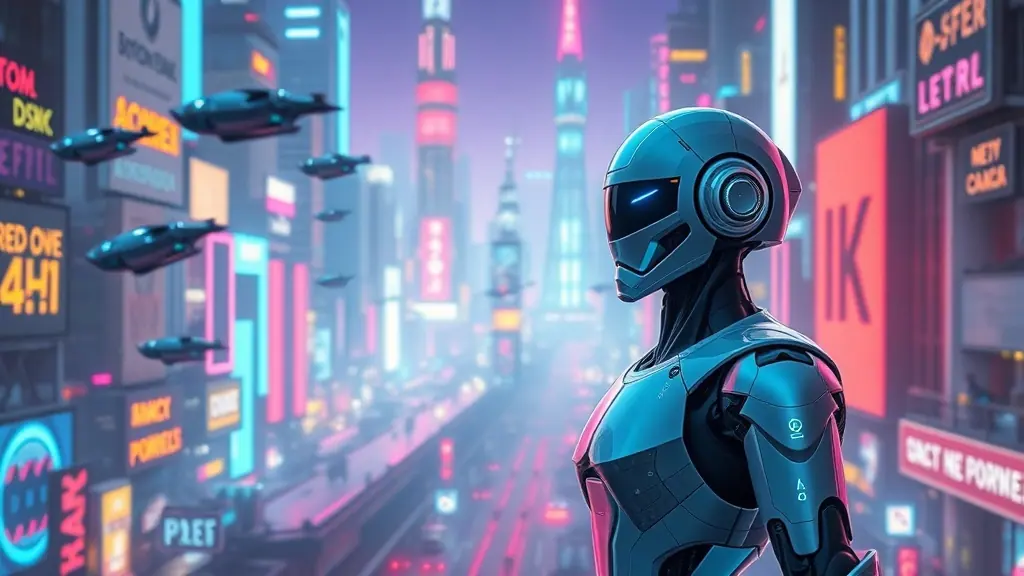
The AI Revolution is Here: CES 2026 Shocks the World
Did you feel that? The ground just shifted. CES 2026 wasn't just another tech show; it was a seismic event signaling a new era of artificial intelligence. Forget incremental improvements, we're talking about exponential leaps in processing power, robotic intelligence, and on-device AI capabilities. Buckle up, because the future is arriving faster than ever!
Nvidia's Rubin: 10x Cheaper AI, 4x Fewer GPUs
The undisputed headliner of CES 2026 was Nvidia's unveiling of its next-generation AI platform, Rubin. Imagine a world where training colossal AI models becomes dramatically more accessible and cost-effective. Rubin promises a staggering 50 petaflops of inference performance per GPU. But here's the kicker: it slashes costs by 10x compared to the previous Blackwell generation while needing 4x fewer GPUs to train those same models! This isn't just an upgrade; it's a paradigm shift.
Microsoft, Amazon, and Google are already lining up to integrate Rubin into their data centers in the second half of 2026. What does this mean for you? Expect faster, more responsive AI-powered services across the board, from search engines and cloud computing to personalized recommendations and cutting-edge research tools. Oh, and Nvidia also dropped Cosmos, a world simulation model, designed to run on the Rubin infrastructure.
Atlas Gets a Brain: Boston Dynamics + Google DeepMind = Skynet (Kind Of)
Robots have always been a staple of science fiction, but Boston Dynamics is turning fiction into reality. Their partnership with Google DeepMind to integrate Gemini AI into the Atlas robot is nothing short of revolutionary. Now, Atlas isn't just performing pre-programmed tasks; it's reasoning through complex, unseen instructions and environments. Think of it: a robot with 56 degrees of freedom, capable of advanced maneuvers and adapting to unpredictable situations. What are the implications?
- Search & Rescue: Robots navigating disaster zones, assessing structural damage, and locating survivors.
- Manufacturing: Adaptive robots working alongside humans on assembly lines, handling intricate tasks with precision and dexterity.
- Exploration: Autonomous robots exploring hazardous environments, from deep-sea trenches to the surface of Mars.
Intel's Panther Lake: AI on Your Laptop
Nvidia isn't the only player making waves in AI hardware. Intel's launch of the Core Ultra Series 3 (Panther Lake) chips, built on its cutting-edge 18A (<2nm) process, is a game-changer for on-device AI. These chips deliver:
- 1.7x better image classification
- 1.9x faster LLM latency
- 2.3x improved video analytics
These chips don't just meet Microsoft Copilot+ PC requirements; they exceed them, powering 200B-parameter models locally on laptops. Imagine running powerful AI models directly on your device, without relying on cloud connectivity. This means faster processing, enhanced privacy, and the ability to work seamlessly even when offline. Laptops powered by Panther Lake are shipping from major manufacturers now!
The Future of AI: What Does It All Mean?
The advancements showcased at CES 2026 point to a future where AI is seamlessly integrated into every aspect of our lives. Here are some key takeaways:
- Falling Inference Costs: Thanks to platforms like Rubin, the cost of running AI models is plummeting, making AI more accessible to businesses and individuals.
- On-Device AI: Powerful chips like Intel's Panther Lake are bringing AI processing directly to our devices, enhancing privacy and enabling new applications.
- Agentic AI: AI agents are becoming more sophisticated, capable of reasoning, problem-solving, and even self-improving.
- AI-Powered Discovery: AI is accelerating scientific research, from drug discovery and protein folding to climate modeling and materials science.
Stanford AI experts predict that 2026 will be a pivotal year for testing AI's real utility post-hype. The breakthroughs are here; now it's time to see how they transform our world.
The Bottom Line
CES 2026 has ushered in a new era of AI. The combination of powerful hardware, intelligent robots, and sophisticated AI models is poised to revolutionize industries, transform our daily lives, and unlock new possibilities we can only begin to imagine. The question isn't whether AI will change the world, but how quickly and how profoundly. Are you ready for the AI revolution?
Discussion (0)
Commenting as
No comments yet. Be the first to share your thoughts!
The discussion could not be loaded. Please refresh the page.
Digital transformation writer and startup advisor


