
AI on the Front Lines: Why the Pentagon is Opening its Classified Vaults
The Department of Defense is moving beyond simple chatbots, inviting AI giants to train mission-specific models on America's most sensitive military secrets.
Key takeaways
- The Pentagon is shifting from simply using AI chatbots to allowing firms like OpenAI and Google to train models on top-secret classified data.
- A major point of contention exists between tech companies like Anthropic, which refuse to work on autonomous weapons, and military officials who want 'unrestricted' models.
- The Defense Innovation Unit is rushing to build a benchmarking system by late March to test AI reliability under battlefield conditions and protect against adversarial hijacking.
- Training on sensitive data carries high risks of 'data leakage' and hallucinations that could result in lethal military errors.
The Great Classified Handshake
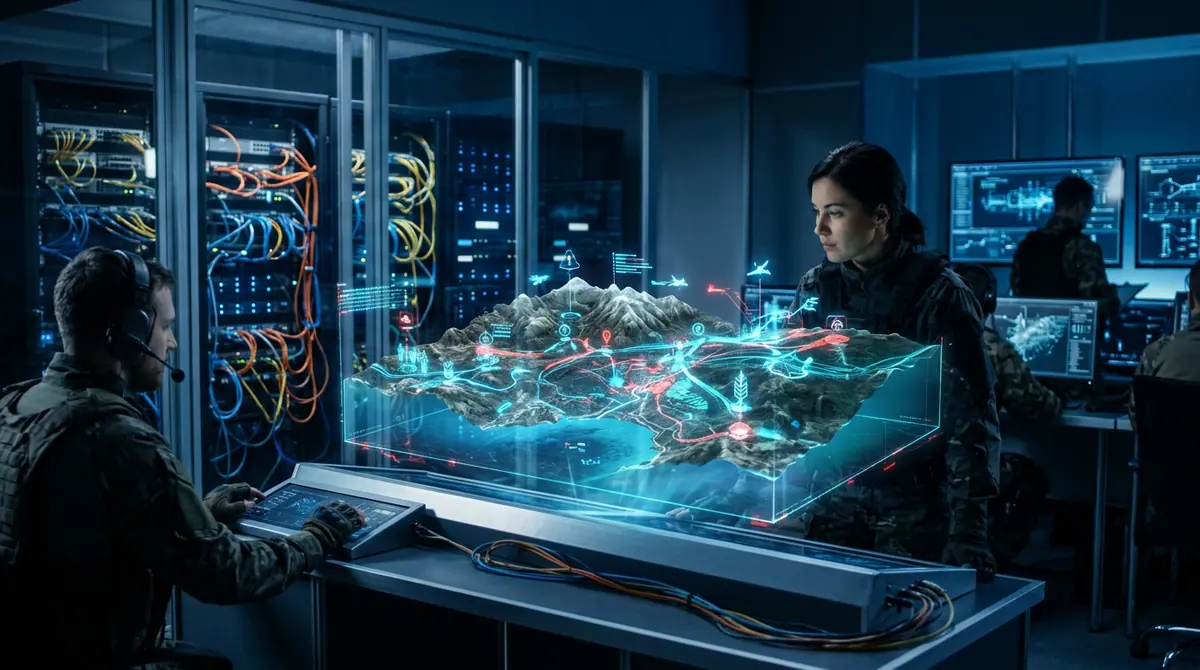
Imagine an artificial intelligence that does not just help you draft a memo, but instead analyzes thousands of hours of high-altitude surveillance and battlefield reports to suggest a tactical strike. For years, this was the stuff of science fiction, but a series of recent reports suggest the United States military is ready to bridge the gap between Silicon Valley and the situation room. As the Pentagon accelerates its digital transformation, it is actively discussing new ways for leading AI firms like OpenAI, Anthropic, Google, and xAI to train their most powerful models on classified data.
This represents a massive shift in strategy. According to a report from the Kyiv Post, the military is no longer satisfied with using AI for simple administrative tasks. While current systems like Anthropic’s Claude are already being used in secure environments to analyze specific targets, the Department of Defense (DoD) is now planning to let these companies build military-specific models from the ground up using data that has never seen the light of the public internet. This isn't just about giving an AI a list of facts; it is about teaching the model to 'think' like a military strategist by feeding it the deep, messy, and highly sensitive history of American operations.
The Context Box: Training vs. Inference
To understand why this matters, we have to distinguish between how AI is used today and what the Pentagon wants for tomorrow. Currently, most military users engage in 'inference,' which means they take an existing model and ask it questions. Training, however, is the process of building the model's brain. By training on classified data, the AI learns the specific patterns, jargon, and tactical nuances of the U.S. military, making it exponentially more useful (and potentially more dangerous) than a general-purpose model like the one you might use to write a poem.
What Has Changed: From Chatbots to Battle Buddies
The roadmap for this expansion is already being laid out. As noted in a detailed breakdown by The Decoder, the Pentagon is pushing for 'unrestricted' models to be deployed on classified networks. This means bypassing the standard safety filters that companies usually place on their public products. The goal is to create tools for mission planning and targeting that are not hindered by civilian guardrails that might prevent an AI from discussing combat or weapons systems.
This builds on existing infrastructure already in place. OpenAI has already signed an agreement to provide its technology to the genai.mil network, which serves over 3 million DoD users. While that network remains unclassified for now, the transition to top-secret training is the logical next step in a race to maintain a technological edge over global adversaries. Google and xAI have reportedly reached similar pacts, setting the stage for a competitive ecosystem of military-grade intelligence.
Why It Matters: The Speed of Modern Warfare
The primary driver behind this move is speed. In a world where adversaries are also developing AI, the ability to process information faster than a human can blink is the ultimate advantage. However, this high-speed future comes with significant friction between the tech giants and the government. During a recent White House meeting, tech chief Emil Michael argued that standard company safeguards are often unnecessary for military needs, suggesting that the mission should take priority over the ethics filters designed for the general public.
Not everyone in Silicon Valley agrees. Anthropic, for example, has maintained a firm stance against using its technology for autonomous weapons or domestic surveillance. This highlights a growing tension: can the Pentagon get the power it needs from companies that are fundamentally committed to safety? If the military cannot find common ground with the current leaders in the field, it may have to look elsewhere or build its own siloed models, a move that could be both more expensive and less effective.
What to Watch Next: The Reliability Gap
The biggest hurdle standing in the way of this AI revolution is not just ethics, but reliability. As reported by MIT Technology Review, embedding sensitive data into a model's training set creates two major risks. First, models can 'hallucinate,' or confidently state false information. In a battlefield scenario, a hallucination could lead to a catastrophic error. Second, there is the risk of data leakage. If a model is trained on classified data, an expert hacker might be able to 'reverse engineer' that information through the model's outputs.
The Pentagon is already moving to address these concerns. On March 11, the Defense Innovation Unit (DIU) announced a search for new evaluation infrastructure to benchmark AI against actual mission needs. According to The Military Times, the DIU wants a system that can test how human-AI teams perform under stress, specifically during network degradation or when facing adversarial 'hijacking' by enemy AI. The deadline for these proposals is March 24, signaling that the military is moving at a breakneck pace to ensure these models are ready for the field. The results of these tests will likely determine whether the dream of a classified, AI-powered military becomes a reality or remains a high-risk experiment.
Discussion (0)
Commenting as
No comments yet. Be the first to share your thoughts!
The discussion could not be loaded. Please refresh the page.
Digital transformation writer and startup advisor


