
AI is Your New Teacher's Assistant: How AI is Transforming Education
AI is no longer a futuristic fantasy in education. It's here, it's real, and it's changing everything from lesson planning to personalized learning. Discover how AI is reshaping classrooms and what it means for students, teachers, and parents.
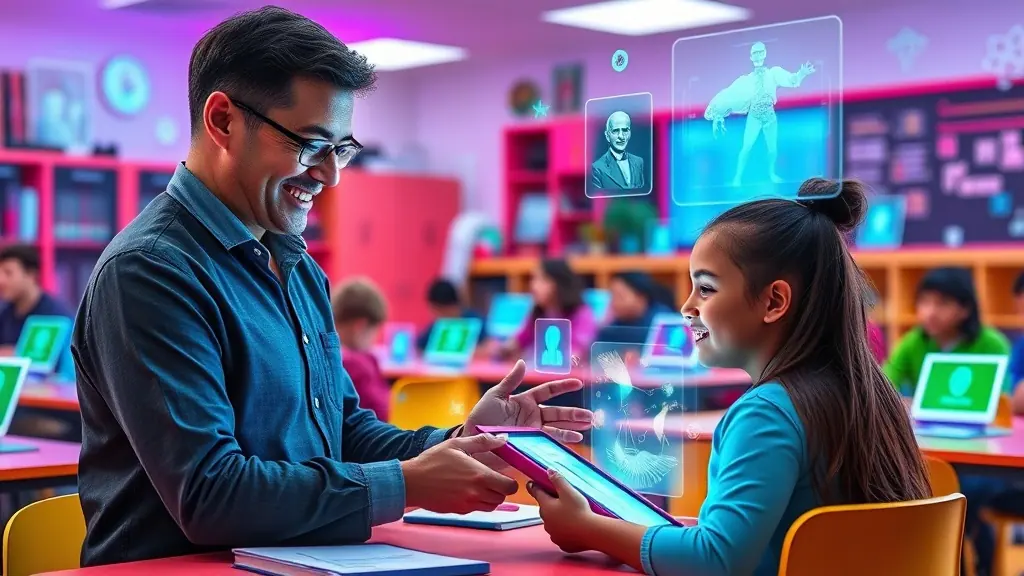
AI is Your New Teacher's Assistant: How AI is Transforming Education
Imagine a world where every student has a personalized tutor, lesson plans are tailored to individual needs, and teachers are freed from tedious administrative tasks. This isn't a scene from a sci-fi movie; it's the rapidly evolving reality of education in 2026, thanks to the rise of Artificial Intelligence (AI).
The integration of AI in education is no longer a trend; it's a core component of the learning landscape. But what exactly does this mean for students, teachers, and parents?
AI: The Personalized Learning Powerhouse
Forget the one-size-fits-all approach. AI is enabling personalized learning experiences that cater to each student's unique needs and learning style. AI tools act as “academic agents,” tailoring content to students' individual progress and knowledge gaps. Some U.S. studies show a 62% improvement in test scores due to this tailored support.
Kyron Learning, an AI-powered edtech firm, recently raised $14.6 million to further develop its platform, which identifies knowledge gaps in real-time and adjusts instruction accordingly. This means students receive targeted support exactly when and where they need it most.
But how does this work in practice? Imagine a student struggling with fractions. Instead of moving on with the rest of the class, the AI system detects the difficulty and provides additional exercises, explanations, and even different visual representations of the concept until the student grasps it. This ensures no student is left behind, and everyone can learn at their own pace.
AI to the Rescue: Streamlining Teacher Workloads
AI isn't just for students; it's a game-changer for teachers, too. From lesson planning to grading, AI is automating time-consuming tasks, freeing up teachers to focus on what they do best: connecting with students and fostering a love of learning.
Denver Public Schools, for example, is funding platforms like MagicSchool AI, which helps teachers ethically plan lessons and communicate with families. This support is invaluable, especially considering the increasing demands on educators' time and energy.
Think about it: instead of spending hours crafting the perfect lesson plan, a teacher can use AI to generate a starting point, tailored to the specific needs of their students. The AI can even suggest relevant resources, activities, and assessment methods. This allows the teacher to focus on adapting the plan to their unique classroom environment and individual student needs, making the learning experience more engaging and effective.
Addressing the Challenges: Ethics, Equity, and AI Literacy
The rapid adoption of AI in education isn't without its challenges. Concerns about ethics, academic integrity, and equitable access are paramount. What happens when students use AI tools without authorization? How do we ensure that all students, regardless of socioeconomic background, have access to these powerful learning tools?
These questions are driving a focus on AI literacy, both for students and teachers. We need to equip educators with the knowledge and skills to use AI tools effectively and ethically, while also teaching students how to leverage AI for learning responsibly.
The Rise of Cyber-Physical Learning
Beyond AI, the integration of cyber-physical learning environments is also transforming education. These environments blend the physical and digital worlds through technologies like telepresence robots, mixed reality, VR/XR, and remote labs. This creates immersive, hands-on learning experiences that boost engagement and provide crucial mental health support.
Imagine a student learning about the Amazon rainforest not just from a textbook, but through a VR simulation that allows them to explore the environment, interact with the flora and fauna, and even conduct virtual experiments. This type of immersive learning can bring abstract concepts to life and spark a deeper interest in the subject matter.
What This Means For You
- For Students: Get ready for personalized learning experiences tailored to your unique needs. Embrace AI as a tool to enhance your learning, but remember to use it responsibly and ethically.
- For Teachers: Embrace AI as your new assistant. Explore the many ways it can streamline your workload, personalize instruction, and create more engaging learning experiences for your students.
- For Parents: Stay informed about the technologies being used in your child's education. Engage in conversations with teachers and administrators about how AI is being used and how it can benefit your child's learning.
The Future of Education is Here
The future of education is here, and it's powered by AI, innovative learning platforms, and a commitment to personalized, engaging, and equitable learning experiences. By embracing these technologies and addressing the challenges they present, we can create a brighter future for all students.
Discussion (0)
Commenting as
No comments yet. Be the first to share your thoughts!
The discussion could not be loaded. Please refresh the page.
Mobile ecosystem analyst and smartphone reviewer


