
AI is Grading Homework? The EdTech Revolution Transforming Classrooms
AI is no longer a futuristic fantasy in education, it's here and changing everything. From personalized learning to easing teacher workloads, discover how AI is reshaping classrooms and what it means for students, teachers, and parents.
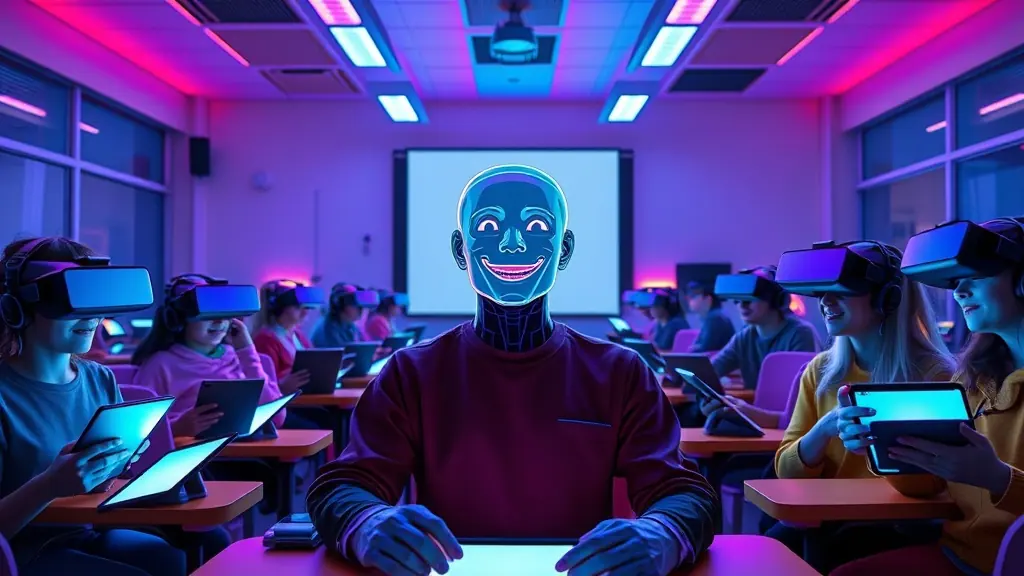
Is AI About to Become Every Student's New Teacher?
Imagine a classroom where every student receives a personalized learning experience, tailored precisely to their needs. It sounds like science fiction, but in 2026, it's becoming reality. Artificial intelligence (AI) is rapidly infiltrating education, sparking both excitement and debate. But is it a positive change? Let's dive into how AI is changing education as we know it.
AI's Rise in Education: From Novelty to Necessity
What started as an optional add-on is now becoming a core component of EdTech. AI tools are now essential for:
- Personalized instruction: AI algorithms analyze student performance to create customized learning paths.
- Lesson planning: Teachers are leveraging AI to generate engaging and effective lesson plans.
- Real-time feedback: Students receive instant feedback on their work, allowing for immediate correction and improvement.
Denver Public Schools is a prime example, investing in platforms like MagicSchool AI due to overwhelming teacher demand. The numbers don't lie: teacher usage of AI tools nearly doubled between 2023 and 2025.
Success Stories and Startups Leading the Charge
Companies like Kyron Learning, which recently secured $14.6 million in Series A funding, and Buddy.ai are proving the potential of AI in education. These platforms are reporting significant gains:
- Up to 70% improvement in test scores
- Up to 62% improvement in course completion rates
Navigating the Concerns: Ethics, Data Privacy, and the Human Element
Despite the excitement, concerns linger. Misuse of AI, academic integrity, and student data privacy are all valid worries. States are responding with new policies, pilot programs, and training initiatives to address these challenges. The 2025-2026 Education Insights Report reveals that while nearly all superintendents are optimistic about AI, they also emphasize the importance of ethical safeguards and careful evaluation of large language models.
The Human-Centric Approach: AI as a Teacher's Ally
Schools are also prioritizing “human” skills like collaboration and communication to counterbalance AI’s increasing role. As districts like Knox County Schools (Tennessee) and Gilbert Public Schools (Arizona) are showing, the focus is on training educators to use AI responsibly. The goal isn't to replace teachers but to equip them with powerful tools to enhance their instruction.
Platform Consolidation and the Rise of Immersive Learning
Districts are streamlining their digital resources, consolidating platforms to reduce the burden on teachers and parents. The focus is on platforms that support direct instruction rather than replacing it. We're also seeing a surge in:
- AR/VR for immersive simulations: Virtual labs and interactive experiences are making learning more engaging than ever before.
- Skills-based micro-credentials: Digital credentials are gaining traction as a way to recognize and validate specific skills.
These trends are supported by generative AI tools, as highlighted in the OECD Digital Education Outlook 2026, which are enabling adaptive online experiences.
What Does This Mean for You?
For Students: Expect more personalized learning experiences, tailored to your individual needs and learning style. Get ready to engage with interactive simulations and virtual labs that make learning more fun and effective. For Teachers: Embrace AI as a powerful tool to streamline your workload and enhance your teaching. Focus on developing those uniquely human skills that AI can't replicate. For Parents: Stay informed about how AI is being used in your child's education. Engage in conversations about data privacy and responsible technology use. Support schools as they navigate this evolving landscape.
The Future of Education is Here
AI is not just a passing fad in education; it's a fundamental shift. By embracing AI thoughtfully and addressing the associated challenges, we can create a future where every student has the opportunity to reach their full potential. The key is to remember that technology is a tool, and its effectiveness depends on how we use it. Let’s ensure that AI empowers both students and educators to thrive in the ever-evolving world of learning.
Discussion (0)
Commenting as
No comments yet. Be the first to share your thoughts!
The discussion could not be loaded. Please refresh the page.
Education technology researcher and policy analyst


