
AI is Grading Homework? EdTech's Wild 2026 Ride
AI in education is surging! From personalized learning to ethical debates, discover how AI and new tech like Accessibility+ are reshaping classrooms and challenging traditional norms. Is your school ready?
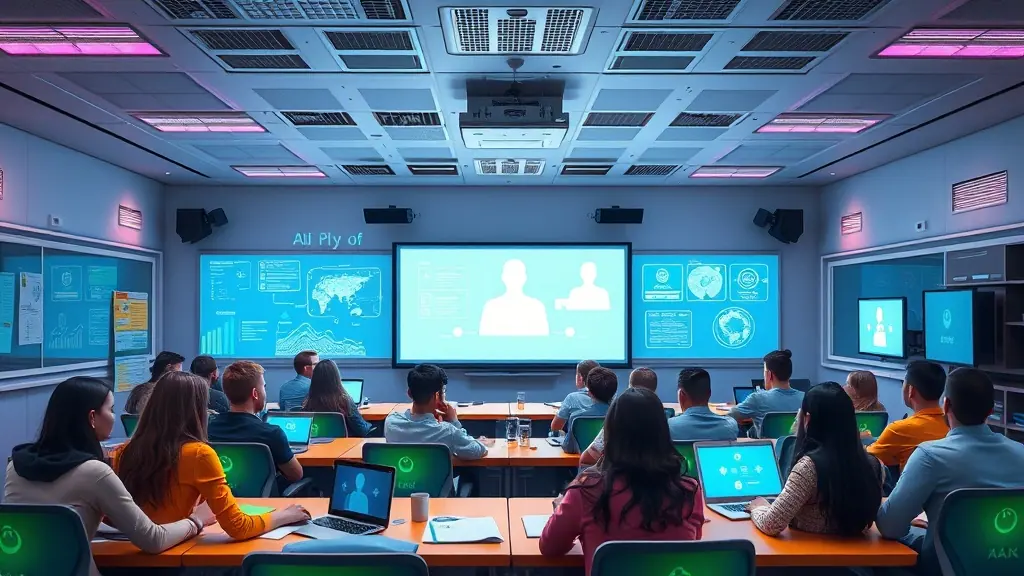
AI is Grading Homework? EdTech's Wild 2026 Ride
Imagine a world where AI personalizes every student's learning path, grades assignments with lightning speed, and even helps teachers craft the perfect lesson plan. Sound like science fiction? Think again. In 2026, Artificial Intelligence has exploded onto the EdTech scene, promising a revolution in how we teach and learn. But is it a smooth ride, or are there bumps in the road?
The Rise of the Machines (in Classrooms)
Forget dusty textbooks and one-size-fits-all lectures. AI is enabling hyper-personalized learning experiences. As Tec de Monterrey's Institute for the Future of Education reports, AI now powers student-specific academic agents and provides sophisticated learning analytics. This goes beyond just tracking grades; AI algorithms are now able to assess individual learning styles and adapt the curriculum in real-time. Think of it as having a 24/7 personal tutor, but instead of a person, it's an algorithm.
New Tools, New Opportunities
It's not just AI grabbing headlines. Innovative platforms are also making waves:
- Accessibility+ in D2L Brightspace: Minnesota State users now have access to Accessibility+, which provides free accessibility reports on course materials, ensuring content is WCAG and ISO compliant. This is a game-changer for inclusive design.
- Cyber-Physical Learning: Tec de Monterrey defines these environments as integrating physical and digital elements, think telepresence robots, mixed reality, and 24/7 remote labs. Learning is no longer confined to four walls.
- Digital Credentials: Skills-based learning is getting a boost with interoperable digital credentials, making it easier for students to showcase their abilities to potential employers.
The Ethical Minefield
But with great power comes great responsibility. The rapid integration of AI raises serious ethical questions. Who controls the data? How do we prevent bias in algorithms? And what happens when free AI tools suddenly become subscription-based, creating a digital divide? Denver Public Schools, for example, is using tools like MagicSchool AI for lesson planning and family communication, but they're also grappling with data privacy concerns and the costs associated with these platforms.
The OECD's Digital Education Outlook 2026 is diving deep into generative AI research and tools, and a few states are even piloting AI for student outcomes. But widespread implementation still faces hurdles, including budget constraints, privacy policies, and the need for critical evaluation of EdTech vendors, as noted by K-12 Dive.
Teaching in the Age of AI
What does all this mean for teachers? Are robots going to replace educators? Absolutely not. Instead, AI is positioned to augment teaching, freeing up educators to focus on what they do best: mentoring, inspiring, and fostering critical thinking. Tools like Microsoft Copilot are even assisting in Scholarship of Teaching and Learning (SoTL) research, enabling teachers to continuously improve their practice.
What This Means For You
- Students: Get ready for personalized learning experiences tailored to your unique needs. Embrace new technologies but also develop critical thinking skills to evaluate the information you receive.
- Teachers: Explore AI tools to enhance your teaching, but prioritize ethical considerations and data privacy. Focus on developing human skills that AI can't replicate, such as empathy, creativity, and leadership.
- Parents: Stay informed about the technologies being used in your child's school and advocate for responsible AI implementation. Encourage your children to develop both technical skills and critical thinking abilities.
Looking Ahead
As we move further into 2026, the integration of AI in education will only continue to accelerate. The key will be to navigate the ethical challenges, prioritize student wellbeing, and ensure that technology serves to enhance, not replace, the human connection at the heart of learning. The future of education is here and it's a fascinating blend of human ingenuity and artificial intelligence.
Discussion (0)
Commenting as
No comments yet. Be the first to share your thoughts!
The discussion could not be loaded. Please refresh the page.
Cloud computing specialist and tech trend forecaster


