
A 230-Year-Old Swiss Legend Just Became the New Face of Generative AI
STADLER, a global leader in waste sorting since 1796, is proving that legacy companies can lead the AI revolution with a massive deployment of ChatGPT Enterprise.
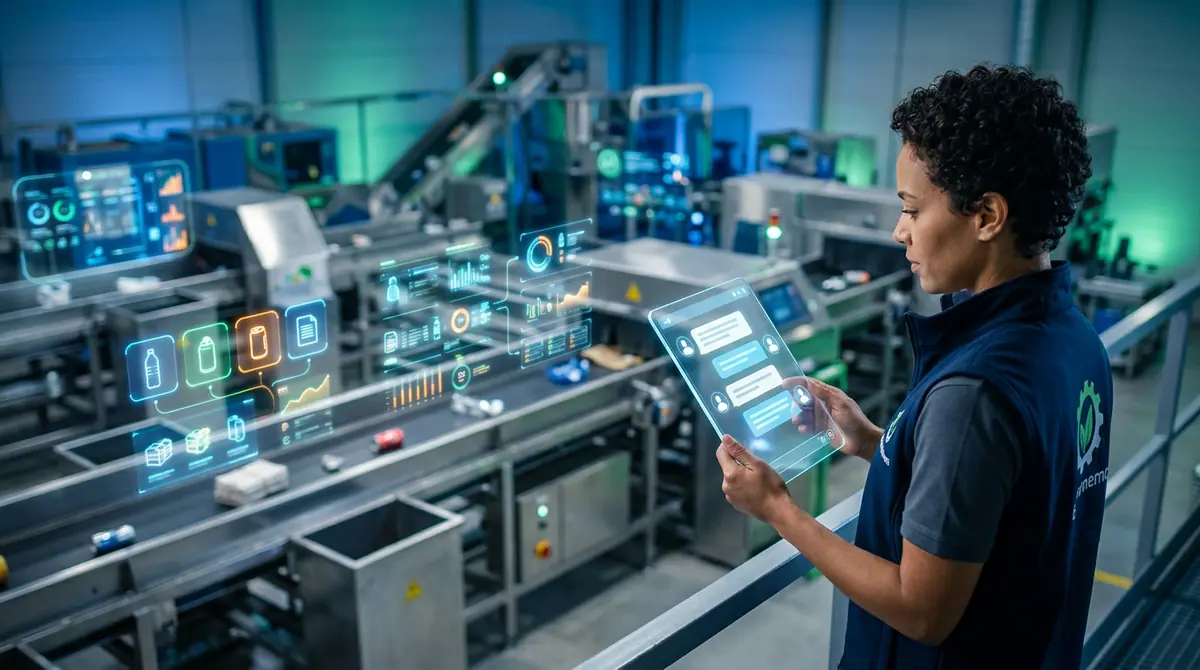
Key takeaways
- STADLER, a 230-year-old firm, achieved 85% daily active usage of AI across its 650-employee workforce.
- The deployment resulted in a 30-40% reduction in time spent on routine technical documentation and proposals.
- The company uses custom GPTs to handle complex multilingual translations and technical workflows, ensuring global accuracy.
- The strategy focuses on augmenting human workers and capturing institutional knowledge rather than headcount reduction.
- This represents a major milestone in the 'industrial AI wave,' where legacy manufacturers use LLMs to outpace startups.
The 200 Year Leap Into the Future
Imagine a company founded while George Washington was still in office suddenly becoming a global case study for Silicon Valley's most advanced technology. According to a report by TechBuzz.ai, STADLER Anlagenbau GmbH, a 230 year old Swiss family owned manufacturer, has done exactly that. This industrial giant, which specialized in sorting waste long before the term sustainability was coined, has officially crossed the enterprise AI chasm by deploying ChatGPT Enterprise across its entire 650 person workforce.
The transition is not just a pilot program or a small experiment in a corner office. As reported by ZetBit, the initiative began in 2023 under the leadership of Co-CEO Julia Stadler. She prioritized AI integration for all computer based roles, selecting OpenAI's enterprise tools for their structured outputs and immediate usability. Today, 85% of the workforce uses the tool daily, marking one of the highest adoption rates seen in the industrial sector to date.
What Is New: From Metal to Large Language Models
While STADLER has long been a leader in the physical world of recycling equipment, the recent shift focuses on the cognitive side of the business. The company has moved beyond basic automation into the realm of complex knowledge work. According to internal metrics shared by the company, routine tasks like technical documentation, requests for proposals (RFPs), and project proposals now take 30 to 40 percent less time to complete. Furthermore, employees are producing first drafts 2.5 times faster than they did before the deployment. This represents a fundamental change in how a legacy manufacturer operates on a day to day basis, shifting the focus from manual drafting to high level editing and strategic oversight.
To support its global operations, STADLER has developed custom GPTs specifically designed for translation and email workflows. This has drastically boosted accuracy in their multilingual operations, ensuring that a technical specification written in Switzerland is perfectly understood by a client in another part of the world. This is a significant delta from their previous workflow, which relied on slower, traditional translation methods and manual document creation.
Why It Matters: Bridging the Industrial AI Gap
The significance of this deployment extends far beyond a single company's productivity gains. The Meridiem notes that STADLER’s success signals that legacy firms are now ready to compete with tech native startups by using LLMs to modernize their operations. For decades, the industrial sector was seen as slow to change, but the rapid implementation at STADLER suggests that the threshold for digital transformation has lowered significantly. By augmenting workers rather than replacing them, the company is capturing unarticulated human expertise and turning it into documented, accessible knowledge.
In a broader analysis of this trend, researcher Daniel Miessler argues that AI is effectively dispersing human expertise into documented skills. When a legacy giant like STADLER captures its institutional knowledge within an AI framework, it makes the entire organization smarter simultaneously. This approach addresses a major pain point in manufacturing: the loss of expertise as senior engineers retire. By using AI to document and streamline processes, that knowledge stays within the company's digital nervous system.
The Context Box: Who is STADLER?
Founded in 1796, STADLER Anlagenbau GmbH is a global leader in the design, production, and assembly of automated sorting plants for the recycling industry. Headquartered in Switzerland, they are a primary driver in the circular economy, helping cities and corporations process waste into reusable materials. Their existing STADLERconnect platform already uses AI for real time plant data analysis, showing that while they are 230 years old, they have always been tech forward in their operations.
What to Watch Next: The Industrial AI Wave
As we move through 2026, expect to see a surge in traditional manufacturing firms following STADLER’s lead. According to industry reports, OpenAI’s enterprise subscriptions grew significantly over the past year as firms shifted from experimental pilots to full scale deployments. The next step for STADLER and its peers will likely be the deeper integration of LLMs with physical sensor data. We are moving toward a future where a technician can ask an AI assistant why a specific sorting belt is vibrating, and the AI will answer based on both real time sensor data and two centuries of engineering documentation. This synergy between the physical and the digital is the next frontier for the industrial world.
A Final Word for the Modern Workforce
The STADLER story is a powerful reminder that AI is not just for software developers in San Francisco. It is a tool for the engineer in Zurich, the sales lead in Berlin, and the project manager in London. By embracing these tools, companies can free their people from the drudgery of paperwork and allow them to focus on what humans do best: solving problems and building the future. The message is clear: if a 230 year old firm can reinvent itself for the AI age, there is no excuse for the rest of us to lag behind.
Discussion (0)
Commenting as
No comments yet. Be the first to share your thoughts!
The discussion could not be loaded. Please refresh the page.
Open source advocate and full-stack developer


